
Idea 1
Turning Customers into a Zombie Army of Loyal Fans
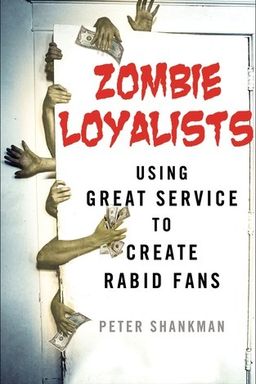
Have you ever walked out of a store or hung up from a call feeling truly valued—so much that you couldn’t wait to tell your friends about it? Peter Shankman’s Zombie Loyalists: Using Great Service to Create Rabid Fans starts with that feeling. He argues that the most effective form of marketing in today’s overhyped digital world isn’t a bigger ad budget or a viral post—it’s delivering consistently great service that makes your customers so obsessively loyal, they become your brand’s most fearless promoters.
Shankman reimagines loyal customers as “Zombie Loyalists”—people who, once “infected” by incredible service, lose their ability to keep quiet about you. Like metaphorical zombies, they spread the “infection” by sharing stories, posting photos, writing reviews, and bringing new customers straight to your doorstep. The book’s metaphor is playful but pointed: if you feed your zombies well (with attention, care, and consistency), they’ll devour your competition for you.
The Service Crisis and the Loyalty Opportunity
Shankman reveals a striking disconnect between how companies see their customer service and how customers experience it. According to his research, 80% of businesses believe they deliver superior service—yet only 8% of their customers agree. This gap creates an enormous opportunity: if everyone else is providing mediocre service, simply being one level better than crap can make you stand out. A company that provides consistent, human, attentive service immediately positions itself as extraordinary in a marketplace dominated by indifference.
His opening story drives the point home. On a flight, Shankman enthusiastically showed off his gadget-filled SCOTTeVEST jacket to a seatmate, who quickly bought several for her family. No ads, no press releases—just genuine passion from a satisfied customer. That spontaneous sale, Shankman notes, is more effective than any marketing campaign. Customers trust other customers more than they trust brands.
From Ordinary Customers to the Infected Elite
Zombie Loyalists don’t need discounts, gimmicks, or clever slogans. They need reasons to care. Shankman defines their transformation as a chain reaction that begins when an employee, empowered and happy in their job, delivers a surprisingly good experience. That single spark spreads because people today are wired to share. A customer who gets recognized, listened to, or made to feel special will post about it faster than any ad can load on their phone. That’s why he urges readers to “be amazing to the customers you have to get the customers you want.”
He also dismantles common excuses about cost, arguing that most legendary customer moments—from an unexpected greeting to a personalized follow-up—cost little or nothing. As he puts it, there’s no higher return on investment than kindness. A smile, a thank-you note, or even a 30-second acknowledgment can create more revenue than a million-dollar campaign. (In this way, Shankman’s argument resembles the cultural philosophies of Tony Hsieh’s Delivering Happiness and Fred Reichheld’s loyalty insights from The Loyalty Effect.)
The Blueprint for a Zombie Takeover
Each section of the book lays out a progression—from fixing broken service cultures to empowering employees, from “infecting” your first customer to building an unstoppable army of loyal fans. Shankman provides case studies ranging from small bodegas to brands like Morton’s Steakhouse, Bose, and Ritz-Carlton. The common denominator is never massive budgets but company cultures that put humans first. His formula is cyclical: happy employees breed happy customers; happy customers generate positive buzz; and that buzz attracts more business, making employees and customers happier in return.
Shankman’s zombie metaphor runs deeper than gimmickry—it underscores the idea of single-minded devotion. Real zombies feed to survive; loyal customers feed on belonging. Once someone’s emotionally invested in your brand, they’ll defend it fiercely, forgive its missteps, and evangelize it to others. But that relationship is fragile. Lose your customer’s trust, and a former zombie can turn into your most dangerous critic. One angry ex-loyalist can “infect” hundreds in reverse.
Why Loyalty Beats Advertising
Ultimately, Shankman’s thesis challenges how we think about growth. Instead of obsessing over lead generation or viral marketing, he insists that scalable growth starts with microscopic acts of delight. A loyal customer base that markets for you is effectively an unpaid sales force. As social media and word-of-mouth grow ever more powerful, businesses no longer control their brand story—customers do. Being “beyond awesome” to the customers you already serve is not idealism; it’s strategic survival.
Core Argument
In an era where we expect bad service, the easiest way to stand out is to be genuinely good. Loyalty is contagious, service is the new marketing, and every employee is part of the epidemic. If you treat people as if they matter, they’ll make sure the world knows you do.
By the end of Zombie Loyalists, you realize that customer service isn’t a department—it’s your company’s heartbeat. When you empower your people, delight your customers, and stay one step ahead of mediocrity, your business doesn’t just attract attention—it builds an army. And in Shankman’s world, that army is unstoppable.