
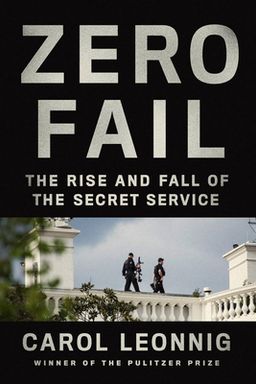
Zero Fail cover

Zero Fail

by Carol Leonnig

Zero Fail exposes the Secret Service''s turbulent history of scandal and mismanagement. From reckless agents to presidential threats, Carol Leonnig''s gripping account reveals systemic failures and cover-ups that have plagued the agency for decades, urging a call for reform.

The Evolution of the Secret Service

How does an agency created to track counterfeiters become the nation's most visible shield around its leader? The book traces that transformation—from a small Treasury investigative unit in 1865 to a complex organization struggling to protect presidents in a world of evolving threats. Across its arc, you see how institutional birth defects, cultural habits, and political interference shape every stage of this evolution.

Foundation and contradictions

The Secret Service begins as a pragmatic response to counterfeiting chaos at the end of the Civil War. You meet figures such as William P. Wood and Pete McCartney—one a government operative, the other a notorious forger—whose cat-and-mouse game spurs the agency’s creation. Yet when President McKinley is assassinated in 1901, Congress grafts presidential protection onto this investigative culture. That dual mandate creates enduring tension: the habits of detectives—quiet, methodical, reactive—clash with the demands of bodyguards—visible, immediate, proactive.

From the start, the Service accumulates roles faster than it builds doctrine. That mismatch means presidents like Kennedy and Roosevelt operate with small, improvised protective details drawn from an investigative workforce. The first key truth is that the Secret Service was never designed to guard a person; it was trained to protect a currency. Everything that follows—including its resource scarcity and training deficits—flows from this origin story.

Kennedy’s crucible and the birth of modern protection

The assassination of John F. Kennedy becomes the moment when improvisation proves fatal. Exhausted agents, thin manpower, and fragile communications culminate in an irreversible tragedy. James Rowley’s post-Dallas reforms—expanding training, creating computerized threat databases, and institutionalizing intelligence work—transform the Service from an ad hoc team into a professional security corps. These steps mark a shift from courage to system, replacing instinct with doctrine. (In management terms, it is the shift from crisis response to structured prevention.)

Political theater versus security realism

A recurring motif emerges: presidents crave visibility, and agents must secure vulnerability. Kennedy’s handshakes, Reagan’s sidewalk strolls, and Obama’s open-air speeches all illustrate the eternal compromise between optics and protection. You watch agents redesign operations to appear invisible—magnetometers tucked behind stages, snipers hidden on rooftops—so that democracy can perform its rituals safely. The Secret Service learns that the best protection often looks like openness.

Culture, loyalty, and silence

Culture becomes the hidden variable in the agency’s success. Its strong code of silence—originally meant to protect presidential privacy—morphs into a barrier against accountability. Drinking scandals (the Cellar episode), misconduct investigations, and later whistleblower retaliation reveal how institutional loyalty can outweigh candor. Directors such as Merletti and Sullivan wrestle with this tension: is confidentiality a tool for safety or a cloak for dysfunction?

Threat evolution and structural transformation

As threats shift—from lone assassins like Hinckley and Bremer to coordinated terror after 9/11—the Service reshapes itself into a national-security node. It builds the Counter Assault Team, expands bomb-sweep capacity, and joins the new Department of Homeland Security. Yet new responsibilities multiply faster than resources. At the same time, internal scandals—Cartagena, racist emails, perimeter failures—reveal corrosion from within.

Modern crises and accountability

The book’s later chapters read as a reckoning. From the Cartagena “Hookergate” embarrassment to the Chaffetz data leak, you see how oversight battles expose internal fragility. Officers like Charles Baserap, punished after raising deficiencies in the Uniformed Division, illustrate the cost of speaking truth from the front lines. More recently, budget strain and political loyalty under Trump show that operational power can still be bent by politics. When loyalty becomes currency and whistleblowers become liabilities, protective readiness dissolves into bureaucracy.

Core argument

The Secret Service’s story is one of mission collision: investigative heritage meets protective improvisation, idealism meets institutional secrecy, and visibility meets vulnerability. It reminds you that protecting a presidency is never just a technical task—it is a reflection of how a democracy manages power, transparency, and trust.

By the end, you see the agency as a mirror to American government itself: effective when insulated from politics, fragile when captive to it. The book doesn’t just chronicle failures; it warns that without stable culture, candid oversight, and genuine accountability, even the nation’s shield can shatter in plain sight.


Origins and Early Contradictions

The first decades of the Secret Service reveal a pattern familiar in American bureaucracy—mission creep without matching resources. Born as a Treasury investigative arm in 1865, its laboratory of detectives quickly takes on presidential protection as an afterthought. That dual role—law enforcement and personal security—creates the DNA that later defines institutional conflict.

The dual mandate

Investigations drove recruitment: men skilled at tracing counterfeit rings, not at tactical close protection. Presidents from McKinley onward are guarded by investigators improvising tactics. You see mismatched tools in practice—no command doctrine, no advance protocols, only reactive staffing after tragedy. The assassination of McKinley forces Congress to legislate presidential protection, but the Service remains structured for investigative work, explaining why modernization lags into the twentieth century.

Institutional improvisation

Field realities reflect the mismatch. Early details borrow staff from criminal-finance divisions, presidents travel with tiny teams, and protection runs on guesswork rather than intelligence. Even Kennedy’s 34-man detail in 1961 strains against his global travel demands. The takeaway: when origins favor paperwork over combat-readiness, protective success depends more on personal courage than structural preparedness.

Cultural aftermath

This origin explains future patterns—overwork, understaffing, and reactive reform cycles. You can trace nearly every later scandal or operational shortfall back to this formative contradiction: the Service’s allegiance to investigative norms over practical protection. Institutional reform always follows crisis; this is the agency’s rhythm from 1865 to Dallas to 9/11.

Historical insight

The Secret Service’s early compromises—born out of fiscal necessity and bureaucratic improvisation—prove how political reaction can outpace organizational design. Every presidential tragedy becomes both a catalyst and an indictment of structural inertia.

Understanding these contradictions lets you read later failures—Kennedy’s vulnerability, perimeter breaches, or Cartagena’s lapses—not as surprises but as inheritances from a body built for one mission and asked to master another.


Kennedy’s Legacy of Reform

Kennedy’s assassination transforms the Secret Service from improvisation to institution. The Dallas tragedy exposes thin doctrine and exhausted manpower, forcing Director James Rowley to make the agency modern: controlled, systematic, and professional.

Systemic exposure

The motorcade disaster reveals technical cracks—late communication, empty running boards, and decisions made on optics rather than risk. Kennedy’s request for visible contact with crowds literally removes his protection seconds before fatal shots. Dallas thereby becomes the Service’s self-diagnostic test, revealing that personal charm and institutional fatigue can combine lethally.

Rowley’s modernization blueprint

Rowley doubles manpower, designs the now-standard four-shift rotation, and founds the Beltsville training center. He digitizes threat files with early IBM systems and insists on intelligence analysis instead of anecdotal guesswork. Metal detectors, crowd screening, and advance route sweeps—all modern norms—begin here. The Service moves from intuitive bravery to repeatable competence.

Long-term consequences

These reforms ripple through later eras. Reagan’s survival during Hinckley’s attack, for instance, reveals how post-Dallas doctrine—quick cover, armored vehicles, crowd control—saves lives. (In contrast to earlier improvisation, agents now train to cushion risk through procedure.) Congress’s attitude shifts too—from stingy before Dallas to supportive after Dallas—proving that change often follows tragedy, not foresight.

The enduring lesson

Protective success depends on doctrine and infrastructure, not heroism alone. Rowley’s reforms show how systems of rotation, training, and intelligence turn bravery into predictable safety rather than desperate reaction.

Dallas redefines the Service’s relationship with technology, Congress, and the presidency itself. For perhaps the first time, America’s bodyguard learns to plan, not merely to react.


Politics and Presidential Image

Presidents want to be seen; agents need them shielded. That paradox drives decades of friction between political imperatives and protective logic. Every administration must negotiate this line—how to appear accessible without becoming vulnerable.

The optics dilemma

Kennedy’s display politics—rope lines, swims, handshakes—turn agents like Win Lawson and Emory Roberts into reluctant stage managers. Reagan resists being seen as fearful, insisting on walks that leave detail chiefs scrambling. Clinton and Obama favor closeness with crowds that stretch screening protocols. Visibility equals legitimacy, but each act of accessibility expands the threat surface.

The evolution of invisible security

After Reagan’s shooting, DeProspero introduces covered arrivals and magnetometer norms. By the 2000s, the Service learns to make protection invisible—snipers tucked behind glass, bulletproof barriers disguised as décor, and crowd zones that seem spontaneous but are meticulously screened. You see the art of maintaining political theater while minimizing vulnerability.

The paradox refined

Each protective success that preserves a presidential image is a compromise, not a victory of security over politics but a delicate equilibrium of both. The Service must let democracy look open while engineering its invisibility.

By watching this balance play out across administrations, you learn that protection is not just tactical—it is symbolic. The Service protects both a person and the illusion that democracy can embrace its leader safely.


Culture, Misconduct, and Loyalty

The most dangerous weaknesses inside the Service are not technical—they are cultural. Loyalty, silence, and fear of exposure shape behavior more than policy manuals do. When discretion becomes secrecy and loyalty becomes armor for misconduct, protection suffers.

Secrecy and its distortions

Agents are trained to protect a president’s dignity, but that norm extends to concealing internal misbehavior. From pre-Dallas drinking episodes to later sex scandals, silence often overrides accountability. The Lewinsky-era push for an “executive protection privilege” illustrates the confusion: to preserve proximity, leaders argue against transparency—an ethical paradox the courts reject.

Loyalty over standards

Later examples—Luczko’s promotion amid misconduct reports, racial-insensitivity emails at Beltsville, retaliations against whistleblowers like Baserap—show how loyalty politics eclipse corrective discipline. When Mark Sullivan or later directors favor insiders, the message travels down ranks: keep quiet, stay connected, survive. Minority agents’ lawsuits and suicides like Prieto’s expose the moral cost of that calculus.

The Uniformed Division’s warning

Baserap’s manifesto captures institutional fatigue—broken radios, unmanned posts, burnout, and futility of reporting problems. Leadership responds with retaliation, not repair. You realize that culture isn’t abstract; it directly affects security when those guarding the perimeter are too tired or demoralized to react swiftly.

Cultural takeaway

Protective strength depends on truth-telling. Suppression of error—whether out of loyalty or fear—turns confidentiality into rot. Reform must start with culture before equipment.

By foregrounding these stories, the book demonstrates that the Service’s greatest vulnerability may lie not beyond the fence but within its own code of silence.


Scandals, Oversight, and Redemption

Cartagena (2012) becomes the flashpoint for twenty-first-century reckoning. The scandal of agents buying sex overseas ignites global embarrassment and drives congressional, inspector-general, and internal inquiries that expose a deeper problem—an agency whose disciplinary system bends under political filtration.

Cartagena’s unfolding and fallout

Paula Reid’s discovery of guest logs, Ambassador McKinley’s alarm, and press leaks combine into a perfect storm. Director Mark Sullivan’s uneven punishments, from retirements to firings, reveal inconsistent norms and the dominance of damage control over justice. The scandal morphs into congressional scrutiny, spearheaded by Ron Johnson and staffer Rachel Weaver, as leaked IG drafts show suppressed findings about potential criminal connections and political deletions.

Oversight wars

The Chaffetz episode deepens mistrust: agents access the congressman’s rejected job file and leak it, demonstrating a retaliatory culture toward critics. Inspector General John Roth’s later rebuke exposes systemic misuse of data, proving how oversight itself can trigger defensive secrecy. The book uses these episodes to illustrate a feedback loop—investigation breeds retaliation, which breeds more scandal.

Lessons in accountability

The common thread is institutional defensiveness. Reform needs independence—an IG capable of standing apart and Congress that insists on whistleblower protection. When that independence collapses, reform collapses. The agency begins to rebuild only when oversight pressure forces transparency in hiring, discipline, and communication protocols.

Redemptive theme

Crises like Cartagena don’t merely punish bad behavior—they act as institutional MRI scans, revealing hidden fractures. The Service’s future survival depends not just on catching offenders but on dismantling the silence that protects them.

In exposing its failures publicly, the Secret Service learns the paradox of reform: the very act of shame is what purges denial. Cartagena makes accountability an operational necessity, not a moral option.


Modern Strain and Political Capture

From 9/11 to the Trump years, the Service enters its most demanding era—technologically ambitious, financially strained, and politically exposed. As threats globalize, presidents personalize, forcing the agency to protect not just a person but an institution under conflicting loyalties.

9/11 and the expansion of mission

The morning of 9/11 reveals coordination gaps between FAA, military, and protective channels. Delayed evacuation orders and confused communications at the JOC demonstrate systemic brittleness. In response, the Service rewrites evacuation doctrine, hardens command centers, and integrates with the Department of Homeland Security. Its identity shifts from lone-guardian to network defender.

Budget and loyalty crises

The Trump presidency intensifies resource strain. Travel to private resorts multiplies costs, while family protection demands drain manpower. Emergency funding requests replace stable budgeting. Meanwhile, the appointment of Tony Ornato—moving from protection detail to political appointee—symbolizes the erosion of apolitical norms. When leaders like Tex Alles and Jim Murray must navigate between political comfort and institutional integrity, neutrality collapses.

Public trust and future risk

The Service’s response to January 6 and pandemic-era political pressures demonstrates the fragility of neutrality. Delays in assisting the incoming Biden detail raise fear of partisanship. Without rigorously apolitical leadership and protected funding streams, operational professionalism can’t survive. The book ends with a warning: loyalty politics threaten not just morale but constitutional confidence.

Final reflection

To protect a democracy’s leader, you must first protect the legitimacy of the protector. Budget discipline, political neutrality, and cultural transparency are not peripheral—they are core security technologies.

By closing with this insight, the author reminds you that the Secret Service’s strength lies not in its arsenal but in its ethics. A loyal bodyguard becomes dangerous when loyalty outranks law.

Dig Deeper

Get personalized prompts to apply these lessons to your life and deepen your understanding.

Go Deeper

Get the Full Experience

Download Insight Books for AI-powered reflections, quizzes, and more.