
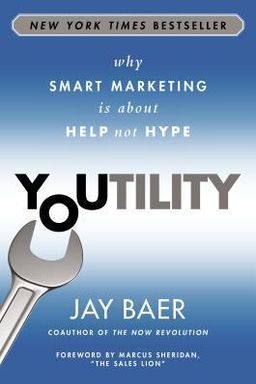
Youtility cover

Youtility

by Jay Baer

Youtility by Jay Baer challenges conventional marketing by emphasizing the power of useful, informative content over traditional promotional tactics. Through real-world examples, it demonstrates how businesses can build trust and prosper by prioritizing customer needs, leveraging social media, and embracing technology to create meaningful connections.

Marketing So Useful, People Would Pay for It

What if your marketing was so genuinely helpful that people would pay you for it—even if you never asked them to? That’s the question at the heart of Youtility for Real Estate by Jay Baer and Erica Campbell Byrum. In a marketplace flooded with noise, pushy ads, and endless self-promotion, this book argues for an entirely different approach: stop trying to be loud and start being useful. The best way to win clients, particularly in real estate, isn’t by selling harder—it’s by helping better.

Jay Baer’s central idea of “Youtility”—marketing so useful that people would pay for it—redefines success for modern real estate professionals. Traditional marketing tried to shout the loudest, but digital behavior has flipped the playing field. Consumers now expect instant, self-serve access to transparent information, available when they want it, not when agents push it. When you help clients solve problems, answer questions, and educate themselves, you don’t just earn attention—you earn trust and loyalty.

Why Youtility Matters Now

Real estate professionals face overwhelming competition from online aggregators, social platforms, and other agents vying for attention. Meanwhile, homebuyers and renters—armed with smartphones—can research everything before ever speaking to an agent. Consumers have flipped the funnel. Baer and Byrum note that the modern buyer consults an ever-growing number of digital touchpoints (ten or more, on average) before making a decision. To stand out, you must be a trusted guide, not a gatekeeper. That’s where Youtility comes in.

The authors define three pillars of Youtility for real estate, each corresponding to a different stage of the customer journey: self-serve information (helping consumers educate themselves), real-time relevancy (being usefully present when needs arise), and radical transparency (building trust through total honesty). Together, these create a blueprint for being indispensable before, during, and after the transaction.

Friend-of-Mine Awareness: The Human Side of Marketing

The book begins with the concept of “friend-of-mine awareness,” where trust is built not merely through advertising but through authentic relationships. Because consumers’ social feeds mix posts from brands and personal friends, businesses must act more like friends—offering value, empathy, and interesting content. Through case studies like Girl’s Guide to Real Estate and Brad Bell Real Estate’s community cafés, Baer shows how human, helpful marketing can shift brand perception from promotional to personal.

In today’s digital world, this type of human connection is essential. People don’t engage with companies—they engage with personalities, transparency, and stories that feel relatable. “Be as interesting as the people your clients love,” Baer advises.

Helping at Every Stage: The New Funnel

The authors organize Youtility around the customer funnel: top, middle, and bottom. At the top, people aren’t thinking about buying yet. Smart professionals capture their attention with lifestyle, community, and informational content. Cassina TV’s short films about Charleston culture or the Corcoran Group’s Foursquare lists about New York neighborhoods show how top-of-funnel Youtility attracts attention long before a client starts a search.

In the middle stage, self-serve tools, blogs, and video education empower customers to take control of their real estate learning. Examples like Anne Jones’s real estate video guides and Joe Manausa’s Tallahassee housing blog demonstrate how consistent, relevant teaching builds loyal audiences. Finally, at the bottom of the funnel, radical transparency—openly discussing costs, problems, and even when you’re not the best fit—cements trust and wins deals long-term.

A Philosophy and a System

Youtility isn’t just a marketing tactic—it’s a mindset shift. It asks you to view your customers not as leads but as learners. Instead of asking, “How can I sell to them?” ask, “How can I help them make better decisions?” This approach requires patience, authenticity, and operational change. You must commit to educating over advertising, transparency over polish, and service over self-interest. But when done well, it transforms how clients perceive you—not as yet another Realtor, but as an indispensable resource.

“If you sell something, you make a customer today. If you help someone, you make a client for life.”

Baer and Byrum’s work ultimately reframes marketing as continuous customer education. Whether through YouTube, email courses, or apps, Youtility means being relevant, honest, and useful—because usefulness never goes out of style. In the competitive real estate world, that’s perhaps the most powerful sales strategy of all.


Building Friend-of-Mine Awareness

Imagine logging into your social feeds and seeing friendly, authentic advice from a real estate professional who feels less like a salesperson and more like a neighbor. That’s friend-of-mine awareness in action—the approach where you earn attention not through shouting but through genuine, consistent usefulness. Jay Baer argues that when clients see your helpful ideas next to posts from their own friends, you must be just as engaging, trustworthy, and personal to compete for their attention.

From Transactions to Relationships

Traditional marketing aims for “top-of-mind awareness”—being remembered when someone needs your service. But friend-of-mine awareness goes deeper: it means becoming part of someone’s trusted circle long before they enter the market. This is critical in real estate, where buying or selling decisions are infrequent. You can’t rush trust; you must earn it with ongoing value. This transformation moves professionals from one-time agents to long-term advisors.

Baer’s examples are diverse and inspiring. Girl’s Guide to Real Estate, created by Joda Mize, built an informal, sisterly tone that gave women practical home-buying and design advice. Her site’s blend of finance and lifestyle transformed the emotional side of real estate communication. By serving readers with empathy and insider expertise, Mize positioned her brand as that “honest girlfriend” everyone turns to for advice.

Helping Beyond Real Estate

Friend-of-mine awareness isn’t about constant real estate talk—it’s about adding value to your clients’ lives even outside the transaction. The Brad Bell Real Estate team in Brisbane, Australia, embodied this. When Sarah and James Bell took over the family firm, they realized most people weren’t constantly in the housing market. So they built The Hub 4122—a local newspaper, website, and even a physical café. Community members could grab coffee, read stories, and connect—all powered by the firm’s commitment to being genuinely useful. The café didn’t promote listings; it promoted community connection. And because of that, Brad Bell Real Estate became local leaders in both business and trust.

This mirrors modern brand-building trends. (Marketing experts like Seth Godin argue similarly that permission-based marketing thrives when you create emotional resonance, not just awareness.) When you engage with people beyond sales, your brand becomes a trusted friend in their everyday lives.

Local Connection and Content

The same principle appears in OCF Realty, a 100-person Philadelphia firm. Founder Ori Feibush turned his real estate offices into neighborhood institutions by adding OCF Coffee Houses. More importantly, his team built Naked Philly, a blog covering local construction, neighborhood developments, and city changes. These stories weren’t sales pitches—they were hyperlocal reporting. As readers turned to OCF as a daily source of real estate news, trust naturally followed. The blog eventually generated more online traffic than all the city’s competing firms combined.

The key lesson: local, useful storytelling can make your audience associate your brand with insight and authority. When they’re ready to act, they’ll already know and like you.

From Stranger to Advocate

Friend-of-mine awareness flips the funnel. Instead of chasing leads, you build familiarity until leads chase you. Think of brands like Apple or Zappos, whose identities evoke trust and positive emotion. Real estate pros can do the same by focusing on inclusion, empathy, and relevance. As Baer writes, when you’re genuinely helpful, people don’t just remember your logo—they root for you.

Friend-of-mine awareness is about moving from visibility to belonging. It’s not what you sell; it’s how you show up in people’s lives before they ever need to buy.


Empowering Clients with Self-Serve Information

In the smartphone era, buyers and renters want to guide their own journey. They don’t want to wait for a call or fill out a form to learn about schools, taxes, or neighborhoods. They want self-serve information—accurate, trustworthy, always-on answers. Jay Baer calls this the first and most essential form of Youtility: giving people the tools to educate themselves on their own terms.

Google’s research into the “zero moment of truth” showed that 84% of buyers make decisions before even contacting a company. In a world where consumers use ten or more information sources before committing, agents must create those sources—or risk losing clients who never made contact. The new rule: if you’re not visible and useful before the first call, you’re invisible altogether.

Video: The Power of Visual Education

Consider Anne Jones, a Tacoma, Washington agent who built her business on short, affordable listing videos. With her husband’s handheld Canon camera, Jones shot cinematic tours that gave buyers emotional context, not just data. “I think it gives properties the best possible exposure,” Jones explains, “but it also makes me different in my market.” Video marketing helped prospective clients visualize living spaces and gave her listings an edge. Similarly, luxury agencies like The Corcoran Group invested in lifestyle-driven YouTube series, showing not just homes, but urban experiences—proving that emotion sells as much as information.

Educational Series and the Power of Teaching

Anne teamed up with fellow agent Marguerite Giguere to host conversational videos titled “Marguerite & Anne Talk Tacoma Real Estate.” Each episode answered real questions from Twitter followers—topics like choosing schools or buying your first home. These clips positioned them as approachable experts. By including “Tacoma Real Estate” in every title, they also boosted SEO visibility. More importantly, they empowered clients through education, showing that transparency and guidance beat aggressive pitching every time.

Another standout example is Joe Manausa in Tallahassee, Florida, who blogs daily for middle-funnel clients researching homes. By clustering his posts into downloadable guides like “Should I Short Sale My Home?” or his email course Home Buying for Smart People, Joe turns complex data into digestible insights. He even tracks client readiness based on what content they consume, proving how helpful information can become a sophisticated lead-nurturing system without overt selling.

When Software Becomes Youtility

Technology can also deliver self-serve education at scale. The platform Doorsteps exemplifies this: it walks home buyers through checklists, finances, and inspections step-by-step. Agents who license Doorsteps get access to clients’ progress and insights—like whether a buyer owns pets or how prepared they are to move forward. This transforms a digital tool into a relationship diagnostic, helping professionals meet clients where they are. It’s Youtility turned into infrastructure.

Together, these approaches prove a core truth: real estate success belongs to those who become educators first and sellers second. As Baer insists, people may forget what you sold them, but they’ll never forget how you helped them understand.


Mastering Real-Time Relevancy

Imagine a prospective renter tweeting: “Apartment hunting in D.C. is exhausting!” Within minutes, someone messages back with empathy and a helpful guide on how to find a roommate. That’s not coincidence—it’s real-time relevancy, the second pillar of Youtility. It’s about using moments, technology, and context to provide instant, situation-specific help.

Being Useful at the Right Moment

Baer argues that usefulness has an expiration date. To truly connect, you have to appear exactly when your audience’s need arises. Few illustrate this better than Taxi Mike in Banff, Alberta. A taxi driver, not a tech marketer, Mike prints old-fashioned yellow dining guides listing the best bars and restaurants every season. Locals and tourists love it because it’s genuinely helpful; by night’s end, when they’re ready for a ride, his number is already in their pocket. That’s analog Youtility—help today, gain loyalty tomorrow.

Digital and Social Real-Time Youtility

In the digital world, Holli Beckman of WC Smith applied the same idea online. While managing apartments in Washington, D.C., she monitored Twitter for anyone complaining about apartment hunting. Instead of spamming links, she responded with empathy, advice, and helpful blog posts. Within thirty days, she generated 100 leads and six signed leases—$144,000 in total leases—all by being useful in real time. Tools like free app TweetDeck allowed her to track phrases like “roommate sucks” or “can't find a place.” Holli didn’t push messages; she listened first, then helped.

Real-Time Relevancy via Mobile

The rise of smartphones has made this type of usefulness even more powerful. Systems like Goomzee let agents attach text-message codes to signs. A passerby texts a code, instantly receives a formatted mobile listing, and connects directly with the agent. Every inquiry provides a verified phone number, drastically improving lead quality. Founder Mike Sparr notes that one in four Goomzee leads results in meetings. In essence, mobile relevancy makes curiosity immediately actionable.

Augmented Reality and the Future

Some firms push the limits of real-time engagement. In Australia, Starr Partners used near-field communication (NFC) and augmented reality to allow users to tap a sign or scan a photo for instant 3D house data. Its app “Snaploader” transforms floor plans into interactive models and links users to maps, social profiles, and agent videos. By merging practicality with excitement, they turned futuristic tech into another form of Youtility: instant, personalized access to useful info right when users are standing in front of a property.

These examples remind you that relevance isn’t by chance—it’s by design. Whether printed guides or real-time tweets, success comes from understanding exactly when and where your audience needs you, then showing up without demanding attention first.


Earning Trust Through Radical Transparency

Trust is the final battlefield of modern real estate. At the bottom of the funnel—when clients are ready to decide—facts and data alone aren’t enough. They need confidence. Jay Baer’s third Youtility pillar, radical transparency, means providing honesty so bold it almost feels risky. This approach builds trust faster than any glossy brochure ever could.

When Openness Saves a Business

The power of truth shines in the story of Marcus Sheridan and River Pools and Spas. In 2009, his Virginia pool company was collapsing. Instead of pushing harder, Marcus wrote a blog post answering every customer question he’d ever received—including ones most competitors avoided: cost, maintenance issues, and product comparisons. Posts like “Top 5 Fiberglass Pool Problems and Solutions” and “How Much Will My Pool Really Cost?” attracted attention because they answered what clients truly asked. In doing so, River Pools became the most-trafficked pool site worldwide and survived the recession. It proved that transparency pays.

Teaching People Not to Hire You

In real estate, Joe Manausa applies the same principle by literally teaching homeowners how to sell their houses without him in his free guide, How to Sell a Home Yourself. Most agents would never do that. Yet by being candid about the challenges of for-sale-by-owner transactions, Joe proves his expertise and generosity. When those DIY sellers realize the process is overwhelming, he’s the first professional they call. Radical transparency, paradoxically, attracts more clients because it demonstrates confidence and integrity.

Similarly, Redfin built an entire company on data-driven openness. Their agents earn salaries plus customer satisfaction bonuses, not commission percentages. They publish agent transaction histories, star ratings, and even raw offer details on their website. Tools like Price Whisperer let sellers poll local buyers to gauge price interest before listing—a uniquely transparent approach that saves everyone time and emotion. Redfin’s philosophy: when you hide nothing, you become inherently trustworthy.

Putting Personality in Transparency

Of course, not all trust-building is data-based. The Corcoran Group blends honesty with relatability through video bios that showcase agents’ human sides—languages spoken, favorite restaurants, or personal motivations. Transparency here isn’t about numbers but about authenticity. These approaches mirror what modern buyers crave: honesty with personality. In an era where online reviews shape reputation, this kind of openness transforms skepticism into genuine connection.

Transparency may feel risky in business, but as Baer reminds us, “You cannot be the best Realtor for everyone—but you can be the perfect one for someone.”

By courageously revealing what others hide—your costs, flaws, or even your competition—you build trust that can’t be manufactured. Radical transparency isn’t about oversharing; it’s about proving you have nothing to hide.


Overcoming Barriers to Creating Youtility

If Youtility is so powerful, why isn’t everyone doing it? Jay Baer identifies two primary roadblocks: psychological barriers and operational barriers. The first is mental—overcoming the urge to market for quick wins instead of long-term relationships. The second is practical—lacking the systems, skills, or leadership to execute consistently.

Letting Go of Instant Results

Traditional marketing teaches that bigger budgets and louder ads equal more sales. Youtility flips that logic. It requires patience and faith that being helpful now will pay off later. But most professionals struggle to accept delayed gratification. As Baer writes, the hardest part of useful marketing is that results compound slowly—just like trust. Yet, as the examples show, the returns are exponential. Friend-of-mine awareness builds loyalty that doesn’t decay with each new campaign.

Building New Capabilities

Operationally, real estate firms may wonder: who owns Youtility? Is it marketing, leadership, or everyone? The answer, Baer suggests, is all of the above. Youtility demands collaboration—content creators, social media experts, videographers, and customer service all united by one purpose: be the most useful voice in your market. Fortunately, the cost of participation has dropped. Affordable mobile tools, freelance videographers, and social automation platforms make it easier than ever for even solo agents to build professional-grade marketing.

Youtility Is Never Finished

Most importantly, Youtility isn’t a campaign—it’s an ongoing commitment. Information needs evolve, technology changes, and customer expectations rise. You must continuously evaluate whether your resources are still relevant. A static blog that doesn’t update is not Youtility—it’s just a brochure. Useful marketing lives and adapts. (In They Ask, You Answer, Marcus Sheridan—featured earlier—echoes this point: useful content must grow with your audience.)

Ultimately, the challenge isn’t “Can you be useful?” but “Will you commit to staying useful?” In an age when buyers Google their way through the funnel, those who consistently educate and empower win not just clients, but lifelong advocates.

Dig Deeper

Get personalized prompts to apply these lessons to your life and deepen your understanding.

Go Deeper

Get the Full Experience

Download Insight Books for AI-powered reflections, quizzes, and more.