
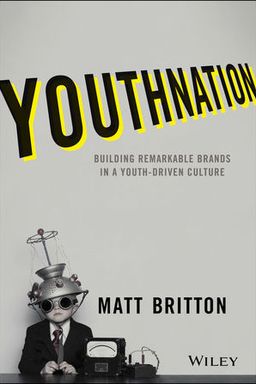
YouthNation cover

YouthNation

by Matt Britton

YouthNation by Matt Britton explores the transformative power of modern youth culture, offering strategies for businesses to thrive in a rapidly evolving landscape. Discover how to connect with a generation that values experiences, embraces the sharing economy, and uses social media to shape their world.

Building Remarkable Brands in a Youth-Driven Culture

What happens when youth culture stops being a fringe movement and becomes the guiding force of an entire economy? In YouthNation: Building Remarkable Brands in a Youth-Driven Culture, marketing expert Matt Britton argues that American society has entered an era where youth is not just an age group—it's a mindset, a worldview, and the dominant economic engine. Britton contends that to succeed in this “YouthNation,” brands, institutions, and even individuals must learn to think, act, and communicate with the agility, authenticity, and social fluency of young digital natives.

Britton’s central premise is that youth-driven disruption—fueled by technology, social media, and new cultural values—is reshaping everything from business models to personal identity. He believes traditional corporate structures and marketing systems built during the industrial age are collapsing under the pressure of digital immediacy and shifting priorities. Status no longer comes from possessions but from experiences; ownership has lost ground to access; and fame has been democratized through the rise of social influencers. YouthNation isn't about age—it’s about attitude, creativity, and connection.

From the Industrial Age to the Instagram Age

Britton traces the evolution of youth culture from the 1960s’ countercultural movements to today's hyperconnected social networks. He explains that modern youth grew up online—sharing, shaping, and remixing culture in real time. This generation doesn’t wait for gatekeepers or institutions to validate their ideas; they crowdsource everything from funding (Kickstarter) to housing (Airbnb) and transportation (Uber). As a result, power has shifted from corporations to users. Brands must now earn influence through participation rather than command it through advertising budgets.

The book explores how economic disruptions, particularly the 2008 financial crash, stripped away illusions of stability and made experience, creativity, and community the new currencies of success. Millennials—more correctly, “YouthNation”—have learned that owning stuff doesn’t equal happiness. They value flexibility, access to technology, and the freedom to create impact. For them, “forever young” isn't a slogan—it’s a strategy for surviving a fast-changing world.

Why Brands Must Think Like People

Britton argues that businesses can no longer be faceless corporations disconnected from their customers. To thrive, brands must behave like individuals—authentic, expressive, and human. He introduces the idea that “People Are Brands” and “Brands Are People,” where storytelling replaces advertising and dialogue replaces slogans. If a brand wants to be relevant, it must live within the newsfeed—where consumers spend their days scrolling through baby photos, memes, and moments of real life. Every business is now competing in the same space as its customers’ personal lives.

This book isn’t just about marketing tactics—it’s a manifesto for transformation. Britton invites readers to embrace the ethos of YouthNation: experimental, socially conscious, experience-obsessed, and perpetually innovative. He calls for marketers and leaders to empower young voices inside organizations, reimagine education through brand-driven learning, and learn the art of storytelling in the blink of a smartphone flick. Ultimately, YouthNation offers a blueprint for understanding a generation that has made creativity and global connectivity the ultimate status symbols.

Why It Matters to You

For anyone building a career, a company, or a movement, Britton’s insights matter because they reveal the cultural DNA of the future. The youth mentality—collaborative, fluid, and mobile—is spreading across generations. Even if you’re not young by age, adopting the principles of YouthNation makes you future-ready. Whether you lead a global brand or launch a startup, the challenge is the same: learn the language of real-time culture, create stories worth sharing, and participate authentically in the human conversation. Being relevant in YouthNation means being forever adaptive, relational, and creatively alive.


From Status Symbols to Experiences

Britton begins with a cultural shift that defines YouthNation: status is no longer about what you own—it’s about what you do. In prior generations, social standing came from material wealth—cars, jewelry, suburban homes. But millennials, shaped by the digital revolution and the 2008 recession, have redefined success around experiences. Festivals, travel, creativity, and shared moments have become the new luxury goods.

The Journey from Symbols to Updates

In ancient China, a cap signified maturity and prestige. In the 20th century, American youth learned to aspire to Maybachs and Louboutin heels. But by the 1990s, hip-hop democratized luxury. Artists like Run-DMC, Snoop Dogg, and Jay-Z turned material brands into cultural badges, making “cool” accessible to everyone. Yet after the financial meltdown, that gleam faded. Parents were losing homes while teens were flaunting designer sneakers—a disconnect that birthed a new awareness: maybe stuff wasn’t real status after all.

Experience as the New Luxury

Today’s youth collect memories, not merchandise. Festivals like Coachella, Burning Man, and the Electric Daisy Carnival epitomize this movement. Britton calls it the “experience economy”—a psychological shift toward living fully rather than accumulating things. Hashtags like #FOMO (Fear of Missing Out) and phenomena like “Did It For The Instagram” echo this obsession with experiences that can be both lived and shared online. For example, millennials now spend on pilgrimages to events and wild adventures because the story of being there holds social capital comparable to luxury goods.

From Consumer to Creator

Britton explains that social media turned everyone into a storyteller. When Coldplay asked fans to put away their phones at a concert, it revealed the tension between presence and performance—between living the experience and sharing it. This paradox defines modern life: experiences gain meaning through sharing, yet sharing can dilute authenticity. Despite that contradiction, the experience economy continues to grow across sectors—from fitness adventures like Tough Mudder to hybrid nightclub gastronomy at Tao and Marquee. The “thrill” has replaced the “thing.”

The Implications for Brands

For businesses, this means products must become experiences. Whole Foods transformed grocery shopping into a community event with greenhouse rooftops and local art displays. Fitness brands like SoulCycle reimagined exercise as emotional storytelling through music and lighting. The most successful companies now sell meaning, identity, and access—not just materials. In YouthNation, your story defines your value, and the memories you help create are worth more than the items you sell.


Access Over Ownership

Britton calls the next stage of the experience economy “Access Over Ownership.” YouthNation prefers renting, sharing, and streaming rather than buying. Uber and Airbnb are the emblematic disruptors. They removed the middlemen and allowed people to access convenience without the burdens of ownership. A house or car is no longer a dream—it’s an obstacle. Having the ability to move freely and connect instantly is the real measure of freedom.

The Airbnb and Uber Revolution

Brian Chesky and Joe Gebbia launched Airbnb by renting out air mattresses in their apartment—a small act that reshaped global hospitality. Today, Airbnb hosts more people nightly than most hotel chains. Uber did the same to transportation. By turning cars into rentable assets, founder Travis Kalanick empowered millions of drivers while offering frictionless mobility to consumers. This isn’t just a technology shift—it’s a mindset change. Ownership implies permanence; access celebrates freedom.

The “Uber of Everything” Mindset

Britton notes that startups now race to become the “Uber of Everything”—whether it’s Postmates for delivery, DogVacay for pet care, or Zeel for massages. Each uses mobile tech to match real-time supply and demand. This is the heart of the sharing economy: efficiency and personalization driven by data and trust. Ratings and reviews have become the new credit score, validating reputations instead of collateral.

Why Ownership Feels Outdated

In an era of student debt and transient lifestyles, millennials avoid long-term commitments. Homeownership has plunged 20%, and car ownership among youth is below its mid-century levels. Access models like Rent the Runway show how consumers now rent fashion for events rather than filling closets. The implication: products must be durable, shareable, and adaptable. Corporations will need to rethink their models to survive a generation that values experiences over possessions.


The Peer-to-Peer and Free Agency Revolution

In the past, income and identity were tied to stable jobs and institutions. Britton shows that YouthNation has flipped this logic. Work is project-based, decentralized, and deeply personal. The “peer-to-peer economy” and “free agency movement” empower individuals to trade goods, skills, and time directly without corporate intermediaries. Platforms like LinkedIn, TaskRabbit, and WeWork are the infrastructure of this new work order.

Decentralizing Work

Britton contrasts the unionized factories of Detroit—where staying with one employer for life once signaled success—with today’s world of freelancers. In 2014, 53 million Americans were freelancing, contributing $700 billion to the economy. Platforms like oDesk and Fiverr connect hyperspecialists to clients worldwide. A humor writer, graphic designer, or app coder can now piece together contracts instead of relying on corporate employment. Depth of skill trumps breadth of title.

Workspaces as Ecosystems

Collaborative workspaces like WeWork and tech incubators like TechStars reimagine offices as social hubs. These are ecosystems where freelancers can network, learn, and launch ventures together. Instead of corporate hierarchy, innovation thrives through community. Britton points to TechStars’ boot camps and funding programs as examples of how mentorship replaces management. Creativity becomes the new career currency.

Freedom and Flexibility as Values

Millennials want autonomy. They trade stability for flexibility and purpose. “Eat what you kill” describes the free agent mindset—an entrepreneurial survival ethic where personal accountability replaces job security. For corporations, this poses a challenge but also an opportunity: embracing intrapreneurship and allowing employees to pursue their passions within the structure. Britton’s own agency, MRY, nurtured creative rebels and funded spinoffs like CrowdTap, showing how freedom fuels innovation.


Lifehacking: Career Reinvented

For Britton, the concept of “lifehacking” embodies YouthNation’s approach to success: rewriting rules, bypassing bureaucracy, and designing life on your own terms. Lifehackers aren’t just freelancers—they’re explorers of purpose. He profiles several archetypes to show how personal passion and technology merge to create new lifestyles and businesses.

The Archetypes of Innovation

Britton identifies five types of lifehackers: The Passion Pilgrim (driven by love for craft, like YouTube filmmaker Devin Graham), The Explorer (adventurous nomads like Bear Grylls), The Automator (efficiency gurus like Tim Ferriss), The Octopus (networkers like Rohan Oza), and The Side Hustler (entrepreneurs like Sara Blakely who start billion-dollar ideas while holding day jobs). Each reinvents productivity through creativity and independence.

Education Reimagined

Britton criticizes traditional education for producing degree-holders who lack street smarts. Lifelong learning now happens online through MOOCs and platforms like Skillshare and CodeAcademy. Schools like General Assembly offer modular, hands-on courses in design and entrepreneurship for both students and executives. This is “brand-driven education”—companies sponsoring real-world, experiential learning to cultivate talent early, as MRY did with its RepNation program.

The Spirit of Summit

The book’s most inspiring example is Elliot Bisnow, founder of the Summit Series. What began as a ski trip for 19 entrepreneurs evolved into gatherings with presidents and global leaders, ultimately buying Powder Mountain to build a permanent community centered on innovation and purpose. Lifehackers like Bisnow show how passion projects can literally reshape the world.

In Britton’s view, the lifehacker ethos marks the end of the linear career path and the birth of fluid, purpose-driven living. For companies, this means hiring and inspiring creators, not just workers—and rewarding curiosity over conformity.


People Are Brands, and Brands Are People

Social media erased the boundary between individuals and corporations. Britton observes that everyone's competing for attention in the same newsfeed—whether you’re Nike or a neighbor posting vacation photos. To matter, people and brands alike must master storytelling and authenticity. Fame is no longer conferred from above; it’s built from connection and relatability.

The Democratization of Celebrity

Platforms like YouTube and Instagram have made stardom accessible. Influencers such as Michelle Phan built empires from bedroom tutorials, while creators like Billy Eichner and the team behind “Drunk History” turned viral web series into TV franchises. Britton’s interview with YouTube marketing VP Danielle Tiedt reveals that teens relate less to Hollywood stars and more to authentic personalities who speak their language. Relatability, not perfection, drives attention.

Influencer Marketing and Everyday Advocacy

Britton’s agency MRY applies this concept through initiatives like CrowdTap and Old Navy’s Style Council—platforms empowering everyday consumers to promote brands they love. “Every customer you have is an influencer,” he says. By lowering barriers to sharing and rewarding advocacy, companies can turn ordinary people into powerful ambassadors. Authentic engagement beats paid celebrity endorsements.

Personal Branding for All

Britton offers practical tips for building your personal brand: use consistent handles, create a clear value proposition, post regularly, and craft shareable content. Just as corporations have personas, individuals must define their narrative. Whether you’re a designer or entrepreneur, visibility and reputation—your “Q rating”—can accelerate careers. Fame is now a skill set.

The takeaway: identity and marketing have fused. To thrive in the age of social storytelling, you must become the brand of yourself.


Stories Worth Sharing: Content as Currency

Britton closes with a call to arms: storytelling is now the lifeblood of marketing. Advertising, once about persuasion, no longer works in the age of smartphones, where consumers check their devices 43 times a day. Instead of forcing attention, brands must earn it through emotional, visual, and shareable stories.

From Messaging to Meaning

Traditional ads boasted features—“350 horsepower,” “better absorption.” But YouthNation doesn’t care about specs; they care about how products make them feel. Britton distinguishes between advertising and content: advertising says “buy this,” while content asks “how can we add value to your life?” Successful brands create content that satisfies unmet needs, sparks emotion, or fulfills identity—what BuzzFeed VP Jonathan Perelman calls “the art and science of sharing.”

Five Mantras of Modern Storytelling

  • Create an inspiring story: Pencils of Promise began when its founder met a boy who simply wanted a pencil—proof that purpose beats profit.
  • Go deep: Red Bull owns “extreme energy” by turning ideas like Flugtag and Stratos into cinematic events.
  • Be human: Dollar Shave Club broke through with humor and authenticity, driving $120,000 in sales in two days from a single YouTube video.
  • Inspire action: Visa’s “Go in Six” campaign encouraged consumers with six-word or six-second visual challenges, blending brevity with thrill.
  • Be inclusive: Starbucks’ “Meet Me at Starbucks” campaign used global footage and user stories to connect across cultures.

The Flick Economy

YouthNation lives “in the flick”—where content lives or dies in the second it takes to swipe a screen. Emojis, tags, and ephemeral messages like Snapchat introduce new forms of storytelling, emphasizing impermanence and emotion. Stories must be visually arresting and instantly meaningful. They are shared not because of budgets but because they resonate, amuse, or inspire.

Britton’s final lesson is clear: in a world where everyone is a publisher and every feed is a stage, the only sustainable way to thrive is to tell a story worth sharing.

Dig Deeper

Get personalized prompts to apply these lessons to your life and deepen your understanding.

Go Deeper

Get the Full Experience

Download Insight Books for AI-powered reflections, quizzes, and more.