
Idea 1
Reclaiming Money as Life Energy
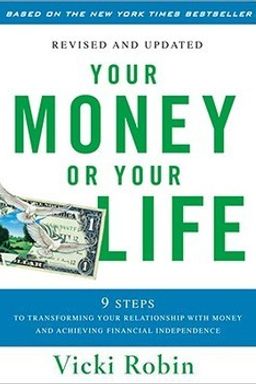
What if every dollar you spent represented a piece of your life? In Your Money or Your Life, Joe Dominguez and Vicki Robin propose a radical reframe: money is not paper, digits, or a marker of success—it is life energy, the time and effort you trade for income. By linking each financial decision to hours of your life, they show how you can achieve clarity, integrity, and ultimately, independence. This book offers a nine-step practical program to transform your relationship with money from fear and confusion to freedom and fulfillment.
Money as a Reflection of Life
When you earn a salary, you are exchanging finite life-hours for dollars. When you spend, you are trading those hours away. Seeing money this way grounds your choices in reality: a $20 purchase might cost two hours of your time when you count taxes, commutes, and decompression. This awareness helps you discern what truly matters and what wastes life energy. Joe Dominguez applied this thinking personally: by calculating his real wage, curbing unnecessary expenses, and aligning work with purpose, he left Wall Street at 31 to live on passive income—the first visible proof of his philosophy.
Introducing FI Thinking
The method rests on three pillars: Financial Intelligence (understanding money’s flow), Financial Integrity (aligning money choices with values), and Financial Independence (building freedom from compulsory work). This triad reframes wealth not as endless accumulation but as “enough”—a condition of sufficiency and peace. FI Thinking is not about budgeting spreadsheets; it’s about consciousness, purpose, and self-respect. As you develop factual awareness of how money enters and leaves your life, emotions like guilt, envy, and anxiety begin to dissolve.
The Nine Steps to Transformation
The program moves sequentially but can be revisited often. You start by calculating everything you’ve earned and what remains (Step 1: Make Peace with the Past). Then, you track your life energy through real hourly wage and daily logs (Step 2), convert transactions into categories (Step 3), and identify fulfillment and value alignment (Step 4). Visualization tools like the Wall Chart (Step 5) transform numbers into momentum. Later steps push you to separate life purpose from employment (Step 6), maximize income ethically (Step 7), reach the financial crossover point (Step 8), and invest conservatively for independence (Step 9). Each step integrates practical math with deep introspection.
Enough, Frugality, and the New Road Map
At its heart, this method cultivates frugality not as deprivation but freedom—the art of maximizing joy per unit of life energy. “Enough” lies at the peak of the Fulfillment Curve: after a certain point, more spending yields less joy. Living frugally allows you to buy fewer things and live fuller days. Examples fill the book: the Leniches erased $52,000 of debt by tracking and simplifying; Diane G., a programmer, cut monthly expenses by two-thirds while reclaiming creative life goals. The “new road map” replaces consumer culture’s race for more with a clear, joyful vision of sufficiency and harmony with planet and community.
Beyond Financial Independence
Achieving Financial Independence marks the midpoint, not the ending. Once your investment income exceeds expenses, you can live from choice—teaching, volunteering, creating, or resting. Dominguez and Robin depict life after FI as filled with purpose: Ron launches a philanthropic tea business, the Dacyczyn family uses thrift to support creativity, and Vicki herself reconnects to the land through local food sourcing (shared in her later book Blessing the Hands That Feed Us). The essence is autonomy—channeling the freedom you’ve earned toward actions that matter deeply to you and your community.
Core Proposition
When you stop seeing money as an external force and start seeing it as your life energy, every financial act becomes ethical, ecological, and personal. You cease working for money—you let money work for what matters in your life.
The book’s radical gift is an integrated framework for freedom: awareness, alignment, and action. By redefining money as energy, work as choice, and frugality as joy, you reclaim not only financial control but your time—the substance of your life.