
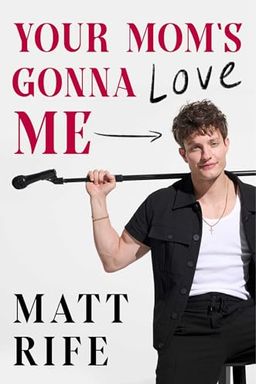
Your Mom's Gonna Love Me cover

Your Mom's Gonna Love Me

by Matt Rife

The comedian portrays moments from his life and career.

From Outsider To Sold-Out: Humor As A Lifeline

What do you do with the parts of your life that feel too painful, weird, or unfair to carry? In "Your Mom’s Gonna Love Me," comedian Matt Rife argues you turn them into power. He contends that comedy—especially the kind you earn in hostile rooms, on cheap couches, and through public missteps—can alchemize trauma, insecurity, and rejection into connection and career. But to do that, you have to understand the craft beneath spontaneity, the discipline beneath brashness, and the community beneath the lone-mic myth.

Rife’s throughline is simple and sharp: a chip on your shoulder can either sink you or steer you. His memoir-travelogue charts how a skinny, late-blooming kid with gap teeth from North Lewisburg, Ohio, turned family instability and small-town claustrophobia into a relentless pursuit of stage time. You’ll see how a grandfather’s rough-and-ready love created a safe harbor and a comedic compass; how Atlanta’s toughest rooms and MTV’s Wild ’N Out formed a crucible; how quitting a lucrative TV reboot protected his creative soul; and how a pandemic alleyway show rebuilt not only his act but his mental health. Finally, you’ll see how viral crowd work—Lazy Hero, MILF & Cookies—launched an arena-selling tour, and how he navigated the backlash from his Netflix hour without abandoning his voice.

Why This Story Matters Now

The book doubles as a field manual for modern creativity. Rife makes the case that the artist’s path has changed: you don’t wait for gatekeepers; you build your reps in any room that will have you, you document ruthlessly, and you learn to make social platforms your distribution without letting them become your director. He’s explicit that virality is an accelerant, not a plan. What counts is the years of unglamorous work behind the clips: the Funny Bone open mics at 15, Uptown Comedy Corner’s dreaded car keys, Laugh Factory lobby nights, and pandemic pop-up shows under helicopters and shade tarps.

The Memoir’s Core Claims

  • Humor is a survival skill first, a business second. Rife learned to roast and be roasted by his Black childhood friends in Ohio, turning insecurity (late puberty, tiny teeth) into social currency. That sensibility—self-deprecation first, equal-opportunity jabs second—anchors his act later (compare to Trevor Noah’s "Born a Crime" for how humor reframes outsider status).
  • Contrarian choices protect your voice. He leaves Wild ’N Out after four seasons rather than calcify as the "token white guy," and he quits TRL while wearing a referee shirt between two Vine-inflatable Sumo suits—because money without meaning kills craft.
  • Crafted spontaneity wins the internet. Crowd work isn’t winging it; it’s engineering reveals in real time. "Lazy Hero" (the ER boyfriend vs. baggage-claim girlfriend) and "MILF & Cookies" (grandma Christina’s squeaky implants) worked because he listened, reframed, escalated, and closed—as deliberately as a written bit (think Steve Martin’s structure in "Born Standing Up").
  • Community is the antidote to collapse. When lockdown triggered panic attacks and depression, Rife and pal Paul Elia built "Lowkey Outside," a guerrilla alleyway show that restored craft, connection, and control.

What You’ll Learn In This Summary

We’ll trace the early-making of a comic: Papaw Steve’s weekend rescues, a seventh-grade talent show, and the first real clubs that introduced stakes (and stage fright). Then we’ll enter the apprenticeship furnace: Uptown Comedy Corner’s brutal rooms, Gary Abdo’s dojo drills (dodging thrown tennis balls), and Wild ’N Out’s gladiator format that taught Rife to stand tall and think fast. We’ll walk the LA grind: sleeping on couches, bus rides with seat-pee, Erik Griffin’s tough love, and a near detour into life as a Ralphs bagger. We’ll see how a single clip transformed his fortunes—and why it worked. We’ll analyze the Netflix controversy and Rife’s refusal to bend his voice for WitchTok. Finally, we’ll sit with the costs of speed and scale—insomnia, trust, grief—and the practices he uses to stay human.

Big Idea

In Rife’s world, "never say never" isn’t a bumper sticker; it’s a workflow: say yes to the hard rooms, say no to the shiny distractions, build with your people, record everything, edit like a pro, and let the internet find what the work has already earned.

The result is a coming-of-age-in-public that’s blunt, profane, and unexpectedly tender—especially when Grandpa Steve enters the frame. Whether you’re a creator, a fan, or just someone trying to convert hard things into forward motion, Rife’s story offers a frank blueprint: put your chip to work.


From Outsider To Sold-Out: Humor As A Lifeline

What do you do with the parts of your life that feel too painful, weird, or unfair to carry? In "Your Mom’s Gonna Love Me," comedian Matt Rife argues you turn them into power. He contends that comedy—especially the kind you earn in hostile rooms, on cheap couches, and through public missteps—can alchemize trauma, insecurity, and rejection into connection and career. But to do that, you have to understand the craft beneath spontaneity, the discipline beneath brashness, and the community beneath the lone-mic myth.

Rife’s throughline is simple and sharp: a chip on your shoulder can either sink you or steer you. His memoir-travelogue charts how a skinny, late-blooming kid with gap teeth from North Lewisburg, Ohio, turned family instability and small-town claustrophobia into a relentless pursuit of stage time. You’ll see how a grandfather’s rough-and-ready love created a safe harbor and a comedic compass; how Atlanta’s toughest rooms and MTV’s Wild ’N Out formed a crucible; how quitting a lucrative TV reboot protected his creative soul; and how a pandemic alleyway show rebuilt not only his act but his mental health. Finally, you’ll see how viral crowd work—Lazy Hero, MILF & Cookies—launched an arena-selling tour, and how he navigated the backlash from his Netflix hour without abandoning his voice.

Why This Story Matters Now

The book doubles as a field manual for modern creativity. Rife makes the case that the artist’s path has changed: you don’t wait for gatekeepers; you build your reps in any room that will have you, you document ruthlessly, and you learn to make social platforms your distribution without letting them become your director. He’s explicit that virality is an accelerant, not a plan. What counts is the years of unglamorous work behind the clips: the Funny Bone open mics at 15, Uptown Comedy Corner’s dreaded car keys, Laugh Factory lobby nights, and pandemic pop-up shows under helicopters and shade tarps.

The Memoir’s Core Claims

  • Humor is a survival skill first, a business second. Rife learned to roast and be roasted by his Black childhood friends in Ohio, turning insecurity (late puberty, tiny teeth) into social currency. That sensibility—self-deprecation first, equal-opportunity jabs second—anchors his act later (compare to Trevor Noah’s "Born a Crime" for how humor reframes outsider status).
  • Contrarian choices protect your voice. He leaves Wild ’N Out after four seasons rather than calcify as the "token white guy," and he quits TRL while wearing a referee shirt between two Vine-inflatable Sumo suits—because money without meaning kills craft.
  • Crafted spontaneity wins the internet. Crowd work isn’t winging it; it’s engineering reveals in real time. "Lazy Hero" (the ER boyfriend vs. baggage-claim girlfriend) and "MILF & Cookies" (grandma Christina’s squeaky implants) worked because he listened, reframed, escalated, and closed—as deliberately as a written bit (think Steve Martin’s structure in "Born Standing Up").
  • Community is the antidote to collapse. When lockdown triggered panic attacks and depression, Rife and pal Paul Elia built "Lowkey Outside," a guerrilla alleyway show that restored craft, connection, and control.

What You’ll Learn In This Summary

We’ll trace the early-making of a comic: Papaw Steve’s weekend rescues, a seventh-grade talent show, and the first real clubs that introduced stakes (and stage fright). Then we’ll enter the apprenticeship furnace: Uptown Comedy Corner’s brutal rooms, Gary Abdo’s dojo drills (dodging thrown tennis balls), and Wild ’N Out’s gladiator format that taught Rife to stand tall and think fast. We’ll walk the LA grind: sleeping on couches, bus rides with seat-pee, Erik Griffin’s tough love, and a near detour into life as a Ralphs bagger. We’ll see how a single clip transformed his fortunes—and why it worked. We’ll analyze the Netflix controversy and Rife’s refusal to bend his voice for WitchTok. Finally, we’ll sit with the costs of speed and scale—insomnia, trust, grief—and the practices he uses to stay human.

Big Idea

In Rife’s world, "never say never" isn’t a bumper sticker; it’s a workflow: say yes to the hard rooms, say no to the shiny distractions, build with your people, record everything, edit like a pro, and let the internet find what the work has already earned.

The result is a coming-of-age-in-public that’s blunt, profane, and unexpectedly tender—especially when Grandpa Steve enters the frame. Whether you’re a creator, a fan, or just someone trying to convert hard things into forward motion, Rife’s story offers a frank blueprint: put your chip to work.


Papaw, Pain, And A Comic Blueprint

Rife’s origin story is equal parts small-town claustrophobia and one-man rescue mission named Steve. Growing up in North Lewisburg, Ohio—"the Alabama of the North," as he calls it—he was younger than his classmates, painfully skinny, and stuck with teeth he jokes could’ve earned him the nickname METHew. His biological father died by suicide when Rife was a year old; his mother remarried a man he dubs simply "That Asshole," a Bud Light–pounding NASCAR devotee who turned the living room into a minefield. That’s the soil his comedy grew out of: a survival reflex masquerading as a punchline.

The Rescue: Grandpa Steve

Enter Papaw—Grandpa Steve—tile-layer, long-haired seventies rock fan, and the world’s most inappropriate babysitter in the best way. Their bonding canon: Bad Santa, Adam Sandler, Ernest movies, and an unbroken chain of weekend pickups. He drove 45 minutes every Friday, ferried Matt to his one-bedroom near Columbus, and gave him something better than safety: a sense that laughing at what hurts can defang it. If you’ve read Kevin Hart’s "I Can’t Make This Up," you’ll recognize the pattern: an imperfect elder who becomes the moral weather system of the book.

Papaw wasn’t a Hallmark saint. He was deeply bitter post-divorce, covered his furniture in plastic, and nursed grudges like pets. But he showed up. He taught work ethic by example, hauling sheetrock through Ohio winters and cutting tile in near-freezing air. He also taught Rife his first great comic principle: take the edge off reality by calling it what it is. Their shared bit from Bad Santa—"I’m on my fuckin’ lunch break"—wasn’t just a line; it was permission to say the quiet part out loud.

Roasts As A Love Language

Rife’s closest friends growing up were Black neighbors—Brendyn, Derick, and Devin—who schooled him in the most durable skill of his career: the affectionate roast. When Brendyn joked, "You’re the only person I know who can chew without opening your mouth," he weaponized Matt’s insecurity (those teeth) into joy. That dynamic—trust first, jab second—later powers Rife’s crowd work. If the crowd feels you’re on their side, they’ll give you rope to play. If they don’t, you’re dead (see: his first panic-attack freeze on Wild ’N Out).

The First Stage: A Gym Floor

Seventh-grade homeroom becomes his beta lab. After bombing with a "lost contact—while wearing glasses" bit, he jumps at a school talent show and does something smarter than telling knock-knock jokes: he interacts. He lightly roasts the principal (Peter Griffin lookalike), pulls a popular girl up to do the worm, and sets the muscle memory he’ll later cash in online: build trust quickly, make the room a collaborator, exit before you overstay.

Permission To Be Different

Late puberty becomes a motif, both comic and existential. Even now, he jokes his mustache is "aspirational." But the lesson is durable for you: when you identify as an "ugly person" who learned to be liked for laughs, you stop chasing approval through conformity. That frees you to oscillate across cliques (jocks to nerds) and, later, across rooms (urban clubs to TV sets) without begging to be let in. Dave Chappelle talks about "inner freedom" as a comic’s true asset; Rife’s arrives because his body didn’t give him conventional options. Humor had to.

Key Takeaway

You can’t outrun origin pain, but you can metabolize it. Rife’s template: find a person who shows up (Papaw), a practice that converts pain to play (roasting), and a room—however small—that lets you test being bold (a gym floor counts).

When Papaw later dies just two weeks before Rife films his second self-produced special, the tribute is perfectly on brand: he pours Papaw’s "ashes" from a pocket pussy onstage (kitty litter, of course). Vulgar? Sure. But it’s also a thesis: if you can laugh with love at what would sink most people, you’ve found a lifeline you can hand to others.


Papaw, Pain, And A Comic Blueprint

Rife’s origin story is equal parts small-town claustrophobia and one-man rescue mission named Steve. Growing up in North Lewisburg, Ohio—"the Alabama of the North," as he calls it—he was younger than his classmates, painfully skinny, and stuck with teeth he jokes could’ve earned him the nickname METHew. His biological father died by suicide when Rife was a year old; his mother remarried a man he dubs simply "That Asshole," a Bud Light–pounding NASCAR devotee who turned the living room into a minefield. That’s the soil his comedy grew out of: a survival reflex masquerading as a punchline.

The Rescue: Grandpa Steve

Enter Papaw—Grandpa Steve—tile-layer, long-haired seventies rock fan, and the world’s most inappropriate babysitter in the best way. Their bonding canon: Bad Santa, Adam Sandler, Ernest movies, and an unbroken chain of weekend pickups. He drove 45 minutes every Friday, ferried Matt to his one-bedroom near Columbus, and gave him something better than safety: a sense that laughing at what hurts can defang it. If you’ve read Kevin Hart’s "I Can’t Make This Up," you’ll recognize the pattern: an imperfect elder who becomes the moral weather system of the book.

Papaw wasn’t a Hallmark saint. He was deeply bitter post-divorce, covered his furniture in plastic, and nursed grudges like pets. But he showed up. He taught work ethic by example, hauling sheetrock through Ohio winters and cutting tile in near-freezing air. He also taught Rife his first great comic principle: take the edge off reality by calling it what it is. Their shared bit from Bad Santa—"I’m on my fuckin’ lunch break"—wasn’t just a line; it was permission to say the quiet part out loud.

Roasts As A Love Language

Rife’s closest friends growing up were Black neighbors—Brendyn, Derick, and Devin—who schooled him in the most durable skill of his career: the affectionate roast. When Brendyn joked, "You’re the only person I know who can chew without opening your mouth," he weaponized Matt’s insecurity (those teeth) into joy. That dynamic—trust first, jab second—later powers Rife’s crowd work. If the crowd feels you’re on their side, they’ll give you rope to play. If they don’t, you’re dead (see: his first panic-attack freeze on Wild ’N Out).

The First Stage: A Gym Floor

Seventh-grade homeroom becomes his beta lab. After bombing with a "lost contact—while wearing glasses" bit, he jumps at a school talent show and does something smarter than telling knock-knock jokes: he interacts. He lightly roasts the principal (Peter Griffin lookalike), pulls a popular girl up to do the worm, and sets the muscle memory he’ll later cash in online: build trust quickly, make the room a collaborator, exit before you overstay.

Permission To Be Different

Late puberty becomes a motif, both comic and existential. Even now, he jokes his mustache is "aspirational." But the lesson is durable for you: when you identify as an "ugly person" who learned to be liked for laughs, you stop chasing approval through conformity. That frees you to oscillate across cliques (jocks to nerds) and, later, across rooms (urban clubs to TV sets) without begging to be let in. Dave Chappelle talks about "inner freedom" as a comic’s true asset; Rife’s arrives because his body didn’t give him conventional options. Humor had to.

Key Takeaway

You can’t outrun origin pain, but you can metabolize it. Rife’s template: find a person who shows up (Papaw), a practice that converts pain to play (roasting), and a room—however small—that lets you test being bold (a gym floor counts).

When Papaw later dies just two weeks before Rife films his second self-produced special, the tribute is perfectly on brand: he pours Papaw’s "ashes" from a pocket pussy onstage (kitty litter, of course). Vulgar? Sure. But it’s also a thesis: if you can laugh with love at what would sink most people, you’ve found a lifeline you can hand to others.


Open Mics, Atlanta, And A Gauntlet

The apprenticeship phase—what Steve Martin would call the "cruelty of stand-up" in "Born Standing Up"—is where Rife earns his stripes. At fifteen, he emails the Columbus Funny Bone, promises not to drink, and shows up with Papaw, who literally buys five tickets himself so the kid can meet the bringer quota. Backstage is a cold-shoulder clinic; onstage, Matt nearly soils himself and freezes mid-set… until a stranger yells, "You got it! Take your time!" That grace note cements a belief that becomes central to his crowd work later: most people want you to win, if you let them.

DMs That Change A Life

Twitter—back when it felt like a chat room—unlocks mentors. He tweets D.L. Hughley about the comic’s five-second cameo in "Soul Plane" and gets a guest set at the Funny Bone. Then Atlanta club owner Gary Abdo—scouting on social—invites Rife to spend a summer at Uptown Comedy Corner. It’s an "urban" room (read: Black audiences who aren’t here for your fear), home to Chris Tucker and Chappelle. The rules are different: if you bomb hard enough, the crowd jingles car keys to usher you off. Rife bombs, flies home crushed, then bargains for one more shot at Gary’s festival. He rewrites with Gary’s coaching—"comedy comes in threes," use misdirection—and crushes. The lesson is portable: rooms are cultures; earn fluency.

The Dojo: Gary’s Tennis Balls

Gary becomes his Mr. Miyagi. Actual drill: perform a full set to an empty room—"embrace the silence"—while Gary pegs tennis balls at him so he learns to react on the fly. It’s ridiculous and brilliant. Any creator can transpose this: task-switching under fire is a skill, not a vibe. If you can’t keep your pacing when life throws balls at your face, the first heckler (or algorithm) will fold you.

Atlanta Education: Culture, Hustle, Boundaries

Atlanta also initiates him into touring’s underbelly. He hawks free tickets at Lenox Square mall (learning that "free" can be the most annoying price), sleeps on a comic’s couch whose boyfriend goes to jail mid-summer, and gets an extended earful of post-parole make-up sex his last weeks there. More importantly, he learns how to open an all-Black room as a white teenage beanpole: use self-deprecation (Justin Bieber "Baby" dance), demonstrate cultural fluency (a Boyz n the Hood quote), or go heartfelt and honest. What he refuses to do: pander. The audience can smell it.

Wild ’N Out: Standing Tall

Matt’s first Wild ’N Out audition fizzles. Two years later, he nearly flames out again… until executive producer Nile Evans drags him in front of the cast and bellows, "Get your fuckin’ hands out of your pockets and stand up straight like a man!" It’s performative masculinity as stagecraft: posture signals permission. In his first episode, he freezes, hands go corpse-cold—first real anxiety attack—then rebounds in a second taping, locks in, and spars with D.C. Young Fly ("I think the scar on your face is from Nick Cannon’s nuts"). That back-and-forth becomes a muscle he’ll flex in clubs: rapid reframes, status flips, and undeniable tags.

Apprenticeship Principles

1) Ask anyway. A respectful DM can open doors mentors didn’t know they wanted to open. 2) Train harder than the room demands. If you can withstand tennis balls in silence, you can survive a bachelorette party in Phoenix. 3) Posture is content. Shoulders back, hands visible, eyes up—these aren’t cosmetics; they’re consent contracts with the crowd.

Rife leaves Wild ’N Out after four seasons, wary of becoming only "the White Guy" who gets laughs for tax jokes and two-steps. The exit isn’t petulance; it’s a bet that identity bits without growth calcify. If you’ve followed other comedians who left cushy gigs to re-find their edge (see: John Mulaney post-SNL, Ali Wong post–first special), you’ll recognize the courage.


Open Mics, Atlanta, And A Gauntlet

The apprenticeship phase—what Steve Martin would call the "cruelty of stand-up" in "Born Standing Up"—is where Rife earns his stripes. At fifteen, he emails the Columbus Funny Bone, promises not to drink, and shows up with Papaw, who literally buys five tickets himself so the kid can meet the bringer quota. Backstage is a cold-shoulder clinic; onstage, Matt nearly soils himself and freezes mid-set… until a stranger yells, "You got it! Take your time!" That grace note cements a belief that becomes central to his crowd work later: most people want you to win, if you let them.

DMs That Change A Life

Twitter—back when it felt like a chat room—unlocks mentors. He tweets D.L. Hughley about the comic’s five-second cameo in "Soul Plane" and gets a guest set at the Funny Bone. Then Atlanta club owner Gary Abdo—scouting on social—invites Rife to spend a summer at Uptown Comedy Corner. It’s an "urban" room (read: Black audiences who aren’t here for your fear), home to Chris Tucker and Chappelle. The rules are different: if you bomb hard enough, the crowd jingles car keys to usher you off. Rife bombs, flies home crushed, then bargains for one more shot at Gary’s festival. He rewrites with Gary’s coaching—"comedy comes in threes," use misdirection—and crushes. The lesson is portable: rooms are cultures; earn fluency.

The Dojo: Gary’s Tennis Balls

Gary becomes his Mr. Miyagi. Actual drill: perform a full set to an empty room—"embrace the silence"—while Gary pegs tennis balls at him so he learns to react on the fly. It’s ridiculous and brilliant. Any creator can transpose this: task-switching under fire is a skill, not a vibe. If you can’t keep your pacing when life throws balls at your face, the first heckler (or algorithm) will fold you.

Atlanta Education: Culture, Hustle, Boundaries

Atlanta also initiates him into touring’s underbelly. He hawks free tickets at Lenox Square mall (learning that "free" can be the most annoying price), sleeps on a comic’s couch whose boyfriend goes to jail mid-summer, and gets an extended earful of post-parole make-up sex his last weeks there. More importantly, he learns how to open an all-Black room as a white teenage beanpole: use self-deprecation (Justin Bieber "Baby" dance), demonstrate cultural fluency (a Boyz n the Hood quote), or go heartfelt and honest. What he refuses to do: pander. The audience can smell it.

Wild ’N Out: Standing Tall

Matt’s first Wild ’N Out audition fizzles. Two years later, he nearly flames out again… until executive producer Nile Evans drags him in front of the cast and bellows, "Get your fuckin’ hands out of your pockets and stand up straight like a man!" It’s performative masculinity as stagecraft: posture signals permission. In his first episode, he freezes, hands go corpse-cold—first real anxiety attack—then rebounds in a second taping, locks in, and spars with D.C. Young Fly ("I think the scar on your face is from Nick Cannon’s nuts"). That back-and-forth becomes a muscle he’ll flex in clubs: rapid reframes, status flips, and undeniable tags.

Apprenticeship Principles

1) Ask anyway. A respectful DM can open doors mentors didn’t know they wanted to open. 2) Train harder than the room demands. If you can withstand tennis balls in silence, you can survive a bachelorette party in Phoenix. 3) Posture is content. Shoulders back, hands visible, eyes up—these aren’t cosmetics; they’re consent contracts with the crowd.

Rife leaves Wild ’N Out after four seasons, wary of becoming only "the White Guy" who gets laughs for tax jokes and two-steps. The exit isn’t petulance; it’s a bet that identity bits without growth calcify. If you’ve followed other comedians who left cushy gigs to re-find their edge (see: John Mulaney post-SNL, Ali Wong post–first special), you’ll recognize the courage.


LA Grind, Detours, And Saying No

Los Angeles arrives like a mirage and smells like bus urine. Rife lands at seventeen, crashes on comedian Erik Griffin’s couch, and learns two simultaneous truths: the Laugh Factory lobby is warmer than most stages, and seasoned comics will help you if you respect the room’s pecking order. Erik introduces him to the club, but also sits him down over lunch to say, "You’re not funny yet." It’s not cruelty; it’s calibration. (In "Sick in the Head," Judd Apatow catalogs similar straight-talk moments that either make you quit or recommit.)

Couches, Crunch, And Craft

Rife scrounges stage time by simply showing up nightly until a scheduled comic flakes; manager Christina Shams—one of the book’s quiet heroes—gives him the nod. He befriends Dane Cook, who lets him tag along to Crunch in West Hollywood (a gym so legendarily gay he refuses to enter the locker room). The point isn’t glamour; it’s routine. Crush core work, do pull-ups, then hit mics. If you want a metaphor: build the body you’ll need for a career that won’t slow down to let you heal.

The Almost Bag Boy

By 2015, two years in, money’s scarce. A manager at the notorious "Rockin’ Ralphs" on Sunset offers him a bagging job right at the checkout lane. He accepts training. Days before he starts, Wild ’N Out calls back with a cast slot. He cancels Ralphs; the manager shrugs, "It’ll always be here." That shrug haunts the chapter; retail is a dignified path, but it’s also a powerful counterfactual: without one call, the memoir becomes "Requiem of a Hollywood Bag Boy."

TRL And The Power Of Quitting

Post–Wild ’N Out, MTV taps him to co-host a rebooted TRL in Times Square. He is promised writing, sketches, and play. Four months later, he’s in a ref jersey adjudicating a Vine Sumo match between influencers, twelve-hour days are killing his stand-up rhythm, and he feels professionally full but artistically empty. He quits the next day. Money isn’t meaning—a lesson many creators learn too late. The quit costs him heat in the short term and returns dividends later when fans sense he’s not in this to be famous-for-anything.

Zendaya, Tokenism, And Limits

His Wild ’N Out moment with Zendaya—he touches her chin in a "Talking Spit" bit and the internet loses it—foreshadows a career-long tension: how much heat will he take for refusing to file down his choices for the internet? He neither gloats nor grovels in the book; he names the clip’s surreal afterlife (26M+ YouTube views) and moves on. What does bother him is ceilinged growth: on Wild ’N Out, anything clever that wasn’t "white" got cut. He leaves to write past the stereotype.

Working Principles From The Grind

1) Be present until luck recognizes you. The lobby hang is a job. 2) Borrow routines while you build your own. Crunch with Dane becomes a proxy for daily discipline. 3) Quit the wrong platform fast. Sunk costs are lies; craft is the asset you’re protecting.

LA’s most cinematic beat is also the most human: on Christmas in LA, he flies Papaw out, introduces him to Netflix and Santa Monica Pier, and cooks a midwestern feast. That family interlude, bracketed by quitting TRL and near-broke flights to New York comedy basements, underscores the recurring stance: your people are the point. Fame is noise.


LA Grind, Detours, And Saying No

Los Angeles arrives like a mirage and smells like bus urine. Rife lands at seventeen, crashes on comedian Erik Griffin’s couch, and learns two simultaneous truths: the Laugh Factory lobby is warmer than most stages, and seasoned comics will help you if you respect the room’s pecking order. Erik introduces him to the club, but also sits him down over lunch to say, "You’re not funny yet." It’s not cruelty; it’s calibration. (In "Sick in the Head," Judd Apatow catalogs similar straight-talk moments that either make you quit or recommit.)

Couches, Crunch, And Craft

Rife scrounges stage time by simply showing up nightly until a scheduled comic flakes; manager Christina Shams—one of the book’s quiet heroes—gives him the nod. He befriends Dane Cook, who lets him tag along to Crunch in West Hollywood (a gym so legendarily gay he refuses to enter the locker room). The point isn’t glamour; it’s routine. Crush core work, do pull-ups, then hit mics. If you want a metaphor: build the body you’ll need for a career that won’t slow down to let you heal.

The Almost Bag Boy

By 2015, two years in, money’s scarce. A manager at the notorious "Rockin’ Ralphs" on Sunset offers him a bagging job right at the checkout lane. He accepts training. Days before he starts, Wild ’N Out calls back with a cast slot. He cancels Ralphs; the manager shrugs, "It’ll always be here." That shrug haunts the chapter; retail is a dignified path, but it’s also a powerful counterfactual: without one call, the memoir becomes "Requiem of a Hollywood Bag Boy."

TRL And The Power Of Quitting

Post–Wild ’N Out, MTV taps him to co-host a rebooted TRL in Times Square. He is promised writing, sketches, and play. Four months later, he’s in a ref jersey adjudicating a Vine Sumo match between influencers, twelve-hour days are killing his stand-up rhythm, and he feels professionally full but artistically empty. He quits the next day. Money isn’t meaning—a lesson many creators learn too late. The quit costs him heat in the short term and returns dividends later when fans sense he’s not in this to be famous-for-anything.

Zendaya, Tokenism, And Limits

His Wild ’N Out moment with Zendaya—he touches her chin in a "Talking Spit" bit and the internet loses it—foreshadows a career-long tension: how much heat will he take for refusing to file down his choices for the internet? He neither gloats nor grovels in the book; he names the clip’s surreal afterlife (26M+ YouTube views) and moves on. What does bother him is ceilinged growth: on Wild ’N Out, anything clever that wasn’t "white" got cut. He leaves to write past the stereotype.

Working Principles From The Grind

1) Be present until luck recognizes you. The lobby hang is a job. 2) Borrow routines while you build your own. Crunch with Dane becomes a proxy for daily discipline. 3) Quit the wrong platform fast. Sunk costs are lies; craft is the asset you’re protecting.

LA’s most cinematic beat is also the most human: on Christmas in LA, he flies Papaw out, introduces him to Netflix and Santa Monica Pier, and cooks a midwestern feast. That family interlude, bracketed by quitting TRL and near-broke flights to New York comedy basements, underscores the recurring stance: your people are the point. Fame is noise.


Panic, A Dumpster, And Rebuilding Craft

When COVID shutters clubs, Rife’s life goes silent—and loud. Silent, because Zoom "shows" with seven college kids on mute are graveyards. Loud, because panic attacks seize his body at night—chest pain, airless throat, a racing heart—while daytime depression makes even video games feel like chores. Doctors offer platitudes or pills. He needs a stage, not a sedative.

Lowkey Outside: Comedy In A Back Alley

One afternoon, taking out the trash, he measures his apartment alley with his shoe (twelve-ish inches… give or take). He and friend Paul Elia negotiate with a neighbor (a legendary shakedown artist) for a parking spot rental, rent a U-Haul as a stage, borrow chairs from a perennially late party-rental company, and tape DIY waivers that amount to a pinky-swear of liability. They take temps at the door, space seats "six shoes" apart, and pray the cops don’t shut it down. A patrol rolls in on show one—for a domestic dispute upstairs—and leaves them alone. The show lives.

Embracing Silence, Owning Chaos

Gary’s tennis-ball drills pay off. Lowkey Outside is a masterclass in controlling variables you didn’t invite: helicopters overhead, oppressive heat (they eventually rent a fifteen-foot shade screen), and rain (solved via a morally gray run to Home Depot for tent returns—"Doers get more done"). Comics like Taylor Tomlinson, Iliza Shlesinger, Tom Segura, Jeff Ross, and Bill Burr swing through; The Tonight Show tapes a set there. What the crowd sees is grit and novelty; what Rife experiences is return: timing recalibrated, risk appetite restored, and a feeling of being useful again.

A Community Rebuilt

The show scales: from alley to driveway to parking lots. Four hundred people, a friend’s pickup as a stage, and a logo born from a photo of him and Paul in that truck. Crucially, the vibe is not "look at me" but "look what we can do together." If you’re a creator, steal this play: in a crisis, build for the people in front of you first. The internet is a side effect of a room that works in real life.

The Creative Dividend

Out of this period comes his first self-produced hour, "Only Fans" (crowdfunded to $25K and shot well enough to live on YouTube next to Netflix polish). The title is a wink and an ethos: make for the people already with you. He also finds a new habit loop—shoot every set, cut smartly (friend Elton shows him Adobe Premiere), and post only what the bit earns. No schtick-chasing; just honest tape.

Mental Health, Practically

Rife never sermonizes; he demonstrates. For him, the antidote to spirals is agency: build a show, negotiate a neighbor, move a dumpster, invite peers, and give the city a safe laugh. The panic doesn’t vanish, but purpose turns volume down.

By the time the world reopens, he’s not just stage-sharp; he’s re-centered. That’s why when his first mega-viral moment hits, it lands in a body that can sustain it.


Panic, A Dumpster, And Rebuilding Craft

When COVID shutters clubs, Rife’s life goes silent—and loud. Silent, because Zoom "shows" with seven college kids on mute are graveyards. Loud, because panic attacks seize his body at night—chest pain, airless throat, a racing heart—while daytime depression makes even video games feel like chores. Doctors offer platitudes or pills. He needs a stage, not a sedative.

Lowkey Outside: Comedy In A Back Alley

One afternoon, taking out the trash, he measures his apartment alley with his shoe (twelve-ish inches… give or take). He and friend Paul Elia negotiate with a neighbor (a legendary shakedown artist) for a parking spot rental, rent a U-Haul as a stage, borrow chairs from a perennially late party-rental company, and tape DIY waivers that amount to a pinky-swear of liability. They take temps at the door, space seats "six shoes" apart, and pray the cops don’t shut it down. A patrol rolls in on show one—for a domestic dispute upstairs—and leaves them alone. The show lives.

Embracing Silence, Owning Chaos

Gary’s tennis-ball drills pay off. Lowkey Outside is a masterclass in controlling variables you didn’t invite: helicopters overhead, oppressive heat (they eventually rent a fifteen-foot shade screen), and rain (solved via a morally gray run to Home Depot for tent returns—"Doers get more done"). Comics like Taylor Tomlinson, Iliza Shlesinger, Tom Segura, Jeff Ross, and Bill Burr swing through; The Tonight Show tapes a set there. What the crowd sees is grit and novelty; what Rife experiences is return: timing recalibrated, risk appetite restored, and a feeling of being useful again.

A Community Rebuilt

The show scales: from alley to driveway to parking lots. Four hundred people, a friend’s pickup as a stage, and a logo born from a photo of him and Paul in that truck. Crucially, the vibe is not "look at me" but "look what we can do together." If you’re a creator, steal this play: in a crisis, build for the people in front of you first. The internet is a side effect of a room that works in real life.

The Creative Dividend

Out of this period comes his first self-produced hour, "Only Fans" (crowdfunded to $25K and shot well enough to live on YouTube next to Netflix polish). The title is a wink and an ethos: make for the people already with you. He also finds a new habit loop—shoot every set, cut smartly (friend Elton shows him Adobe Premiere), and post only what the bit earns. No schtick-chasing; just honest tape.

Mental Health, Practically

Rife never sermonizes; he demonstrates. For him, the antidote to spirals is agency: build a show, negotiate a neighbor, move a dumpster, invite peers, and give the city a safe laugh. The panic doesn’t vanish, but purpose turns volume down.

By the time the world reopens, he’s not just stage-sharp; he’s re-centered. That’s why when his first mega-viral moment hits, it lands in a body that can sustain it.


Crowd Work, Craft, And Viral Lift-Off

Rife’s signature online is crowd work—specifically, the "Red Flags" prompt where he asks women for dating deal-breakers and then judo-flips the logic. He insists it’s not winging it. It’s a structured improvisation: establish empathy, pick a specific, widen to principle, escalate with comparisons, then land a closer that reframes the initial claim.

Case Study: "Lazy Hero"

At Copper Blues in Phoenix, a woman yells her red flag: "He doesn’t do anything." That’s the hook. Rife clarifies—"In life or wrong?"—discovers the guy works in an ER, and builds the bit around a hero vs. expectation frame. He paints an ER doc post–bus crash, haunted, and hears his girlfriend: "You’re not coming to Amber’s karaoke?" Then the closer: "You broke up with a hero." He adds a kicker—"If you need attention, date a homeless dude"—that adds a second logic twist. The audience roars. Months later, he’s in Montreal for Just For Laughs, angry because the festival tried to exclude him from his own alley-born show. Over dinner, he posts the clip he’d been sitting on. It hits 10M in a day, 20M the next, and drags his back catalog into the algorithmic sun.

Case Study: "MILF & Cookies"

In Des Moines, a glamorous forty-five-year-old grandma, Christina, gifts him perfect homemade chocolate chip cookies and a tee that reads "I went to Iowa and all I got was this T-shirt and a BLOW JOB." Rife "+1s" the gag and FaceTimes her 21-year-old daughter onstage. Then the twist: Christina’s implants… squeak. Twice. He doesn’t force it; he frames it ("And you’re talking to a dog. WOOF!") and exits with just enough naughtiness. The clip crosses 100M views across platforms, and Christina parlayes it into charity cookie sales and a social following of her own. The moral? Viral moments feel lucky—until you see the beats: listen, specify, escalate, tag, leave.

Behind The Curtain: Systems

Rife invests in a camera when he can’t afford it, learns basic editing, and treats every set like dailies from a movie. He crowdsources funding for "Only Fans," then ups the production for "Matthew Steven Rife." He uses TikTok as an amplifier, not a muse. (Contrast with creators who chase formats first; Rife insists room-first, clip-second.)

From Clips To Tour

The cascade is insane: Live Nation backs a world tour; Ashton Kutcher (a Live Nation shareholder) and Mila Kunis cameo as a wish-granting "genie" in his tour promo; and in presales he sells out Radio City Music Hall six times, with 80,000 waitlisters in Columbus alone. Across forty-plus countries, he sits at #1 on Netflix the weekend his special drops and, within 48 hours of ticketing, moves ~600,000 seats (eventually ~1M). The viral tail is long only because the stage dog can run.

How You Can Use This

If you make anything live—talks, classes, sales calls—steal the architecture: invite a specific from the room, clarify terms, reframe with a humane twist, attach a concrete image, tag with a surprise, and exit one beat early. Record everything. Ship only what earned the cheer in the room.

Rife insists he "let go" the day he posted Lazy Hero—angry at a festival, ready to join the Army on a bad day—then watched the universe shove him forward. Maybe. But letting go only works when you’ve done the boring work for years. He had.


Crowd Work, Craft, And Viral Lift-Off

Rife’s signature online is crowd work—specifically, the "Red Flags" prompt where he asks women for dating deal-breakers and then judo-flips the logic. He insists it’s not winging it. It’s a structured improvisation: establish empathy, pick a specific, widen to principle, escalate with comparisons, then land a closer that reframes the initial claim.

Case Study: "Lazy Hero"

At Copper Blues in Phoenix, a woman yells her red flag: "He doesn’t do anything." That’s the hook. Rife clarifies—"In life or wrong?"—discovers the guy works in an ER, and builds the bit around a hero vs. expectation frame. He paints an ER doc post–bus crash, haunted, and hears his girlfriend: "You’re not coming to Amber’s karaoke?" Then the closer: "You broke up with a hero." He adds a kicker—"If you need attention, date a homeless dude"—that adds a second logic twist. The audience roars. Months later, he’s in Montreal for Just For Laughs, angry because the festival tried to exclude him from his own alley-born show. Over dinner, he posts the clip he’d been sitting on. It hits 10M in a day, 20M the next, and drags his back catalog into the algorithmic sun.

Case Study: "MILF & Cookies"

In Des Moines, a glamorous forty-five-year-old grandma, Christina, gifts him perfect homemade chocolate chip cookies and a tee that reads "I went to Iowa and all I got was this T-shirt and a BLOW JOB." Rife "+1s" the gag and FaceTimes her 21-year-old daughter onstage. Then the twist: Christina’s implants… squeak. Twice. He doesn’t force it; he frames it ("And you’re talking to a dog. WOOF!") and exits with just enough naughtiness. The clip crosses 100M views across platforms, and Christina parlayes it into charity cookie sales and a social following of her own. The moral? Viral moments feel lucky—until you see the beats: listen, specify, escalate, tag, leave.

Behind The Curtain: Systems

Rife invests in a camera when he can’t afford it, learns basic editing, and treats every set like dailies from a movie. He crowdsources funding for "Only Fans," then ups the production for "Matthew Steven Rife." He uses TikTok as an amplifier, not a muse. (Contrast with creators who chase formats first; Rife insists room-first, clip-second.)

From Clips To Tour

The cascade is insane: Live Nation backs a world tour; Ashton Kutcher (a Live Nation shareholder) and Mila Kunis cameo as a wish-granting "genie" in his tour promo; and in presales he sells out Radio City Music Hall six times, with 80,000 waitlisters in Columbus alone. Across forty-plus countries, he sits at #1 on Netflix the weekend his special drops and, within 48 hours of ticketing, moves ~600,000 seats (eventually ~1M). The viral tail is long only because the stage dog can run.

How You Can Use This

If you make anything live—talks, classes, sales calls—steal the architecture: invite a specific from the room, clarify terms, reframe with a humane twist, attach a concrete image, tag with a surprise, and exit one beat early. Record everything. Ship only what earned the cheer in the room.

Rife insists he "let go" the day he posted Lazy Hero—angry at a festival, ready to join the Army on a bad day—then watched the universe shove him forward. Maybe. But letting go only works when you’ve done the boring work for years. He had.


Netflix, WitchTok, And Not Apologizing Badly

Rife’s Netflix hour, "Natural Selection," films at Constitution Hall in D.C.—the site of Eddie Murphy’s "Delirious" and sets by Pryor and Carlin. He directs with mentor Erik Griffin and purposely does zero crowd work to prove he’s more than a clip machine. The opening joke—riffing on a hostess with a black eye and tagging it with a jab at protection crystals—lights up the internet. The fiercest rage doesn’t come (primarily) from women’s advocacy accounts; it comes from WitchTok-adjacent feeds who felt attacked by the crystal line.

A Nontroversy, Algorithmically

Rife’s diagnosis is cynical but persuasive: a large chunk of outrage is content generation. "Put ‘Matt Rife’ in a post, get boosted." He’s not dismissing all hurt; he’s refusing a moral panic engineered for engagement. He points to his own background—an abusive stepdad he escaped weekly—to clarify that joking about violence is not endorsing it, especially when the bit was a localized riff (he’d been leaning into Baltimore–D.C. gallows humor). You can agree or not; the key is he won’t do the hostage video apology tour.

The "Apology"

He posts an Instagram Story: "If I’ve ever offended you by a joke I’ve told onstage, here’s a link to my official apology…" followed by a link to an adult special-needs helmet. It’s a flamethrower choice—doubling down, not backing down. His core audience surges; his detractors get more content to be mad about. And his calendar stays sold out. (Compare to Dave Chappelle’s "The Closer" dynamic: saying the thing that gets you disinvited by one cohort can make another double down on you.)

Inclusion By Roasting

Ironically, the chapter’s most humane beat is how he talks about disabled fans. He includes them on equal terms—talking with, not around, them—and closes a special with, "That’s what you do to vegetables… you roast them." He reports that a wheelchair user once wept after a show to thank him for "including" her. His stance: ignoring someone is the real insult. This is his comedic ethic writ large: if you’re in the room, you’re in the game.

Editing Quibbles, Not Retreats

He admits frustration that Netflix’s final cut added some jumpy edits he hadn’t approved. But he doesn’t spin a PR fight. He moves on, confident the hour did what it needed to: establish that his written craft matches his improv electricity.

Principle For Creators

You can’t outsource your spine. If a joke no longer represents you, evolve it. If it does, don’t let a for-you page decide your ethics. Audiences smell apologies made to pacify sponsors.

The backlash also functions as a nervous-system test. He’d been waiting, almost inviting, a correction after a near-flawless rocket year. He takes the hit, learns what (and who) remains, and keeps touring.


Netflix, WitchTok, And Not Apologizing Badly

Rife’s Netflix hour, "Natural Selection," films at Constitution Hall in D.C.—the site of Eddie Murphy’s "Delirious" and sets by Pryor and Carlin. He directs with mentor Erik Griffin and purposely does zero crowd work to prove he’s more than a clip machine. The opening joke—riffing on a hostess with a black eye and tagging it with a jab at protection crystals—lights up the internet. The fiercest rage doesn’t come (primarily) from women’s advocacy accounts; it comes from WitchTok-adjacent feeds who felt attacked by the crystal line.

A Nontroversy, Algorithmically

Rife’s diagnosis is cynical but persuasive: a large chunk of outrage is content generation. "Put ‘Matt Rife’ in a post, get boosted." He’s not dismissing all hurt; he’s refusing a moral panic engineered for engagement. He points to his own background—an abusive stepdad he escaped weekly—to clarify that joking about violence is not endorsing it, especially when the bit was a localized riff (he’d been leaning into Baltimore–D.C. gallows humor). You can agree or not; the key is he won’t do the hostage video apology tour.

The "Apology"

He posts an Instagram Story: "If I’ve ever offended you by a joke I’ve told onstage, here’s a link to my official apology…" followed by a link to an adult special-needs helmet. It’s a flamethrower choice—doubling down, not backing down. His core audience surges; his detractors get more content to be mad about. And his calendar stays sold out. (Compare to Dave Chappelle’s "The Closer" dynamic: saying the thing that gets you disinvited by one cohort can make another double down on you.)

Inclusion By Roasting

Ironically, the chapter’s most humane beat is how he talks about disabled fans. He includes them on equal terms—talking with, not around, them—and closes a special with, "That’s what you do to vegetables… you roast them." He reports that a wheelchair user once wept after a show to thank him for "including" her. His stance: ignoring someone is the real insult. This is his comedic ethic writ large: if you’re in the room, you’re in the game.

Editing Quibbles, Not Retreats

He admits frustration that Netflix’s final cut added some jumpy edits he hadn’t approved. But he doesn’t spin a PR fight. He moves on, confident the hour did what it needed to: establish that his written craft matches his improv electricity.

Principle For Creators

You can’t outsource your spine. If a joke no longer represents you, evolve it. If it does, don’t let a for-you page decide your ethics. Audiences smell apologies made to pacify sponsors.

The backlash also functions as a nervous-system test. He’d been waiting, almost inviting, a correction after a near-flawless rocket year. He takes the hit, learns what (and who) remains, and keeps touring.


Speed, Grief, And Staying Human

Success is noisy; sleep is quiet. In the book’s late chapters, Rife admits the part most comics hide: the body bill. After months of two-a-night shows on the ProbleMATTic World Tour, he goes seven days without sleep, collapses in Indiana, and postpones dates for the first time. Doctors tell him his circadian rhythm is essentially gone. It’s a jarring reminder that pace is a craft variable, not bragging rights.

Home, Spiders, And Trust

He buys his first house on land "between two East Coast cities" with opener-turned-roommate Alex. The domestic details are comic—Nerf hoop in the foyer, a firm anti-beige stance, and shrieking about spider webs—but they read as medicine: place builds perimeter. He’s blunt about fame’s worst feature: everyone wants something. He’s grateful for the team he trusts—manager Christina Shams, road brothers like Paul, Alex, and James—but he’s wary of shiny new friends. If you’ve ever climbed fast, you’ll feel the friction: openness vs. survival.

Papaw’s Goodbye, Properly Rife

Grandpa Steve’s death lands like a hammer—two and a half weeks before shooting "Matthew Steven Rife." He decides against canceling. Instead, he builds a shrine onstage—a leather chair like Papaw’s recliner, his favorite hat, a baby photo—and opens with the infamous pocket pussy story. He also shares the Christmas he bought Papaw that first Fleshlight, and the follow-up year’s "deluxe" wall-suction model (his grandpa: "I broke her neck"). It’s indecorous and incandescently loving. The joke is the eulogy. The audience roars and mourns with him.

Gratitude, Forward

Rife uses momentum to pull others up. He hires friends as openers, videographers, and photographers; he buys his mom her dream house; he dreams out loud about one day having three kids (two boys and a girl); and he says out loud the thing many fear to say: being famous is mostly weird. The book ends not in triumphalism but in an invitation to the ordinary—touch grass, shoot hoops, go to therapy, and keep the chip pointed in a useful direction.

What You Can Steal

1) Build a home before you need a fortress. Physical boundaries protect creative stamina. 2) Honor your people the way you actually talk. Sentiment in your own dialect is stronger than solemnity in someone else’s. 3) Rest is a skill. Treat sleep like a set you’re preparing for, not a leftover.

If the early chapters are about earning a voice, the ending is about preserving one. You can’t tell jokes if you’re empty. Rife’s answer isn’t a retreat; it’s a rhythm—tour, home, touch stone (and actual stones), then go again.


Speed, Grief, And Staying Human

Success is noisy; sleep is quiet. In the book’s late chapters, Rife admits the part most comics hide: the body bill. After months of two-a-night shows on the ProbleMATTic World Tour, he goes seven days without sleep, collapses in Indiana, and postpones dates for the first time. Doctors tell him his circadian rhythm is essentially gone. It’s a jarring reminder that pace is a craft variable, not bragging rights.

Home, Spiders, And Trust

He buys his first house on land "between two East Coast cities" with opener-turned-roommate Alex. The domestic details are comic—Nerf hoop in the foyer, a firm anti-beige stance, and shrieking about spider webs—but they read as medicine: place builds perimeter. He’s blunt about fame’s worst feature: everyone wants something. He’s grateful for the team he trusts—manager Christina Shams, road brothers like Paul, Alex, and James—but he’s wary of shiny new friends. If you’ve ever climbed fast, you’ll feel the friction: openness vs. survival.

Papaw’s Goodbye, Properly Rife

Grandpa Steve’s death lands like a hammer—two and a half weeks before shooting "Matthew Steven Rife." He decides against canceling. Instead, he builds a shrine onstage—a leather chair like Papaw’s recliner, his favorite hat, a baby photo—and opens with the infamous pocket pussy story. He also shares the Christmas he bought Papaw that first Fleshlight, and the follow-up year’s "deluxe" wall-suction model (his grandpa: "I broke her neck"). It’s indecorous and incandescently loving. The joke is the eulogy. The audience roars and mourns with him.

Gratitude, Forward

Rife uses momentum to pull others up. He hires friends as openers, videographers, and photographers; he buys his mom her dream house; he dreams out loud about one day having three kids (two boys and a girl); and he says out loud the thing many fear to say: being famous is mostly weird. The book ends not in triumphalism but in an invitation to the ordinary—touch grass, shoot hoops, go to therapy, and keep the chip pointed in a useful direction.

What You Can Steal

1) Build a home before you need a fortress. Physical boundaries protect creative stamina. 2) Honor your people the way you actually talk. Sentiment in your own dialect is stronger than solemnity in someone else’s. 3) Rest is a skill. Treat sleep like a set you’re preparing for, not a leftover.

If the early chapters are about earning a voice, the ending is about preserving one. You can’t tell jokes if you’re empty. Rife’s answer isn’t a retreat; it’s a rhythm—tour, home, touch stone (and actual stones), then go again.

Dig Deeper

Get personalized prompts to apply these lessons to your life and deepen your understanding.

Go Deeper

Get the Full Experience

Download Insight Books for AI-powered reflections, quizzes, and more.