
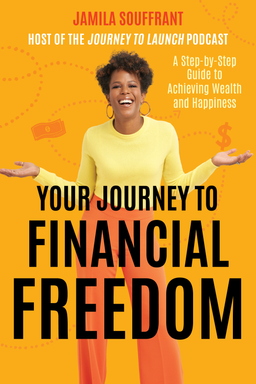
Your Journey to Financial Freedom cover

Your Journey to Financial Freedom

by Jamila Souffrant

Your Journey to Financial Freedom is your ultimate guide to achieving wealth and happiness. Discover how to master budget planning, boost income, and strategically invest to unlock a life of financial independence. Transform your mindset and habits while navigating the journey from debt to financial freedom with confidence and clarity.

Designing a Life of Freedom Through Financial Independence

What if the goal of managing your money wasn’t just to retire someday—but to live freely right now? That’s the question at the heart of Your Journey to Financial Freedom by Jamila Souffrant, founder of Journey to Launch. Souffrant argues that financial independence (FI) is within everyone’s reach—not just for the privileged few who earn six figures or love extreme frugality. Her central message is empowering yet practical: by intentionally managing your financial habits, reprogramming your mindset, and designing a plan that balances today’s joy with tomorrow’s security, you can create a life defined by freedom, not fear.

Souffrant’s FI philosophy rejects both traditional money management—where you work until sixty-five—and the rigid “save-every-penny” mentality of hard-core FIRE advocates. Instead, she invites you to build a middle path that’s sustainable, flexible, and joyful. She shows readers how to shift from paycheck dependence toward autonomy, explaining the practical mechanics of building wealth alongside the emotional growth that real freedom demands. From learning to calculate your FI number to redefining what “enough” means in your life, her roadmap blends financial literacy with self-discovery.

From Frustration to Freedom

Souffrant’s journey began not with financial luck but with an emotional breaking point: a four-hour commute while seven months pregnant. That moment of helplessness sparked her exploration into the Financial Independence Retire Early (FIRE) movement—a discovery that became her “hyperlink moment.” This metaphor of ‘clicking a hyperlink’ illustrates her philosophy: curiosity can completely redirect the path of your life. Starting with modest steps—budgeting, eliminating luxury cars, and increasing investments—Souffrant and her husband restructured their finances to align with their values. Within years, she left corporate life to become an entrepreneur and FI advocate.

Souffrant’s background as a first-generation Jamaican immigrant raised by a single mother who came to the U.S. with almost nothing reinforces her belief that financial freedom is not just about money—it’s about courage. Her mother’s story of sacrifice taught her that bold moves create new beginnings. That spirit threads through the book: your financial plan isn’t only about numbers; it’s a mirror for your desires, fears, and capacity to change.

Rethinking the "Path to Wealth"

Souffrant defines two critical concepts to separate her approach from common financial advice:

  • Financial Freedom: the ability to have options—to handle bills without stress, make decisions based on values, and feel secure even before becoming “rich.”
  • Financial Independence (FI): the point where passive income covers your lifestyle expenses indefinitely; where work becomes a choice, not a necessity.

You can experience financial freedom long before reaching complete independence. She insists that FI exists along a spectrum, and it’s worth celebrating each stage. As she explains: “You can enjoy your life right now while pursuing your journey—because the journey itself is the reward.”

The Framework: Six Components and Five Stages

Souffrant introduces two frameworks that guide readers through the process. The FI Formula includes six interdependent components—four tangible (income, expenses, liabilities, and assets) and two intangible (mindset and habits). Together, they help you increase the gap between what you earn and what you spend, using that difference to eliminate debt and grow wealth. Without working on mindset and habits, she warns, no budget or spreadsheet will stick.

Alongside this formula, she presents the Five Journeyer Stages, a vivid metaphor likening your journey to a space mission:

  • Explorer: You’re living paycheck to paycheck and seeking stability.
  • Cadet: You’re paying your bills but working to eliminate debt.
  • Aviator: You’ve killed consumer debt, started investing, and built an emergency fund.
  • Commander: You enjoy work flexibility; finances are stable and growing.
  • Captain: You’ve achieved full financial independence.

Each stage, she emphasizes, grants new levels of freedom. Paying off just one debt or funding your first $500 in savings changes the way you live, not just your bank balance.

Beyond Math: Mindset, Habits, and Joy

A core thread in Souffrant’s philosophy is that personal transformation fuels financial transformation. She devotes entire chapters to cultivating awareness, reshaping internal “soundtracks” (borrowing from author Jon Acuff), and replacing self-defeating beliefs with empowering narratives. Drawing from the Be-Do-Have model popularized in self-development literature, she urges you to become the type of person who reaches financial independence long before your bank statements reflect it. By acting and thinking like someone already in control, you accelerate real-world results.

Crucially, Souffrant rejects deprivation as a path to wealth. Instead, she popularizes what she calls the “Guacamole Levels”—a humorous but profound metaphor that asks, “Do you want to order the guacamole?” It’s about giving yourself permission to spend joyfully on what you love—even if it delays your FI date. The goal is balance: sustain the journey by designing a lifestyle you enjoy now while working toward freedom later.

Building Your Personalized FI Plan

Souffrant’s approach is radically practical. She walks readers through assessing their income, plotting expenses, categorizing assets and liabilities, and calculating their “FI number” using the 25x Rule or 4% Rule. Yet she continually reminds you that these numbers are guideposts, not prison bars. Plans should evolve as your values and circumstances change. Whether you’re revising your end goal to enjoy life with your children or leaving a stable job to pursue entrepreneurship, flexibility is the ultimate metric of success.

By the end of the book, Your Journey to Financial Freedom becomes less a manual and more a manifesto. It teaches not only how to build wealth, but how to reclaim agency—how to say no to lives defined by debt, overwork, or societal norms. Souffrant doesn’t pretend the road is easy; she shows that the joy lies in the journey. Like her mother’s courage, the book insists that real freedom starts with daring to try.


The Five Journeyer Stages to Independence

Souffrant’s five “Journeyer stages” act like a life map for your financial growth—from the first spark of awareness to complete independence. She compares the journey to a space launch: you begin as an Explorer aiming to lift off, advance through structured missions, and eventually reach the autonomy of a Captain. Each stage, while financial in nature, carries emotional and psychological markers as well.

1. Explorer: Gaining Stability

If you’re struggling to make ends meet, juggling debts, or constantly borrowing from one card to pay another, you are in the Explorer phase. Your mission here is simple but vital: stop sinking further. Create a basic budget, identify income leaks, and move toward equilibrium. Souffrant emphasizes tracking every dollar, negotiating bills, or taking quick cash gigs to ease financial tension. Even small wins—like bringing lunch from home or selling an unused item—become confidence-building “sprints.”

2. Cadet: Paying Down Debt

Once your budget is stable but debt remains, you’re a Cadet. Here, you practice discipline through strategic debt reduction and early investing. Souffrant recommends the debt snowball or debt avalanche methods depending on your motivation type: emotional momentum or mathematical efficiency. She dispels the guilt that often shadows debt; it’s not about shame but strategy. Progress here includes consistent savings and small investments to keep the long-term flame lit (even $50 a month counts).

3. Aviator: Building Wealth and Confidence

Debt-free and saving steadily, you now take flight as an Aviator. This stage focuses on expansion: developing investment muscle, funding an emergency account, and increasing income. The core idea is creating an “FU Fund” (Souffrant’s candid term for an independence fund) large enough to walk away from unhealthy situations. You may even reach “Coast FI” — a state where your existing savings will grow enough for a future retirement without more contributions if left alone. Aviators enjoy increasing flexibility and choice, whether that means travel, side hustles, or sabbatical-style breaks.

4. Commander: Achieving Work Flexibility

In the Commander phase, financial security allows you to control your work-life structure. You may not have reached your ultimate FI number yet, but you can afford to leave a toxic job, start a business, or shift careers—all without panic. Souffrant herself reached this level before forty. She emphasizes that Commanders refine what truly matters; some may choose to slow wealth accumulation if it means spending more time with family or savoring life now.

5. Captain: Full Financial Independence

Finally, as a Captain, your investments can support you indefinitely. Every bill, luxury, or dream project can be sustained without mandatory work. But Souffrant underscores that even Captains face the same introspective challenge as everyone else: Are you actually happy? For many, work continues—not from obligation, but passion. (Think of Warren Buffett or Oprah, both financially independent but still deeply engaged.)

The Journeyer system reframes FI as a continuum rather than a finish line. Each milestone offers tangible freedom: fewer debts, more savings, less fear. As Souffrant reminds readers, “Every loan paid off, every extra hundred invested, unlocks a new level of autonomy.” Freedom, she insists, isn’t the end of the road—it’s built into every step.


The Six Components of the FI Formula

The heart of Souffrant’s method is the FI Formula—six components that together constitute the mechanics of wealth and the psychology of freedom. She explains that progress isn’t about financial tools alone but how these elements interact holistically. Without balance, even good money habits can collapse like a house missing its foundation.

1. Income

Income is your most powerful tool, the engine that drives everything else. Its four purposes? Cover mandatory expenses, repay liabilities, build assets, and fund discretionary experiences. Souffrant teaches you to use “the gap”—the space between income and needs—strategically by expanding it through earning more or spending smarter. She insists that earning more is often a faster path than cutting every latte (echoing discussions from Ramit Sethi in I Will Teach You to Be Rich).

2. Expenses

Expenses should be optimized, not minimized. Differentiating between mandatory (rent, groceries) and discretionary (dining out, subscription boxes) allows you to make values-based choices instead of blanket restrictions. Souffrant advocates a joyful budgeting approach that includes intentional indulgences—her famous “order the guacamole” metaphor. The goal? Sustainability without resentment.

3. Liabilities

Liabilities represent what you owe—credit cards, student loans, mortgages. Debt isn’t inherently bad, she argues, but it must be used with awareness and restraint. She demystifies payoff methods (snowball vs. avalanche) and reframes debt repayment as emotional liberation, not punishment. Paying off debt changes identity: you feel capable, not burdened.

4. Assets

Your assets—cash, investments, property—form the foundation for independence. Souffrant guides readers through creating short-term savings, emergency funds, and long-term investments (index funds, real estate, business equity). She simplifies complex ideas like the 25x Rule and compound interest with examples showing how small steady investments multiply over decades.

5. Mindset

This intangible dimension governs every financial decision. Souffrant integrates lessons from behavioral psychology—awareness, optimism, growth mindset—to help reframe money as a tool, not a trap. By changing inner narratives like “I’m just bad with money” into “I’m learning how to manage my resources,” you unlock behavioral consistency.

6. Habits

Habits make the intangible tangible. Whether it’s checking your finances weekly, automating investments, or saying no to reactive spending, these routines compound just like savings accounts. Souffrant calls them financial rituals—small but sacred actions that, over time, alter your life trajectory.

Together, these six elements interlock to build what she calls a “financial house.” Income and assets are the foundation, expenses and liabilities form the roof, while habits and mindset constitute the walls—the structure that holds everything long-term. Neglect one, and the house wobbles; strengthen all, and it stands against any storm.


Mindset and Habits: The Inner Work of Wealth

Souffrant insists that financial independence begins not with a bank account, but with an internal shift. Before crafting any spreadsheets, you must examine who you are and how you think. She spends an entire section teaching readers how to dismantle limiting beliefs that sabotage progress—because, as she says, “your outer deficits mirror your inner doubts.”

Awareness and Reflection

Start by observing your “money soundtrack”—the repetitive thoughts and emotions guiding your decisions. For instance, telling yourself “I’ll never earn six figures” creates invisible ceilings. Borrowing from author John Acuff’s metaphor of “broken soundtracks,” she encourages journaling your unfiltered money thoughts for a week. Identifying negativity lets you rewrite the internal playlist driving your spending or earning patterns.

Fixed vs. Growth Mindset

Drawing on psychologist Carol Dweck’s framework, Souffrant differentiates between a fixed mindset (“I’m bad at budgeting”) and a growth mindset (“I can learn to budget better”). A fixed mindset breeds shame; a growth mindset empowers experimentation. Her Be-Do-Have model flips traditional logic: instead of waiting to have success before behaving differently, become the person now. Think and act like your financially independent self today—the “Captain” version of you.

Habits That Compound Like Money

Souffrant compares habits to investments: tiny actions that snowball into exponential results. Financially, this might mean automating transfers or reviewing expenses weekly. Psychologically, it means embracing rest, gratitude, and self-compassion to prevent burnout. She reminds readers that routines like cooking at home or meditating don’t just save money—they build identity capital. “Our capacity for wealth,” she writes, “begins with the habit of awareness.”

Ultimately, mastering mindset and habits is about alignment. When your internal settings—beliefs, routines, and self-image—match your external goals, the math finally works. As James Clear argued in Atomic Habits, success is the result of systems, not intensity. Souffrant extends this insight to money: consistent, small shifts lead to massive freedom.


Values, Goals, and the Guacamole Lifestyle

Souffrant’s playful but profound metaphor—the “Guacamole Levels”—captures her refreshing take on money: it’s not about deprivation; it’s about conscious choices. Inspired by her realization that she preferred ordering guacamole over extreme frugality, this framework helps you define what lifestyle you truly want, both now and in financial independence.

Defining Your Guac Level

The Guac Scale runs from Level 1 (bare-bones frugality) to Level 5 (luxury abundance). The key is intentionality: a Guac 4 lifestyle might mean frequent travel or premium experiences, but only if aligned with your goals. Souffrant asks readers to be honest—if you genuinely crave comfort and adventure, why design a plan that demands living like a minimalist monk forever?

Life and Money Alignment

She encourages simultaneous pursuit of life and financial goals. Many plans fail, she argues, because they demand joyless sacrifice. Instead, she guides readers through exercises—like George Kinder’s three life-planning questions and Debbie Millman’s Ten-Year Vision Exercise—so you define what “enough” looks like before chasing numbers. This reflection process transforms financial planning into life design, prioritizing meaning over milestones.

Sacrifice vs. Deprivation

Sacrifice is temporary and purpose-driven; deprivation is endless and self-defeating. Souffrant’s Saint Lucia vacation story shows this change: early in her money journey she refused to pay $10 for a beach umbrella; years later, she joyfully paid for luxury because it aligned with her new definition of success. Each choice, whether skipping a restaurant or buying first-class tickets, should feel empowering, not punishing.

Ultimately, determining your Guac level is about designing a lifestyle that feels authentic and sustainable. As she writes, “You can have your guacamole and your financial freedom too.” The balance between enjoyment and security is the real wealth Souffrant helps readers cultivate.


Creating Your Personalized Financial Independence Plan

Souffrant transforms abstract FI concepts into concrete steps, teaching you to craft a plan rooted in your unique circumstances. Her approach resembles life planning as much as it does financial strategy: it’s analytical but adaptable.

Mapping Your Finances

The first step is self-assessment. Collect all your data—income, expenses, assets, and liabilities. Create a clear snapshot of reality; ignorance, she warns, is expensive. You then calculate your FI number: how much you’ll need for investments to cover annual expenses indefinitely. Using tools like the 25x Rule (annual spending × 25) or the 4% Rule (safe withdrawal rate), you estimate your target wealth.

Scenario Thinking

Souffrant illustrates this with “Marcy,” a reader-surrogate who tests scenarios: doing nothing, making moderate changes, or increasing savings aggressively. Even in Marcy’s slowest path, she builds $270,000—proof that action, any action, compounds. This teaches a psychological truth: progress is rarely linear but always beneficial. Planning is simply a way to visualize what’s possible so fear doesn’t dictate decisions.

Budgeting as Choice, Not Restriction

Budgets are guideposts, not prisons. Souffrant offers practical systems—zero-based and percentage-based budgeting—and encourages flexibility. She likens money tracking to learning to drive with bumpers: once confident, you can loosen control. The goal isn’t endless tracking but discernment—knowing where your money goes and ensuring it reflects your values.

In creating an FI plan, Souffrant invites you to embrace imperfection. Plans evolve as families grow, incomes fluctuate, or passions shift. Her message echoes Vicki Robin’s in Your Money or Your Life: awareness is financial enlightenment. Once you truly know your numbers, you hold the power to adjust your life’s course deliberately.


Executing the Plan: Money In, Money Out

After design comes execution—the part where thoughts become tangible actions. Souffrant divides this phase into four power moves: optimize expenses, increase income, pay down liabilities, and grow assets. Together, they move you up the Journeyer ladder.

Optimizing Expenses

Souffrant starts where most people feel pain: expenses. Her strategy is gentle but firm—focus on awareness, not austerity. She urges readers to evaluate each expense by asking four questions: What value does it bring? Can I decrease it? If not, why not? And does it align with my goals? For example, a gym membership can be a savings tool if it improves health and confidence. Optimization means trimming what doesn’t bring joy while keeping what does.

Increasing Income

Income expansion offers exponential results. Souffrant surveys strategies from negotiating raises and switching employers to side hustles and entrepreneurship. She cites success stories from her podcast—like teachers turning tutoring into full-time businesses—to prove that revenue growth is accessible. Her nuanced take acknowledges systemic realities: wage disparities among women, Black, and Latina workers. Yet her counsel is empowering—“You may not fix the system overnight, but you can raise your own worth.”

Paying Down Liabilities

Debt repayment frees emotional and financial bandwidth. Souffrant blends compassion with structure: choose a method (snowball or avalanche), focus on one debt at a time, and celebrate every milestone. For some, debt feels like shame; she reframes it as data—a story of choices, not character. Once debt-free, she encourages conscious re-engagement with credit, using it as a tool rather than a trap.

Increasing Assets

Finally, Souffrant explains investing in plain language. She distinguishes saving (safety) from investing (growth) and popularizes the simplicity of index funds. Her advice mirrors that of J. L. Collins in The Simple Path to Wealth: automate, diversify, and let compounding work its magic. She counters excuses (“I’m too old” or “too broke”) with stories of real people transforming modest incomes into independence.

In executing your plan, discipline meets delight. Each change—canceling subscriptions, asking for a raise, contributing $100 to an IRA—is a declaration of agency. Through consistent action, financial freedom shifts from possibility to path.


Enjoying the Journey and Staying the Course

Souffrant ends her book with a lesson often absent from financial manuals: joy is non-negotiable. She argues that many chase independence only to find themselves joyless or isolated. Her antidote is clear—build social capital, celebrate small wins, and live pieces of your dream life now.

The Power of Social Capital

True wealth includes community. Drawing on Robert Putnam’s idea of social capital from Bowling Alone, Souffrant highlights relationships as key assets. Whether through online FI forums, accountability partners, or friendships, connection sustains motivation. Surround yourself with people who celebrate paying off a loan as loudly as buying a new car.

Partnerships and Family

Money can unify or divide. Souffrant shares candid stories about navigating finances with her husband, Woody, including negotiation and compromise. She advises couples to create “family planning meetings” to merge dreams and realities. As with her own family, these conversations shift couples from tension to teamwork. For parents, she underscores modeling: children learn financial mindset from watching, not lectures.

Living FI Today

Souffrant suggests infusing your current life with your future aspirations. Want to travel more in retirement? Take local weekend trips now. Dream of writing on a beach? Write at a nearby lake. Freedom, she says, is less about location and more about presence. Avoid putting your joy on layaway until FI; savor it incrementally.

Ultimately, Your Journey to Financial Freedom isn’t a rigid formula—it’s a philosophy of balanced ambition. Financial independence is both destination and practice: a daily choice to live intentionally, build stability, and cultivate joy. Souffrant’s message reverberates long after the last page: you are already on the journey—financial freedom begins today.

Dig Deeper

Get personalized prompts to apply these lessons to your life and deepen your understanding.

Go Deeper

Get the Full Experience

Download Insight Books for AI-powered reflections, quizzes, and more.