
Idea 1
Connecting with Your Future Self
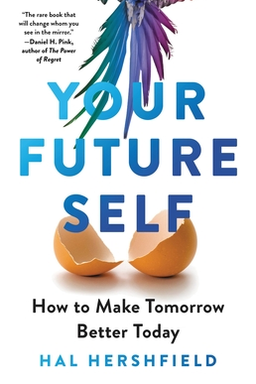
Have you ever wondered why you keep making choices today that seem to betray your own long-term interests? Why do you stay up late even though tomorrow morning you’ll regret it, or spend money that your future self will need? In Your Future Self: How to Make Tomorrow Better Today, psychologist Hal Hershfield explores one deceptively simple idea: we live our lives as a chain of selves through time, often disconnected from each other. This disconnection fuels procrastination, impulsivity, and short-sighted decisions. But if we could learn to see our future selves as real people—people we care about—we’d transform how we live today.
Hershfield, a behavioral psychologist at UCLA, argues that the distance between who we are today and who we will become is the mind’s most persistent barrier. The future self often feels like a stranger, someone we plan for but never meet. Yet modern neuroscience and social psychology reveal that imagining our future self more vividly—whether through letters, aged photos, or deliberate time reflections—can produce measurable changes in health, happiness, and financial well‑being.
The Science of Mental Time Travel
Our ability to mentally time travel, to leap forward or backward, is what Hershfield calls a defining human strength. Drawing on research about the brain’s “default network,” he explains that when we’re resting, our minds naturally wander through past and future moments. This spontaneous time travel helps us plan, worry, and imagine—but it also divides us. You think of tomorrow’s you as different from today’s you, even though you’re the same person wearing different clothes across time. The first part of the book explores this psychological puzzle, asking whether we remain the same over time or become distinct selves. Hershfield shows through stories like Pedro Rodrigues Filho—Brazil’s notorious serial killer turned repentant counselor—that radical transformation across time is possible, but continuity depends on moral and emotional identity, not memories or physical form.
Philosophers from Locke to Parfit have debated this for centuries. Hershfield brings their abstract questions down to earth through neuroscience and everyday examples. You are not just a single, immutable self in time, he argues; you are a collection of connected selves—past, present, and future—linked by habits, stories, and empathy. When those links weaken, our decisions suffer.
Seeing the Stranger Inside
In one fascinating experiment, participants viewed digitally aged images of themselves. Those who saw their wrinkled, gray-haired avatars immediately increased their savings for retirement. Why? Because the visualization made their future self tangible. Hershfield’s studies show that the brain registers future selves similarly to how it registers other people—quite literally viewing tomorrow’s you as an “other.” This means we discount the future self’s needs as if they were someone else’s problem. Understanding this mental bias reframes personal responsibility: just as empathy motivates charity, empathy for your future self can inspire wiser health, financial, and moral choices.
Why It Matters
The implications ripple across life. Recognizing future selves as vivid and connected motivates saving, exercising, and acting ethically. Ignoring them creates regret and instability. The book’s journey progresses through three acts: “The Journey Ahead” explores who we are through time; “Turbulence” reveals the mistakes we make traveling from now to later—missing flights, planning poorly, and packing the wrong clothes; and “The Landing” offers strategies to close the gap. Hershfield connects science to stories—from cryonics enthusiasts freezing their bodies to letter-writers on FutureMe—all chasing contact with their eventual selves. The result is not cold theory but pragmatic compassion: your future self is not a stranger but someone waiting for your help.
The Promise of Connection
Underlying all of Hershfield’s research is a simple moral insight: life improves when we act as guardians of our future selves. This perspective makes self-discipline feel less like deprivation and more like care. Instead of living for instant gratification or extreme sacrifice, the goal is harmony across time—a partnership between present and future. By strengthening this relationship, Hershfield contends, we don’t just create smarter plans or healthier bodies; we cultivate meaning itself. Because when you learn to see your future self clearly, you learn to see your whole life as one continuous, evolving you.