
Idea 1
The Aesthetic Mindset as Everyday Medicine
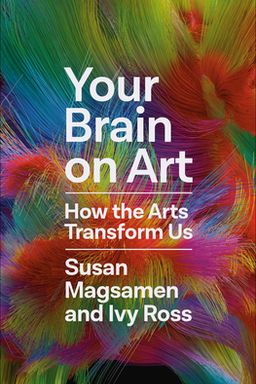
How can you use art, design, and daily sensory choices to change your brain, body, and relationships? In Your Brain on Art, Susan Magsamen and Ivy Ross argue that aesthetics are not luxuries; they are biologically active inputs that shape attention, emotion, learning, health, and belonging. The core claim is simple and radical: when you cultivate an aesthetic mindset—notice, play, create—you generate salient experiences that drive neuroplastic change and produce measurable benefits across your life.
The authors contend that arts experiences are multisensory “micro-interventions” that your nervous system recognizes as meaningful. Because your senses connect directly to memory and emotion centers, small aesthetic acts—humming, coloring, smelling a comforting scent, stepping into nature—become levers for mood, focus, and resilience. This is neuroaesthetics in practice, not theory.
What the aesthetic mindset looks like
You train your brain to scan for salience and savor it. You pause at a shadow on a wall, turn a tune into a ritual, or doodle for twenty minutes when stressed. Magsamen and Ross offer a practical gauge—the Aesthetic Mindset Index (adapted from Ed Vessel’s AReA)—so you can track how often you attend arts events, feel aesthetic chills, or make art yourself. Think of it like a step counter for your senses.
The book’s live installation, A Space for Being (with Suchi Reddy and Google’s hardware team), dramatizes the point. Visitors wore physiological sensors (heart rate, respiration, temperature) while exploring three designed rooms. Many preferred sleek, high-design spaces but biologically relaxed most in the colorful, book-filled middle room. Your body, not your opinion, tells the truth about what restores you. The aesthetic mindset closes that gap between preference and physiology.
The science you need to act
The authors weave five scientific threads into a practical playbook. First, the senses: smell, sound, color, touch, and taste are high-bandwidth signals that map into the brain’s emotion and memory hubs, which is why a song or scent can transform your state in seconds. Second, salience and plasticity: emotionally charged novelty acts like neural fertilizer, strengthening or pruning circuits with dopamine and norepinephrine. Third, enriched environments: from Marian Diamond’s rat studies to trauma-informed architecture, richer sensory contexts foster brain health. Fourth, arts and health: creative practices reduce cortisol, support trauma recovery, and complement clinical care (from VR analgesia to Dance for Parkinson’s and 40 Hz stimulation research in Alzheimer’s). Fifth, learning and transfer: arts build executive function, deepen attention and memory, and accelerate skill transfer through guided play and making.
Key Idea
Aesthetics are medicine for mood, mind, and community when you use them intentionally—small daily doses compound into lasting neural change.
What you’ll learn next
You’ll start with your senses and see why smell sparks memory, rhythm regulates physiology, and color shifts arousal. You’ll then learn how salience sculpts the brain and how to design spaces—homes, schools, clinics—that calm the body and speed recovery (Maggie’s Centres, Denver’s Arroyo Village, Little Island). You’ll explore arts for stress and trauma (Ashes2Art; mask-making at NICoE), and arts as clinical tools (SnowWorld VR for pain; Mark Morris’s Dance for PD; Connie Tomaino’s music and dementia; Li-Huei Tsai’s 40 Hz studies).
From there, the book reframes learning: Ellen Galinsky’s executive-function triad (working memory, cognitive flexibility, inhibitory control) gets built on stage, in ensembles, and with guided play (Golinkoff and Hirsh-Pasek’s Playful Learning Landscapes). “Make to know” (Lorne Buchman) explains why hands do what lectures can’t. You’ll see how arts-informed tech supports neurodiversity—smart glasses for autism (Sahin, Voss) and EndeavorRx for ADHD (Gazzaley)—and how awe, wonder, and ritual forge flourishing and belonging, from the Salk Institute’s courtyard to Cirque du Soleil’s synchronized brainwaves.
Why it matters to you
If you want practical tools for better mood, focus, learning, connection, or recovery, this book translates lab insights into daily habits. Arts-based interventions don’t just decorate life; they reorganize it. Whether you build a calming playlist at 60 bpm, redesign a break room with plants and curves (Tye Farrow’s “super vitamins”), or adopt a classroom Calm Corner (HEART), you are engineering salience that your biology rewards. The takeaway is empowering: you already possess—through your senses—the inputs to tune your nervous system. With an aesthetic mindset, you turn those inputs into a reliable practice for health, growth, and meaning. (Note: Unlike one-pathway medications, arts interventions activate many mechanisms at once—a point Daisy Fancourt emphasizes—which may explain their broad, durable effects.)