
Idea 1
Taking the Big Leap: Embracing Your Zone of Genius
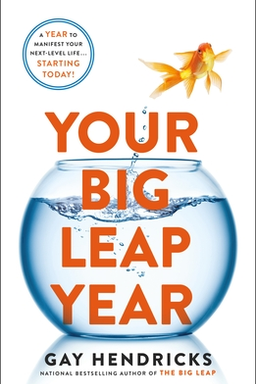
Have you ever noticed how, just when things start going really well—when your career clicks, love deepens, or creativity soars—something seems to go wrong? Maybe you pick a fight out of nowhere, fall sick before a big event, or sabotage your momentum. In The Big Leap, Gay Hendricks argues that this recurring pattern is not random bad luck but the manifestation of what he calls the Upper Limit Problem: our subconscious resistance to sustained success, joy, and love. The book’s central message is both simple and radical—you can learn to overcome this inner ceiling and live permanently in your Zone of Genius, the space where your innate talents, purpose, and enjoyment align.
The One Problem Blocking Your Potential
Hendricks opens with a powerful claim: no matter your achievements, you’re being held back by a single hidden constraint. This Upper Limit Problem—a psychological thermostat set early in life—determines how much happiness, success, and love you’ll allow yourself to experience. When you exceed that limit, you unconsciously sabotage yourself to return to a familiar, ‘safe’ level of well-being. For Hendricks, the implication is transformative: rather than juggling dozens of obstacles to success, there’s only one that truly matters, and once solved, all other limitations dissolve naturally.
To illustrate, he recalls the discovery that changed his life at Stanford University. Right after feeling profound satisfaction about his career and family, he suddenly found himself worrying needlessly about his daughter. When he looked deeper, he realized he had manufactured the worry because he was afraid to feel good for too long. This insight—“I have a limited tolerance for feeling good”—became the seed for his later work. You too have an inner limit set by beliefs absorbed in childhood—like ‘I’m not worthy of happiness’ or ‘If I succeed, I’ll leave others behind.’ These beliefs cap your joy and success until you consciously reset them.
Why This Leap Matters
Most people, Hendricks says, spend their lives hopping between competence and comfort, rarely venturing into genius. Yet our greatest happiness and contribution arise only when we make the Big Leap—shattering the Upper Limit and committing to living fully in our Zone of Genius. This means doing what you most love to do, achieving results that serve others, and experiencing a state of flow where work feels effortless. Among high achievers Hendricks coached, from CEOs like Michael Dell to artists like Bonnie Raitt, he found the same truth: extraordinary success comes from transcending self-imposed ceilings, not from grinding harder.
The book expands beyond mere self-help platitudes. It explores how fear of our potential triggers forms of self-sabotage—such as illness, conflict, guilt, or criticism—and how these patterns show up in love, money, and creativity alike. Hendricks integrates psychology, mindfulness, and storytelling, guiding you to notice these limits in daily life and gradually expand your capacity for abundance. The goal isn’t to live without difficulty but to create a continuous upward spiral of growth, where success feels joyful, not stressful.
From Zones of Comfort to Zones of Genius
A cornerstone of Hendricks’s framework is his four “zones” of activity. In your Zone of Incompetence, you do things you’re poor at; in your Zone of Competence, you’re adequate but replaceable; in your Zone of Excellence, you thrive outwardly but remain inwardly unfulfilled. The Zone of Genius is where you’re doing what you’re uniquely designed to do, using your innate gifts with joy. Most people—especially successful ones—get trapped in the seductive comfort of excellence, afraid to leap into genius. To reach genius, Hendricks encourages radical self-honesty, risk, and a willingness to feel good all the time—concepts that feel both liberating and unsettling.
Moving beyond the familiar zones means dismantling deeply held fears. Hendricks identifies four hidden barriers—Feeling Fundamentally Flawed, Fear of Abandoning Your Roots, Fear of Being a Burden, and Fear of Outshining Others. Recognizing which ones shape your story allows you to shine awareness on them and dissolve them. This process isn’t instant but continuous; each leap expands your capacity for positive energy, enabling further leaps. (Comparable frameworks appear in Maslow’s notion of self-actualization and Steven Pressfield’s ‘Resistance’ in The War of Art—both describe the psychological tension between safety and creative transcendence.)
Love, Time, and Creative Freedom
Hendricks’s later chapters extend the Big Leap into practical dimensions of everyday life. In relationships, he shows how couples unconsciously limit intimacy through conflict or withdrawal when love feels too abundant. In work, he introduces the concept of Einstein Time—the idea that you create time from within, rather than being its victim. When you stop complaining about time scarcity and act from ownership, you experience flow, productivity, and serenity simultaneously. This “Einstein Time” is both physics metaphor and psychological strategy, a counterpoint to Newtonian cause-and-effect thinking.
Ultimately, Hendricks’s approach is about wholeness: removing the barrier between your external success and inner fulfillment. The Big Leap invites you to align love, creativity, and prosperity into one harmonious rhythm. Through awareness, commitment, and his powerful Ultimate Success Mantra—“I expand in abundance, success, and love every day, as I inspire those around me to do the same”—he offers not just a productivity model but a philosophy of conscious living.
If you’ve ever felt that invisible ceiling between your success and happiness, Hendricks’s message is as clear as it is challenging: you set that ceiling, and you can remove it. The Big Leap isn’t about striving harder—it’s about daring to feel good all the time, welcoming the full expression of your genius, and creating a life where joy, love, and abundance expand without limit.