
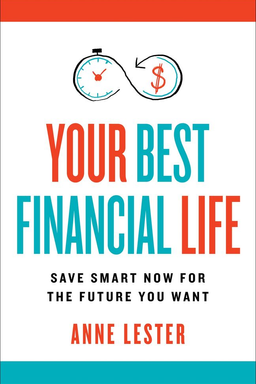
Your Best Financial Life cover

Your Best Financial Life

by Anne Lester

Your Best Financial Life by Anne Lester provides actionable insights into saving, investing, and planning for retirement. Discover the secrets of compound interest, avoid financial pitfalls, and learn to adapt to life’s surprises for a secure financial future.

Building Your Best Financial Life

What if your financial future didn’t have to be a source of stress, confusion, or dread—but a life tool for freedom? In Your Best Financial Life, Anne Lester argues that with the right strategies and mindset, you can stop fearing money and start using it to build the life you actually want. Lester contends that saving for retirement and achieving financial independence aren’t just about discipline or math—they’re about understanding how your brain, habits, and environment shape your relationship to money, and then learning to work with, not against, those forces.

Lester’s main message is simple but revolutionary: you can secure your future even in a world that feels stacked against you. Through deeply relatable storytelling and hard-earned lessons from her own career in finance (including years managing billions in retirement funds at J.P. Morgan), she walks younger generations through a map for financial empowerment. The book balances practical tools—like how to build a 401(k), pay off debt, and build an emergency fund—with psychological insights into why saving feels so hard. More than anything, it’s a handbook for turning financial anxiety into agency.

A Generational Wake-Up Call

Lester opens with a sobering truth: younger Americans—millennials and Gen Z—face financial challenges their parents and grandparents never did. College tuition, housing, and health care costs have soared far faster than wages, while pensions have vanished. Today’s workforce must navigate a DIY retirement system, where security depends on whether you’ve mastered complex tools like 401(k)s and IRAs. Lester combines empathy and candor as she assures readers that their struggles aren’t laziness or moral failings—they’re structural. “The system might be rigged,” she concedes, “but it’s still hackable.”

She contrasts the experience of John, a Brooklyn 29‑year‑old barely getting by after rent and loans, with his grandfather, who enjoyed cheap housing, affordable education, and a pension that paid 85% of his salary at retirement. That juxtaposition drives home the book’s rallying cry: you can’t play by the old rulebook. Instead, younger generations must learn to leverage time—the one remaining advantage they have left.

Time: The Unmatched Asset

You don’t need to be rich to retire comfortably, Lester insists—you need to start early. The first part of the book explains the power of compound returns: how small, consistent contributions can snowball into six or seven figures over decades. She drives this home with vivid examples, like the “$1.2 million gyro” story, which shows how skipping small daily splurges can translate into monumental long‑term wealth. Lester warns that waiting for “the right moment” to start saving is one of the most expensive mistakes you can make. The stock market may fluctuate, but over time, it always trends upward. What matters is time in the market, not timing the market.

Why You Struggle to Save—And Why It’s Not Your Fault

In Part II, Lester turns psychologist. She explains that our brains evolved for short-term survival, not long-term planning. Our emotional brain craves instant gratification—what she calls the “shiny object reaction”—while our logical brain fights to prioritize future security. Add in modern tools like Buy Now, Pay Later apps and targeted social media ads, and saving becomes a near-impossible mental battle. The key isn’t guilt—it’s designing your environment to make saving automatic and painless. Automation, she argues, is a behavioral superpower that transforms good intentions into lasting habits.

Equally important, Lester insists you forgive yourself for past mistakes. From splurging on grad school or maxing out credit cards to simply not starting early enough, she acknowledges that shame prevents action. By letting go of guilt and focusing on one concrete next step, you turn avoidance into motivation—a lesson rooted in both behavioral economics and emotional intelligence (similar to advice found in James Clear’s Atomic Habits).

The STASH Framework: A System for Stability

To move from theory to practice, Lester introduces her five-part STASH framework, a simple scaffold for financial security:

  • S — Save for a Rainy Day (establish your “Oh Shit!” emergency fund).
  • T — Tax‑Advantaged Savings (master 401(k)s, IRAs, and Roth options).
  • A — Assess Your Budget (balance debt repayment and retirement goals).
  • S — Stay the Course (understand investments and ride out market swings).
  • H — Have Fun (save for life experiences and future milestones).

Each step builds on the last, ensuring your present stability while paving the road to your future freedom. Lester’s blend of science, storytelling, and structure turns what could have been dry financial instruction into a warm, confidence-building mentorship. She doesn’t just hand you formulas—she helps you believe that financial calm is within reach.

The Heart Attack Chart and Facing Reality

One of the book’s most memorable moments is the “Heart Attack Chart,” J.P. Morgan’s benchmark for how much you should have saved at different ages. Most readers will find themselves woefully behind—and that’s the point. Lester uses the shock as a motivational tool, not a judgment. Whether you’re saving your first $1,000 or already six figures in, she reassures readers that it’s never too late to course-correct. The key is to calculate your own “On‑Track Score” to gauge how much you should be saving now to reach a secure retirement later.

From Panic to Power: Hacking a Flawed System

Throughout the book, Lester maintains a rare mix of realism and optimism. She recognizes that many young professionals feel the system is broken—but she refuses to accept helplessness. Instead, she teaches readers to “hack the system,” using tools like automatic payroll deductions, tax incentives, and compound growth as counterweights to inflation, debt, and market volatility. Her message is hopeful yet pragmatic: even in a world of recessions and rigged incentives, you can build a life of choice and control.

By the end, Your Best Financial Life isn’t just a manual for retirement saving—it’s a blueprint for confidence. It’s about building systems that outsmart your worst instincts, learning to see saving as empowerment, and remembering that your financial choices today write the story of your freedom tomorrow.


The Magic of Compound Returns

Lester begins her financial playbook with what she calls the life-changing magic of compound returns—a force so quiet yet so powerful it can turn even a modest saver into a millionaire. She uses humor and vivid metaphors (the “bagel fairy” and the “$1.2 million gyro”) to make abstract math feel real. The goal isn’t to dazzle you with equations but to help you see that every dollar invested early is a seed for exponential growth.

Time Is Your Superpower

“The single greatest weapon in your financial arsenal,” Lester writes, “is time.” The earlier you start, the less you have to save. A twenty‑one‑year‑old who invests $5,000 once will have over $100,000 by sixty‑five, even if they never touch it again. Someone who waits until thirty‑one must invest five times more to catch up. By pairing simple math with human stories—like her own ill‑fated $800 piano purchase that cost her $8,000 in lost growth—Lester makes the invisible visible. The takeaway: you don’t need more money, you need more time.

This mirrors Warren Buffett’s philosophy in The Snowball (Alice Schroeder), which shows that wealth accumulates quietly and relentlessly when left untouched. Lester reframes patience as the most powerful investment decision you’ll ever make.

No Risk, No Magic

Many millennials default to hoarding cash, scarred by the Great Recession and the 2020 crash. But cash loses value to inflation. Lester gives historical context: over the past century, the stock market has averaged roughly 10% annual growth despite wars, pandemics, and recessions. The key is persistence, not prediction—“it’s not timing the market, it’s time in the market.”

She introduces readers to 401(k)s and IRAs as frictionless vehicles for achieving compound returns, contrasting the predictable mediocrity of savings accounts (0.3%) with the historic performance of diversified portfolios. Through cases like Ryan, the “smart” investor who waited for the perfect moment to buy in and missed a decade-long bull market, she shows why even professionals often fail at market timing.

Early Mistakes, Lasting Lessons

Lester humanizes finance by sharing her own missteps—credit card debt, overspending in her twenties, and under-saving despite managing billions for corporate pensions. Her candor encourages readers to ditch perfectionism. The best time to start was yesterday, she admits, but the second-best time is right now. Even small contributions matter if they’re automated and consistent. A steady $5‑a‑day habit can become six figures through compounding.

“The market doesn’t go up all the time—but it goes up over time.”

Lester’s mantra encapsulates the patience required for compounding to work. The lesson applies beyond money: invest in habits and systems that compound emotionally, professionally, and financially.

Ultimately, the chapter is less about math and more about mindset. Compound returns reflect a philosophy of trust—in time, patience, and your own ability to stick with the plan even when the world feels chaotic. Master that, Lester argues, and you’ve unlocked true financial magic.


Why You Suck at Saving (But It’s Not Your Fault)

In one of the book’s most compassionate sections, Lester unveils a hard truth: saving isn’t purely a financial problem—it’s a psychological one. From Buy Now, Pay Later schemes to social comparison on Instagram, the modern environment conspires against long-term thinking. But here’s the twist—it’s not your fault. It’s biology.

Your Brain on Money

Our brains evolved in the Stone Age, prioritizing immediate rewards over distant ones. Lester calls this bias future discounting: your brain would rather enjoy sushi tonight than retirement stability in forty years. This “emotional brain vs. logical brain” battle plays out every time you shop online or scroll through deals. The emotional brain urges, “Buy the Tesla!” while the logical brain whispers, “Fund your IRA.” Most of us—herself included—let the Tesla win. The system exploits these instincts through gamified spending tools and instant-gratification payment apps.

Blame Your Parents (Lovingly)

Lester argues that money behaviors start shockingly early—by age seven. Yet most adults avoid talking finances with their kids. She recounts how her parents, products of the Depression, taught thrift by example but not conversation. Many readers will nod along. Whether you grew up believing debt was evil or that money conversations were “impolite,” those early scripts still run your financial software as an adult. The good news: these behaviors are only partially genetic. You can overwrite them through awareness and practice.

Shame and Avoidance

Money shame, Lester warns, is toxic. When we feel ashamed about debt or financial missteps, we avoid taking action, just like Lindsey—the aspiring vet who dropped out of grad school and drowned in guilt over unpaid loans. Her avoidance made things worse, reinforcing the shame spiral. The antidote? Forgiveness and visibility. Lester prescribes small wins: look at your accounts weekly, automate small transfers, and celebrate progress rather than punishing imperfection. She even offers the memorable “Hack: Automate Your Savings,” explaining how direct transfers bypass the pain of paying by removing decisions from the emotional brain’s grasp.

Self‑Worth ≠ Net Worth

In a culture where salary and status have become proxies for value (as anthropologist Caitlin Zaloom notes), Lester reminds us that money is just a tool—not a mirror of worth. She shares Helen’s story: a woman who couldn’t talk about money because her father declared it “impolite.” That silence persisted into adulthood, stunting her financial confidence. Yet healing begins with conversation. Talk about bills, savings, and salaries, Lester urges, just like you’d discuss mental health. Financial transparency can transform shame into solidarity—a lesson echoed by TikTok creator Hannah Williams of Salary Transparent Street.

By the chapter’s end, readers learn that saving isn’t about strength—it’s about structure. If you automate good habits, forgive old mistakes, and separate your self‑worth from your account balance, you’ll finally stop “sucking” at saving—and start mastering it.


Know Your Money Type

Ever wonder why you always splurge on vacations or feel anxious hoarding cash? Lester believes that self‑knowledge is the hidden foundation of financial resilience. In this section, she introduces seven behavioral archetypes—each reflecting a distinct psychology around money. By seeing which type you lean toward, you can design smarter habits instead of fighting your nature.

The Seven Money Personalities

  • Over‑Subscribers bleed money through forgotten subscriptions and micro‑charges. The fix: schedule an annual “subscription cleanse” and visualize yearly totals instead of monthly ones.
  • Accidental Spenders fall prey to consumption creep—the sneaky inflation of lifestyle that eats raises alive. Lester’s advice: save half of every pay raise and anchor spending to old habits.
  • Cryptonauts chase status and thrill through risky investments. Treat crypto like gambling money, she warns, not a retirement strategy.
  • Survivors fear loss so deeply that they hoard cash, missing out on market growth. Their remedy is mindset work: remember that inflation quietly erodes “safe” money.
  • Ostriches avoid financial reality altogether, ignoring statements or skipping logins. Their therapy: monthly money check‑ins and accountability partners.
  • Fireflies, inspired by the FIRE (Financial Independence, Retire Early) movement, burn out chasing radical austerity. Better to pursue balance than perfection—rice‑and‑beans is not a lifestyle.
  • Splurgers oscillate between saving obsession and indulgence. The cure? “Add a zero.” Imagine how much that $1,200 Peloton could grow if invested—about $12,000 over 30 years.

Awareness as Empowerment

Lester’s framework offers gentle self‑diagnosis, not judgment. She also emphasizes that categories shift: as your life evolves, so will your financial persona. A spender in your twenties might become a cautious saver after parenthood. The secret is awareness. Her tone recalls Gretchen Rubin’s typologies in The Four Tendencies—you can’t change what you can’t see, but you can design structures around it.

Ultimately, “Identify Your Money Type” acts as a mirror. It’s not about labeling yourself as good or bad with money—it’s about learning to work with your tendencies rather than denying them. When you understand your type, you gain what Lester calls “financial emotional intelligence”—the power to outsmart your own financial wiring.


Your STASH Framework for Stability

The heart of Lester’s program is her acronym STASH—a five‑step sequence that balances survival, growth, and joy. It transforms abstract personal finance advice into something you can act on right now, no matter your income or background.

S — Save for a Rainy Day

Begin with your “Oh Shit! Fund.” This emergency reserve—three to six months of essential expenses—keeps you from sliding into credit‑card debt when life happens. Lester’s roofing disaster cost her two lost years of retirement contributions, illustrating that neglecting an emergency fund is the most expensive shortcut you can take. Keep this money separate, easily accessible, but not too accessible—ideally in a high‑yield online savings or money‑market account.

T — Tax‑Advantaged Savings

Next, master the invisible engine of wealth: 401(k)s and IRAs. Lester demystifies these plans with relatable storytelling—like her son who defaulted to a measly 1% contribution until she marched him to HR. She urges readers to grab every bit of employer matchmaking money (“otherwise, you’re turning down free cash”) and understand vesting schedules before changing jobs. For freelancers, SEP IRAs offer similar benefits. Her bottom line: learn the tax code, because it’s one of the few games you can legally hack.

A — Assess Your Budget

Here, you balance debt reduction with future saving. Lester dismantles the myth that you must be completely debt‑free before investing. Pay high‑interest debt (>7%) first, but keep contributing to your 401(k). Use raises to fund both. She reframes budgeting not as restriction but as prioritization—the art of telling your money what matters most.

S — Stay the Course

Once your system’s running, your job is endurance. Stay invested through volatility, keep fees low, and rebalance occasionally. She decodes jargon (ETFs, bonds, target‑date funds) and reveals that default 401(k) options often outperform DIY investors. Her motto: automate the boring stuff and ignore the noise. Markets dip, recover, and rise—your superpower is patience.

H — Have Fun

The final step? Don’t wait until sixty‑five to enjoy your money. Your savings plan should fund life’s milestones: a wedding, house, travel, or parental leave. Lester encourages guilt‑free spending on experiences that align with your values—as long as it’s planned. This reframes saving as freedom, not deprivation. You’re not saving for retirement—you’re saving for choice.

By following STASH, you cover every base of financial wellness without overcomplication. It’s what she calls “finance for real humans”—a structured path to peace of mind that leaves room for joy.


Facing the Heart Attack Chart

Few chapters hit harder than Lester’s encounter with the “Heart Attack Chart.” Originally a J.P. Morgan tool, it reveals how much you should have saved by age. The numbers are terrifying—but purposeful. Lester recalls gasping when she discovered she needed fourteen times her income to retire comfortably. Instead of despair, she turned it into direction.

A Reality Check

For most readers, the chart triggers the same panic. Lester normalizes that emotion and then reframes it: you’re not behind, you’re starting. The moment you calculate your own On‑Track Score—the percentage of income you must save going forward—is the moment you take control. No guilt, no shame, just math and choice. She provides examples of Maggie (the early saver) and Paul (the late bloomer) to show how different starting points can still lead to success.

Why Generational Comparisons Fail

Lester dismantles the lazy narrative that young people fritter away wealth on “avocado toast.” The real culprit is structural inflation: tuition up 310%, housing up 100%, wages flat. Today’s savers face a rigged game. Her insight echoes themes from Stephanie Kelton’s The Deficit Myth—that the system often blames individuals for systemic scarcity. Yet rather than despair, Lester encourages adaptability. You can’t change the rules, but you can play smarter.

Turning Panic into Purpose

To beat financial paralysis, Lester recommends reframing goals into annual contribution percentages instead of massive lifetime targets. The Heart Attack Chart isn’t meant to scare you—it’s meant to focus you. Combined with online calculators from Fidelity or NerdWallet, your On‑Track Score becomes a compass. Aim to save just enough each year to move one notch closer to your target. Every minor correction compounds into massive progress.

Eventually, the chart loses its terror and becomes empowering—a snapshot of progress instead of failure. Facing the numbers, Lester reminds us, is the ultimate act of financial courage.


Staying the Course Through Volatility

Markets crash. Headlines scream. Fear spikes. And yet, the richest savers in history share one trait: they stayed the course. During COVID’s early panic, Lester shares Andrea’s story—an investor who sold everything during the dip, only to miss the fastest 100% rebound in modern history. The lesson echoes throughout this chapter: patience beats panic every time.

Understanding Your Options

Lester decodes the alphabet soup—ETFs, mutual funds, index funds, target‑date funds—so even finance novices can see where their money sleeps. She reveals that most 401(k)s default into target‑date funds for good reason: they’re diversified, self‑balancing, and require zero guesswork. For those who crave control, she teaches how to evaluate fees, diversification, and risk without falling prey to “performance chasing.”

Fees: The Invisible Enemy

A seemingly trivial 1% management fee can cost over half a million dollars over decades. Lester likens this to a silent termite problem eating your house from the inside. Her fix: know your all‑in fee (investment + administration + service) and keep it under 0.5%. If your plan is pricier, contribute just enough to capture your employer match, then redirect the rest to a low‑fee IRA.

Automation and Discipline

Investing is less about IQ and more about temperament. Lester’s rule: automate contributions, avoid emotional trading, and check your accounts no more than quarterly. “Compulsively checking balances,” she jokes, “is the gateway drug to panic selling.” The market doesn’t reward anxiety; it rewards endurance.

By demystifying complex financial instruments into plain language, Lester empowers readers to hold tight during volatility. The market always recovers, she insists. Your job is not to predict—it’s to persist.


Have Fun and Spend Intentionally

In a refreshing twist, Lester devotes an entire chapter to joy. After all, what good is a nest egg if you can’t enjoy life along the way? She argues that spending can—and should—align with your values rather than your impulses. The goal isn’t austerity; it’s intentionality.

Short‑Term Joy, Long‑Term Vision

Lester illustrates how to save for the fun stuff—vacations, weddings, cars—without sabotaging long‑term goals. She recommends separating short‑term funds (in high‑yield savings or short‑term bonds) from long‑term investments. That way, you can say yes to experiences today without raiding your retirement tomorrow. Her point: security fuels freedom. You can enjoy life because you’ve planned for it.

Home Ownership and Big Milestones

Buying a house, once a rite of passage, now requires strategy more than optimism. Lester encourages readers to delay buying until they plan to stay at least five years and have emergency savings plus a down payment. She busts myths (“renting isn’t throwing money away”) and promotes realistic financial sequencing—save, then spend.

Balancing Joy and Stability

“Have Fun” connects financial wellness to emotional well-being. Whether saving for your child’s college through a 529 plan or planning the wedding of your dreams, she insists on one rule: never jeopardize your future self for your present self. Spread fun across timelines. Small, planned indulgences create sustainability, preventing burnout (a concept that resonates with Ramit Sethi’s idea of “conscious spending plans”).

For Lester, happiness is not in the price tag—it’s in the peace of knowing your spending reflects your priorities. Money, she concludes, is most powerful when it funds meaning.


Preparing for Life’s Speed Bumps

Life rarely follows a perfect financial script. Lester dedicates this section to the unpredictable—job loss, emergencies, even divorce—and how to weather them without derailing your long‑term security. The key is preparation, not prediction.

Career Changes and Job Loss

She explains the steps to take when changing jobs: check if your new 401(k) automatically enrolls you at a healthy contribution rate (not the stingy default 1–3%), understand vesting, and avoid losing track of old accounts. Millions of Americans have orphaned retirement accounts worth thousands—sometimes tens of thousands—lost in corporate limbo. Use tools like the National Registry of Unclaimed Retirement Benefits to find yours.

Layoffs and Crisis Mode

When layoffs hit, she urges calm reflection before reaction. Review severance and health options, file for unemployment immediately, and revise your budget to stretch your Oh Shit! Fund. Leave your 401(k) untouched—you can’t afford taxes or penalties. By normalizing unemployment as a season, not a sentence, Lester helps remove the stigma from financial setbacks.

Loans and Hardship Withdrawals

Borrowing from your 401(k) should be a last resort, she cautions. Though it avoids taxes in the short term, you’ll lose the compounding power of those dollars and may face job‑linked repayment deadlines. Similarly, hardship withdrawals—allowed for medical or housing emergencies—bring heavy tax consequences. Better to strengthen your emergency fund now than raid your future later.

Divorce and Financial Resilience

Lester ends candidly: love isn’t always forever, but financial clarity can be. She destigmatizes prenups as practical tools—especially since women now earn equal or greater income in many marriages. Being proactive about how retirement assets are divided blunts conflict later. Transparency, she argues, is love in financial form.

By tackling these messy realities head‑on, Lester empowers readers not to fear detours. Financial setbacks aren’t the end of your best life—they’re practice for navigating it.


Invest the Rest

Once you’ve built your STASH and met your On‑Track Score, Lester invites you to level up: investing beyond retirement. This final section demystifies the market for beginners without the arrogance of Wall Street jargon. Her first rule is sobering: only invest after you’ve secured your essentials—emergency fund, debt payoff, and retirement contributions. Everything else is optional adventure capital.

Understanding the Toolbox

Lester defines the essentials—stocks, bonds, ETFs, mutual funds, and even real estate—with the humor of a mentor rather than a professor. She grounds abstract ideas with analogies (bonds as loans you give corporations, dividends as company thank‑yous) and cautions against overconfidence. Most active investors underperform the S&P 500—proof that patience beats prediction.

The Mindset of Wealth

Her actionable strategy: diversify through index funds, dollar‑cost average monthly, and ignore day‑to‑day noise. She reiterates Buffett’s wisdom that investing “is simple, but not easy.” The focus is temperament—staying invested, not chasing novelty. Lester supports this with the principle of dollar‑cost averaging: contribute consistent amounts on autopilot, so volatility becomes your ally, not your enemy.

What About Crypto?

Lester treats cryptocurrency with wry realism: entertaining but unreliable. She recounts the FTX collapse as a cautionary tale and urges readers to treat crypto like casino money—fun to experiment with, but never core to a wealth plan. The focus stays pragmatic: invest in what you understand, and never risk money you can’t afford to lose.

The final message? Wealth isn’t measured by having more accounts—it’s measured by having more options. Your investments, when built on education and patience, buy you time, autonomy, and resilience. That’s the ultimate dividend.

“You’ve got 99 problems, but retirement ain’t one.”

Lester’s closing line captures the tone of the entire book: smart, relatable, and hopeful. Money shouldn’t be a mystery—it should be your ally.

By ending here, she completes the arc from fear to freedom. Master the foundations, build your STASH, and invest the rest—and suddenly, your financial life really does feel like your best life.

Dig Deeper

Get personalized prompts to apply these lessons to your life and deepen your understanding.

Go Deeper

Get the Full Experience

Download Insight Books for AI-powered reflections, quizzes, and more.