
Idea 1
Choose Growth Over Decay
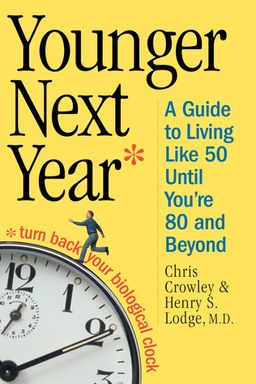
Chris Crowley and Dr. Henry S. Lodge’s central argument is both provocative and hopeful: much of what people believe to be inevitable aging is actually preventable decay. The body you inhabit after fifty is not doomed to frailty; instead, your biology waits for signals to decide whether to grow or crumble. Their book reframes the second half of life around the idea that normal aging is largely optional—you can choose growth through daily exercise, emotional commitment, and sound nutrition.
Aging versus decay
Lodge distinguishes aging—gradual, unavoidable biological decline—from decay—accelerated breakdown caused by sedentarism and emotional withdrawal. Your body’s default setting, he says, is decay unless you send strong growth signals through movement, social connection, and purpose. Roughly seventy percent of what we call aging—the weakness, the loss of balance, the fat accumulation—is controllable. The difference is behavioral and biochemical, not chronological.
The evolutionary mismatch
Your body was built for the long daily activity of the hunter-gatherer era, not the prolonged idleness of modern life. When you sit for days at a time, eat abundantly, and avoid stressors, your physiology interprets this as winter—time to conserve, store fat, and shut down growth. On the other hand, consistent activity sends a “summer” signal: the growth chemistry of youth, repair, and metabolic vitality. Lodge describes this as flipping the biological switch from C‑6 decay to C‑10 growth (his shorthand for inflammatory versus repair molecules).
Your new job for life
To fight decay, Crowley insists you must treat exercise, nutrition, and social engagement not as hobbies but as work. “Make it your new job,” he says—six days a week, every week, for the rest of your life. He recounts stories of men and women who reversed decline: John, who walked one block and ended up walking five miles daily and losing sixty pounds; Fred Goldstone, who spun five days a week at seventy-four and felt decades younger. Their radical improvement proves that daily action rebuilds functional youth.
Signals, not slogans
The book’s power lies in its integration of biology and psychology. Lodge explains how movement sends molecular messages to every organ. Muscles release cytokines that trigger repair chemistry everywhere, from the heart to the brain. Crowley translates that science into urgent motivation: without those messages, your body slides into survival mode—a chemical hibernation marked by inflammation, depression, and decay. Evolution doesn’t care about your comfort; it expects you to keep moving.
Choosing vitality as your baseline
The takeaway is clear: you can live like a fit fifty-year-old well into your seventies and eighties. You do that by choosing daily growth signals—exercise, nutritious food, meaningful commitments, and connection. Age itself doesn’t decide your trajectory; your habits do. As Lodge and Crowley put it, “Decay is optional.” Your body defaults to decline only in the absence of engagement. If you refuse passivity, your physiology rewards you with measurable youth at every level—muscular, cardiovascular, emotional, and even neural.
Key insight
You are not built to retire from movement or meaning. The chemistry of youth returns only when you keep sending growth signals—through effort, connection, and care. The body obeys the messages you give it.