
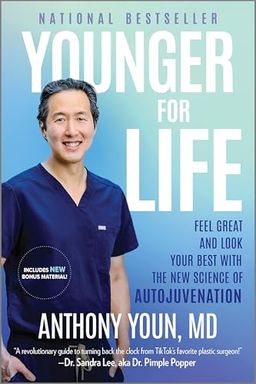
Younger for Life cover

Younger for Life

by Anthony Youn

Younger for Life reveals the revolutionary science of autojuvenation, guiding you to naturally renew and repair your body. Through diet, supplements, skincare, and lifestyle adjustments, Dr. Anthony Youn empowers you to combat aging effectively and holistically.

The Science and Soul of Aging in Reverse

What if your body already knew how to make you younger—and you just needed to learn how to let it? In Younger for Life, Dr. Anthony Youn, a board-certified plastic surgeon often called “America’s Holistic Plastic Surgeon,” argues that we can dramatically slow—and in some ways reverse—the visible and physical signs of aging using what he calls autojuvenation: training your body to rejuvenate itself naturally from the inside out. The book blends medical science, holistic wellness, and beauty instruction into a single philosophy that redefines what it means to age well.

Youn’s central claim is provocative: aging isn’t inevitable decline—it’s a condition we can influence. By addressing the root biological and lifestyle causes of premature aging rather than merely its surface symptoms, you can activate your body’s regenerative systems. Through diet, skin care, sleep, stress management, exercise, and even attitude, Youn demonstrates that “aging in reverse” is less about surgeries and serums, and more about creating the right internal environment for continual renewal.

Why This Matters Now

After decades of performing facelifts and other cosmetic procedures, Youn realized that surgical fixes could make people look younger but not feel younger—a profound distinction. A patient could get smoother skin yet still suffer fatigue, inflammation, and poor health. This disconnection pushed Youn toward functional and integrative medicine, where he found exciting research on how sleep, diet, and cell biology intersect with longevity. His revelation reshaped his mission: the best plastic surgery is the one you never need.

The book opens with the question, “How old are you, really?”—not by birth year, but by cellular behavior. Aging, Youn explains, is partly due to inevitable genetic factors but mostly a consequence of how we live. Studies show that 75-80% of aging results from lifestyle, not DNA. That means you wield enormous influence over your body’s trajectory. By understanding and reversing five key causes—nutrient depletion, inflammation, collagen loss, free-radical damage, and declining autophagy (the cell’s cleanup mechanism)—you can live longer with greater vitality and less visible aging.

The Rise of Holistic Anti-Aging

Youn’s concept of autojuvenation stands between medical precision and wellness philosophy. While earlier books like Lifespan by Dr. David Sinclair or The Blue Zones by Dan Buettner spotlight longevity through genetics or lifestyle, Youn takes a hybrid route. He combines scientific insight—epigenetics, autophagy, circadian rhythms—with practical strategies from nutrition and skin care. His system is structured around six pillars: eating for youth, supplementing strategically, nurturing skin health, sleeping deeply, reducing stress, and considering targeted noninvasive treatments if desired.

From Facelifts to “Life Lifts”

One compelling story that grounds the book’s philosophy comes from Youn’s own career. After a complication from a facelift devastated one patient—and him—he began to question whether success meant doing fewer surgeries that better aligned with health. He realized that skin is a “magic mirror” for internal health: when organs, hormones, and inflammation are balanced, the face naturally glows. “Why get a facelift,” he asks, “when you can get a life lift?”

Youn’s approach is refreshingly attainable. There are no magic creams or bizarre regimens. Instead, he champions a return to biological basics: nourishing food, better light exposure, targeted fasting, oxygenating movement, mindfulness, and clean, evidence-backed skin care. He supports all of this with client testimonials—like women in their 50s and 60s whose wrinkles softened and energy returned after three weeks on his Autojuvenation Jump Start program. The results read less like beauty fads and more like a manual for cellular repair.

Aging as a Choice

Ultimately, Youn reframes aging as a daily decision: every bite, breath, stressor, and thought is either autojuvenating or age-accelerating. Like a holistic engineer, he teaches you to remove biological friction from your system. Aging may be inevitable, but suffering and decline are not. “Humans are meant to age,” he writes, “but not to decay.” By the end of Younger for Life, aging is no longer an enemy to fight but a process to optimize.

Core Premise: You can live younger for life by aligning behavior with biology—feeding your cells, mind, and skin what they need to regenerate naturally.

This overview sets the stage for the rest of Youn’s blueprint: understanding why we age, how to eat and live to reverse it, how to care for skin scientifically, and ways to use modern treatments without losing sight of what truly matters—integrated health, confidence, and purpose. In the chapters that follow, each piece of the Autojuvenation system comes together, helping you transform both how you look and how you live.


The Causes of Aging: Inside and Out

Youn begins by asking what aging really is. Wrinkles and sagging are visible, yes, but aging starts deep within your cells. The external signs—drooping jawlines, dark spots, fatigue—mirror cellular disorganization beneath the surface. He likens human skin to a diagnostic mirror, reflecting the health of your blood vessels, hormones, and immune system.

Drawing on cutting-edge science, he explains that we age due to both intrinsic (internal) and extrinsic (external) factors. While genetics account for roughly a quarter of aging, lifestyle and environment dominate the other three-quarters. The book describes five key internal mechanisms that accelerate aging.

1. Nutrient Depletion

Your cells need consistent micronutrients—vitamins, minerals, amino acids—to repair and create new tissue. Modern diets, reliant on processed food, leave cells starving even in the face of calorie excess. Without adequate protein, for instance, collagen synthesis slows and skin thins. This deficiency ripples outward as fatigue, hormonal imbalance, and dull skin.

2. Inflammation

Inflammation is the body’s natural repair response to injury, but chronic inflammation keeps the body in a low-grade defensive state. According to Youn, this “silent fire” erodes tissues, makes arteries rigid, disrupts insulin, and creates joint pain. On the skin, inflammation manifests as acne, redness, rosacea, and visible aging. He calls it “the great ager.”

3. Collagen Degradation

By age 40, most people have lost 10–20% of their skin’s collagen. Every year after, it declines about 1% more. UV exposure, pollution, and sugar worsen the breakdown. The bonding of sugar molecules to collagen—called glycation—forms advanced glycation end products (AGEs) that harden and distort the skin’s structure. Collagen loss is what turns firm cheeks into sagging jowls and smooth skin into crepe paper.

4. Oxidative Stress

Think of oxygen as a double-edged sword: vital for energy production but capable of creating unstable molecules called free radicals. Youn explains that these radicals steal electrons from healthy cells, damaging DNA and collagen and triggering more inflammation. While the body’s antioxidant systems counter this, modern exposure to processed food, stress, and toxins overwhelms natural defenses. Oxidative stress is aging’s molecular rusting process (similar to David Sinclair’s research on cellular damage in Lifespan).

5. Diminished Autophagy

Autophagy is your cells’ cleaning crew, breaking down debris and recycling old parts into new materials. Over time, this repair crew slows down, leading to a buildup of malfunctioning organelles. Without regular cleanup, wrinkles, fatigue, and disease develop faster. Youn’s later chapters show how intermittent fasting and sleep reactivate this system, letting your body “eat its old cells” before they cause harm.

Importantly, all five processes interact: oxidative stress fuels inflammation, which damages collagen, and poor diet accelerates the whole cascade. External factors like sun damage, smoking, and harsh skin products act as accelerants. A Danish twin study even demonstrated that the younger-looking twin typically lived longer—a powerful reminder that what shows up on your face is happening in your bloodstream, too.

“Skin,” Youn writes, “is the magic mirror of your internal health. When you fix what’s happening inside, beauty inevitably shows up outside.”

This framework—nutrient fulfillment, anti-inflammation, collagen support, antioxidant protection, and cellular cleanup—becomes the foundation for every practical step that follows in the book’s Autojuvenation system. Understanding these causes is crucial because, as Youn insists, you can’t out-surgery bad biology.


Eat Younger: Food as Medicine for Longevity

Forget expensive creams—your anti-aging routine begins at the dinner table. In Youn’s view, food is the most accessible and powerful form of medicine. The “Younger for Life Diet” attacks aging through five dietary mechanisms: nourish, cool, firm, heal, and cleanse. Each corresponds to one of the biological systems driving youthfulness.

Nourish: Foundation Foods

At its core, nutrition is about giving your body the building blocks it needs. Youn urges you to eat nutrient-dense, whole foods full of vitamins and minerals. Imagine constructing a house—you can’t build strong walls without good materials. Essential macronutrients include balanced ratios: around 50% complex carbs, 20% protein, and 30% fat, alongside micronutrients such as vitamins A, B, C, D, and E. He uses stories like Kathy’s—a 43-year-old who swapped soda and fast food for fruits, vegetables, and clean proteins—to show dramatic improvements in skin clarity and energy.

Cool: Anti-Inflammatory Eating

Inflammation responds keenly to diet. Youn’s advice mirrors the Mediterranean and Blue Zones patterns: fill your plate with colorful produce, fatty fish, olive oil, herbs, and fermented foods. Omega-3 fatty acids from salmon or flax counteract the omega-6-heavy vegetable oils that dominate processed foods. Fermented dishes like kimchi and sauerkraut feed beneficial gut bacteria that reduce systemic inflammation. “The gut-skin axis is real,” says Youn, citing research showing probiotic-rich diets reduce acne, rosacea, and even UV sensitivity.

Firm: Foods for Collagen

Collagen is your body’s internal scaffolding. The right foods—protein, bone broth, eggs, and beta-carotene-rich plants like carrots and sweet potatoes—supply the amino acids and antioxidants needed to rebuild it. Animal proteins must be chosen wisely: grass-fed, wild-caught, or organic to avoid inflammation from factory-farmed meat. Youn supports bone broth (popularized by Dr. Kellyann Petrucci) for direct collagen peptides and gut benefits. Plant eaters can turn to legumes, nuts, and seeds for similar amino acids.

Heal: Antioxidant Armory

To fight oxidative stress, Youn prescribes a vibrant rainbow: blueberries, spinach, broccoli, and especially herbs and spices like turmeric, cinnamon, and cloves—the latter being the most antioxidant-rich food discovered. He also tips his hat to green tea, dark chocolate, and moderate red wine, each rich in polyphenols like catechins and resveratrol. His morning ritual might include a matcha latte; his nightcap, a square of 80% cacao chocolate. In moderation, joy counts as medicine, too.

Cleanse: Activate Autophagy via Eating Patterns

Finally, Youn recommends periodic fasting or time-restricted eating to trigger autophagy—the body’s cleanup response. Reducing caloric intake by even 15% or fasting 16 hours a few days a week helps cells clear debris and regenerate. He emphasizes that autophagy-friendly diets shouldn’t be extreme: the focus is on eating real food in the right window, not starving.

The result? Patients like L.D., a 45-year-old project manager, reported softer, glowing skin, more energy, and flatter bellies after just three weeks on this system. Youn’s holistic food philosophy matches scientific consensus on aging: everything from telomere length to collagen density improves when you feed your body clean fuel.

“Every bite you eat can either inflame you or autojuvenate you,” Youn writes. “It’s the most daily vote you cast for your future face.”

From this foundation, Youn expands into lifestyle and skincare guidance, all anchored by diet—because your body’s ability to rebuild physically begins with what lies on your plate.


Autophagy and the Power of Intermittent Fasting

Autophagy—literally “self-eating”—is the body’s built-in repair mechanism, and Youn treats it as the holy grail of youth. When you fast, cells stop digesting incoming food and start recycling old components, cleaning up broken proteins and regenerating. Scientists like Dr. Yoshinori Ohsumi, who won the Nobel Prize for discovering autophagy, demonstrated that this biological housekeeping delays aging and disease. Youn brings it down to earth, showing how you can trigger it even without hard science degrees or extreme deprivation.

Fasting Made Human

Instead of 72-hour juice cleanses, Youn suggests small, sustainable cycles—his favorite is the 16:8 fast (16 hours fasting, 8-hour eating window), practiced two to three days weekly. You can have black coffee or green tea but no calories during fasts. He discovered fasting’s rejuvenating effects firsthand while trying Dr. Valter Longo’s 5-day ProLon Fasting Mimicking Diet. By day five, he felt sharper, leaner, even radiant; his skin glowed from improved cellular renewal. “That’s when I realized,” he writes, “my body wasn’t starving—it was cleaning house.”

Why Caloric Restriction Works

Calorie restriction is the only proven intervention to extend life in animals. Fasting mice live up to 35% longer and resist diseases. In humans, even mild restriction lowers inflammation and boosts insulin sensitivity—both crucial for skin and energy. Youn relates this to spiritual traditions: fasting has anchored Christianity, Islam, and Buddhism for centuries, suggesting that body and soul share rhythms of renewal.

Autophagy-Friendly Eating

To intensify autophagy post-fast, Youn proposes an “autophagy diet” rich in healthy fats (olive oil, avocados, walnuts, salmon), polyphenols (berries, coffee, turmeric), and minimal protein on fasting days—around 25 grams. The key is switching from insulin-spiking foods to glucagon-promoting ones, allowing cells to keep recycling longer. This gentle rhythm—feast, fast, renew—creates what he calls a “metabolic symphony.”

When Not to Fast

Youn, ever cautious as a physician, warns that fasting isn’t for everyone. Pregnant or breastfeeding women, people with eating disorders or chronic illness, and underweight individuals should avoid it. He encourages personalized medical consultation—a refreshing counterbalance to trendy internet fasting challenges. Autophagy should feel energizing, not punishing.

By applying fasting as a rhythm rather than a restriction, you support deeper biological housekeeping. The result is more resilient metabolism, tighter skin, sharper focus—and proof that wellness, not willpower, fuels youthful renewal.


Skincare as Cellular Care

As a plastic surgeon turned holistic healer, Youn bridges two worlds. In the realm of skin care, he translates dermatologic science into daily rituals anyone can follow. His mantra: “Healthy skin is attractive skin.” He structures his external rejuvenation system around three steps—cleanse, protect, and treat—each designed to support the skin’s microbiome and architecture rather than strip or stress it.

Cleanse: Respect the Skin Barrier

Your skin is alive, covered in beneficial microbes. Overwashing with alcohol-based toners or soaps (especially those with sodium lauryl sulfate) destroys these allies. Youn recommends gentle, botanical-based cleansers: oily skins may benefit from foaming or even oil cleansers (“like dissolves like”); dry or sensitive types need creamy, surfactant-free options. For toners, skip alcohol—hydrating ones with green tea or aloe maintain balance. “Clean,” he reminds readers, “shouldn’t mean squeaky.”

Protect: Antioxidants and Sunscreen

During the day, skin faces its greatest threat: radiation and pollution. Youn layers topical antioxidants (vitamin C + E serums, green tea extract) beneath broad-spectrum SPF 30+ sunscreen. He explains the difference between chemical sunscreens (which absorb UV but carry hormonal risks from ingredients like oxybenzone) and physical sunblocks (zinc oxide, titanium dioxide) that deflect rays safely. In line with Europe’s stricter ingredient laws, he favors mineral-based sunscreens and sunscreens free of hormone-disrupting chemicals.

Treat: Anti-Aging Actives

At night, the goal shifts to repair. His skin-care trinity—retinoids, peptides, and growth factors—stimulates collagen renewal. Retinoids (vitamin A derivatives like tretinoin and over-the-counter retinol) remain the gold standard, though those with sensitive skin can use bakuchiol for similar effects. Growth factors like TGF-β prompt new collagen, while peptides reinforce firmness with less irritation. For discoloration, he recommends kojic acid and niacinamide over hydroquinone (banned in Europe for potential toxicity).

Exfoliation, performed one to three times weekly with alpha hydroxy acids, helps remove old cells and boost treatment absorption. But he cautions against over-exfoliating, which can inflame and age the skin faster. His guiding idea: skin should be coached, not coerced.

“The future of anti-aging skin care,” Youn writes, “is not more chemicals—it’s less assault, more alignment.”

With his “Two Minutes, Five Years Younger” routine—cleanse, antioxidant serum, SPF in the morning; cleansing, retinol, moisturizer at night—Youn proves sophistication can be simple. In essence, caring for your skin is caring for your cells.


Sleep, Stress, and the Autojuvenation Lifestyle

Skin creams can’t outmatch sleepless nights or chronic cortisol. After diet and skin care, Youn calls restorative sleep and stress mastery the true youth elixirs. Quoting neuroscientist Dr. Matthew Walker (Why We Sleep), he reminds readers that nearly every disease of aging—from heart disease to dementia—ties back to inadequate rest.

Sleep: Youth’s Natural Reset

Seven to nine hours per night repairs DNA, balances hormones, and triggers collagen production. Poor sleep shortens telomeres—the biological clock of your cells. Youn prescribes a “circadian cleanse”: regular sleep times, dark bedrooms (with blackout curtains or white noise for urban areas), and minimal screen exposure before bed. Blue light suppresses melatonin, keeping your brain wired as if it were noon. His personal rule: no phones within eight hours of bedtime (and yes, your phone should not sleep under your pillow).

Stress: The Fast Track to Aging

Cortisol, the body’s fight-or-flight hormone, erodes collagen, raises blood sugar, and dulls your glow. Chronic worry physically shortens telomeres. Youn teaches meditation and deep breathing as antidotes—simple, evidence-backed tools shown to stabilize heart rate and even lengthen telomeres over time. During COVID, he personally rediscovered meditation to quell 3 a.m. anxiety and insomnia. “Stillness,” he says, “heals what medicine can’t touch.”

He also praises yoga, both for strength and self-awareness. Beyond flexibility, yoga activates fast-twitch muscle fibers, improving balance (critical since one in three adults over 50 may die within a year of a hip fracture). It’s healing for both mobility and mind.

Mindset and Meaning

To sustain youthfulness, Youn insists, cultivate gratitude and connection. He highlights mindfulness, journaling, and altruism as scientifically validated mood-lifters. Helping others releases endorphins; feeling grateful lowers cortisol. Even posture matters—standing tall reduces stress signals in the brain. Ultimately, youth isn’t only a biological state but an emotional stance toward life.

“You can’t Botox your way into peace,” Youn warns. “But peace will Botox you from within.”

His message is both scientific and soulful: when you align your nervous system with calm instead of chaos, biology follows. True rejuvenation happens while you’re resting, breathing, and living with purpose.


Beyond the Basics: Modern but Mindful Treatments

After mastering the internal and external foundations, Youn concedes that sometimes you may want to go a step further. His final section demystifies noninvasive and minimally invasive procedures—from LED therapy to injectables—without veering into vanity. The rule: never pursue a treatment that undermines your overall health.

At-Home Innovations

Youn endorses three DIY options with real science behind them. First, mild at-home chemical peels or fruit-based facials for gentle exfoliation; second, red-light therapy for mitochondrial stimulation (91% of users in studies saw skin improvement); and third, dermaplaning for smoother skin texture. These show how beauty tech can serve wellness rather than obsession.

In-Office Technology

He evaluates numerous treatments candidly: IPL photofacials effectively erase sun spots; radiofrequency microneedling tightens mild sagging without surgery; Ultherapy and Morpheus8 offer noninvasive lifting at the cost of some fleeting discomfort; and PRP (platelet-rich plasma) rejuvenates skin naturally using your body’s own growth factors. These are tools, he says, not crutches.

Aesthetic Common Sense

Youn warns against overfilled “pillow faces,” unsafe fillers, and gimmicky “thread lifts.” His Holistic Beauty Blacklist exposes dangerous fads like carboxytherapy or lip implants. The goal isn’t reconstruction—but reflection—helping your outer self match the vitality inside. For patients who genuinely need surgery, he urges thorough vetting of surgeons and setting realistic expectations.

Even in cosmetology, he says moderation is regenerative. Jade rollers and gua sha facial massage, for instance, can reduce puffiness temporarily—just don’t expect miracles. “Massage your skin,” he jokes, “not your delusions.”

By championing both caution and curiosity, Youn offers a middle path rarely seen in beauty culture: a scientifically literate, emotionally grounded approach to self-care that complements inner health rather than competes with it.


What Really Matters: Aging with Grace and Purpose

The book’s parting chapter departs from serums and supplements to ask a profound question: what is all this youthfulness for? Youn closes with a meditation on meaning. Inspired by his own dog-rescue work, he reminds us that unconditional love, compassion, and purpose are the true markers of a well-lived—and, in spirit, ageless—life.

He tells the story of Sammy, a senior rescue dog who, despite years of neglect and illness, spent his final months full of joy and trust. Sammy didn’t care about wrinkles or time; he embodied gratitude in the present. Watching him changed Youn’s understanding of aging: animals don’t mourn youth—they live today fully. He challenges readers to follow that model: serve others, love deeply, and accept aging as both privilege and teacher.

“Think health span, not life span,” he concludes. The aim isn’t endless years but meaningful ones—years brimming with energy to love family, pursue passions, and contribute to the world. Youth, he argues, isn’t lost with wrinkles; it’s lost when joy, curiosity, and kindness fade.

“You can’t control how many years you get,” Youn writes, “but you can control how alive you are in them.”

That final perspective reframes every previous chapter. Autojuvenation isn’t vanity—it’s vitality, a way to empower yourself so you can show up more joyfully for the people and causes you love. The ultimate beauty treatment, Youn implies, is a full heart.

Dig Deeper

Get personalized prompts to apply these lessons to your life and deepen your understanding.

Go Deeper

Get the Full Experience

Download Insight Books for AI-powered reflections, quizzes, and more.