
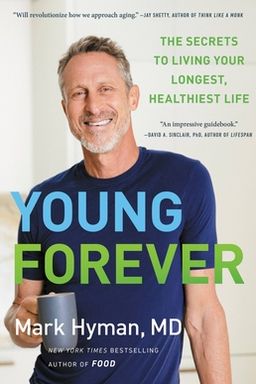
Young Forever cover

Young Forever

by Mark Hyman

Young Forever challenges the inevitability of age-related decline, offering a transformative guide to living longer and healthier. Through practical strategies in nutrition, stress, and lifestyle, readers discover how to extend their lifespan while maintaining youthful vitality.

Reversing Aging Through Functional Medicine and Systems Thinking

How can you grow older without becoming sick? In Young Forever, Dr. Mark Hyman argues that longevity is not about living longer, but about slowing and even reversing biological aging by addressing the root causes of disease rather than its symptoms. His central claim is simple yet radical: aging itself is a disease of imbalance—and by restoring balance across your biological networks, you can become biologically younger even as you age chronologically.

Hyman blends functional medicine, systems biology, and cutting-edge longevity science into a practical blueprint. You’ll learn how to target the ten hallmarks of aging, measure and reverse biological age through epigenetics, eat to activate longevity genes, and use hormetic stressors—like fasting, cold, and exercise—to stimulate your body’s natural repair systems. You’ll also explore the role of microbiome health, detoxification, and regenerative medicine in creating a life that is not only long, but vibrant.

A new model: your body as an ecosystem

Functional medicine reframes the body from a collection of parts into a single, interacting ecosystem. Rather than masking symptoms—high cholesterol, depression, or fatigue—it asks, what systems are malfunctioning and why? Hyman organizes this ecosystem into seven interconnected biological networks: digestion/microbiome, immune/inflammatory, energy/mitochondria, detoxification, communication (hormones and signaling), circulation/transport, and structure/musculoskeletal integrity. When one system falters, others follow; when they’re in sync, health and longevity flourish.

The ten hallmarks of aging

Researchers have identified ten upstream mechanisms that explain why all chronic diseases cluster with age—DNA damage, mitochondrial dysfunction, inflammation, epigenetic wear, senescent ("zombie") cells, and more. These defects form a web: damage one, and the rest accelerate. Hyman shows that you can slow or reverse these hallmarks by optimizing nutrient sensing (for example, balancing insulin and mTOR), supporting mitochondria, clearing senescent cells, and silencing chronic inflammation (“inflammaging”). Target one hallmark upstream and many diseases—diabetes, dementia, heart disease—tend to regress together.

Measuring and reversing biological age

Chronological age is fixed, but biological age is plastic. Hyman highlights advances in telomere biology and epigenetic clocks (Horvath, Hannum, and GrimAge) that let you quantify how old your body truly is. Studies like Kara Fitzgerald’s have shown that functional-medicine interventions—nutrient-dense diets, probiotics, stress reduction, and restorative sleep—can reverse biological age by over three years in just eight weeks. These results confirm that your lifestyle literally writes and rewrites your epigenome every day.

The exposome: what you take in and leave out

Perhaps the book’s most empowering message is that your genes are not your destiny. Around 90% of your chronic disease risk is determined by your exposome—the total of everything you eat, breathe, and experience. Hyman summarizes his guiding rule: “Take out the bad stuff, put in the good stuff.” Remove sugar, toxins, processed food, and chronic stress; add whole foods, movement, purpose, and connection. Healing begins when you change your inputs at the systems level.

A synthesis of science and self-care

Young Forever bridges frontier biotechnology with ancient health wisdom. It integrates the scientific recognition that aging is modifiable with the humanistic insight that meaning, love, and joy are as essential as mitochondria. Through systems medicine, biomarker tracking, hormesis, and regenerative therapies, Dr. Hyman provides a comprehensive, evidence-based map for becoming younger every year—not metaphorically, but measurably.

Core message

When you align the seven biological systems, target the hallmarks of aging, and live by hormetic balance—using small stress to build resilience—you unlock the body’s innate design: self-repair, regeneration, and vitality for life.


The Science Beneath Aging and Renewal

Aging once seemed inevitable. But modern biology has mapped the biochemical mechanisms—known as the ten hallmarks of aging—that drive decline across every organ system. This insight changes everything: it means you can intervene upstream to delay or reverse aging at its source.

Understanding the ten hallmarks

Hyman presents a clear roadmap through these hallmarks: disruptions in nutrient signaling, DNA damage, telomere shortening, misfolded proteins, epigenetic drift, senescent cells, mitochondrial dysfunction, microbiome dysbiosis, stem-cell exhaustion, and chronic inflammation. Each interacts with the others—a web of damage and miscommunication that accelerates as you age.

For example, overeating sugar drives excess insulin release (a nutrient-sensing failure) that increases mTOR activation, promotes fat storage, and fuels inflammation. Senescent “zombie” cells accumulate and secrete inflammatory molecules that corrode surrounding tissue. Over time, energy falters as mitochondria fail, and immune dysregulation perpetuates damage.

Intervening at the source

Target one hallmark upstream and you often slow the rest. Caloric restriction or time-restricted eating, for instance, reduces insulin, activates AMPK, boosts autophagy, and restores mitochondrial and immune function. Adding plant polyphenols like quercetin, curcumin, or resveratrol supports proteostasis, clears senescent cells, and mimics fasting’s longevity effects.

These mechanisms are not theoretical. In animal research, clearing senescent cells extended lifespan by over 30%. In humans, lifestyle shifts—nutrient density, exercise, sleep, and stress reduction—consistently impact epigenetic and inflammatory markers tied to lifespan.

From research to real life

Hyman’s practical message: stop chasing diseases individually. Address the upstream disruptors—poor diet, toxins, stress, inactivity—and you automatically shift multiple hallmarks toward repair. Your goal is not merely preventing disease but extending health span: the years of life free from disability and dysfunction.

Key understanding

Aging is a biological process you can influence. By working at the level of molecular hallmarks, you turn longevity science into daily practice.


Food as Medicine and Metabolic Mastery

What you eat is information for your body’s gene-expression network. Hyman’s Pegan diet—a fusion of paleo’s nutrient density with veganism’s plant emphasis—acts as the cornerstone of the Young Forever program. The idea is simple: use food to modulate the pathways that determine aging—insulin, mTOR, AMPK, and sirtuins.

Dietary patterns that lengthen life

Longevity zones like Sardinia and Ikaria reveal a consistent pattern: whole, local, plant-heavy diets rich in phytochemicals, moderate protein from fish or goat products, little sugar, and daily physical activity. Hyman shows that such diets suppress inflammaging and keep insulin signaling youthful.

Phytochemicals and hormesis

Plants manufacture polyphenols—curcumin, catechins, resveratrol—that act as mild stressors triggering protective responses. This “hormesis” strengthens mitochondrial resilience and promotes autophagy, the cellular cleanup process. Hyman refers to these molecules as nature’s longevity drugs, available in your grocery store.

Taming insulin: the modern anti-aging priority

The foremost dietary villain is insulin overload. Refined sugar and flour hijack hormonal signaling, increasing visceral fat and shortening health span. Reversing insulin resistance through time-restricted eating or ketogenic resets restores metabolic flexibility—the hallmark of youth. When you manage your glucose curve, you stabilize energy, mood, and memory.

Protein, timing, and functional fasting

Hyman recommends balancing fasting routines with sufficient protein—1.0–1.2 g/kg/day, ideally 25–40 grams per meal—to prevent sarcopenia. Combining resistance training with post-exercise protein builds longevity muscle. Time-restricted eating (12–16 hours overnight) offers the autophagy of fasting without deprivation.

Take-home message

Food is programming code for your longevity switches—change it, and your biology responds immediately toward health and renewal.


Movement, Sleep, and the Mind-Body Connection

Movement, rest, and mental balance form the behavioral foundation of rejuvenation. Hyman insists that exercise is as potent as any drug for slowing aging because it activates nearly every repair system in the body—from mitochondrial regeneration to stem-cell release.

Exercise for longevity

You don’t need to be extreme. Raising your VO2 max through moderate-to-intense aerobic activity—even walking briskly or cycling—strongly predicts lifespan. Resistance training 2–4 times weekly prevents sarcopenia, stabilizes blood sugar, and maintains insulin sensitivity. Each muscle contraction is a chemical signal for regeneration.

Sleep as cellular therapy

Deep, regular sleep is when your brain detoxifies and your body heals. Aim for 7–8 hours nightly, consistent timing, and minimal evening light exposure. Sleep deprivation, by contrast, accelerates epigenetic aging and insulin resistance. Hyman uses tools like the Oura Ring to monitor sleep stages and quality.

Healing stress and trauma

Mental wellbeing is not separate from biology—it’s embodied. Chronic stress raises cortisol, damages mitochondria, and dysregulates immunity. Practices like meditation, breathwork, social bonding, and purpose stabilize the autonomic nervous system. For deep trauma, Hyman discusses regenerative mental-health tools such as ketamine therapy, limbic retraining, and psychedelics (MDMA, psilocybin) in clinical contexts.

Simple truth

Longevity begins with strong muscles, quality sleep, and a peaceful mind—these three synergize to slow virtually every biomarker of aging.


The Gut, Detoxification, and the Hidden Burden of Toxins

If your gut and detox systems fail, every other network suffers. Hyman calls the gut the body’s “central command” because 70% of the immune system resides there. Processed food, pesticides, and antibiotics erode this foundation, fueling inflammation that accelerates aging.

Microbiome and inflammation

Healthy microbes produce short-chain fatty acids that regulate metabolism and immunity. A low-fiber Western diet, however, deprives them of fuel, causing dysbiosis and leaky gut. Fiber diversity—especially from vegetables, resistant starches, and fermented foods—restores microbial balance.

Reducing toxic load

The industrial age introduced over 80,000 synthetic chemicals. Many accumulate in fat tissue and disrupt hormones and mitochondria. Hyman’s “4-P” detox model—Process (liver), Poop, Pee, and Perspire—is the daily infrastructure of purification. Cruciferous vegetables, garlic, citrus, and green tea support liver enzymes that neutralize toxins.

Repairing the gut wall

Rebuilding gut integrity involves removing trigger foods, replenishing with collagen, glutamine, and probiotics, and restoring microbial ecology. Hyman’s own recovery from C. difficile infection illustrates how quickly function can return when upstream causes are treated instead of masked.


Hormetic Stress: Building Resilience Through Challenge

Hyman reinvents an ancient truth with modern science: what doesn’t kill you makes you younger. Hormesis—using small, controlled stress to trigger repair—is nature’s longevity code.

Everyday hormesis practices

Regular heat exposure (saunas) induces heat-shock proteins that reduce Alzheimer’s risk; cold plunges activate brown fat and mitochondria. Intermittent fasting and high-intensity intervals mobilize stem cells and autophagy. Even phytochemicals—curcumin, EGCG, resveratrol—are plant-based hormetic molecules that trigger similar responses.

Advanced hormetic therapies

Hyperbaric oxygen therapy (HBOT) lengthens telomeres and reduces senescent cells in small studies; ozone acts as a controlled oxidant to boost mitochondria. Newer technologies like hypoxia-hyperoxia training simulate altitude shifts to regenerate energy systems safely.

How to dose stress wisely

The key is balance: too much stress harms, too little weakens. Start gradually—short fasts, brief cold exposure, manageable intensity—and recover adequately. Properly applied, hormesis upgrades your resilience, metabolism, and mood, mimicking the conditions that shaped human evolution.


Regenerative Medicine and the Future of Repair

Cutting-edge regenerative medicine moves from symptom management to tissue restoration. Hyman introduces stem cells, exosomes, peptides, and plasma exchange as emerging tools that may augment the body’s own healing systems.

Stem cells and exosomes

Stem cells—especially mesenchymal types—can modulate inflammation and regenerate cartilage, tendons, and organs. Exosomes, their signaling particles, carry rejuvenating microRNAs and proteins. Hyman recounts using them for post-surgical recovery and autoimmune symptoms with striking improvements (though evidence is early and anecdotal).

Peptides and immune therapy

Peptides like BPC-157 accelerate soft-tissue repair; thymosin alpha-1 enhances immunity. Natural killer (NK) cell infusions target chronic infections and malignancy. Plasma exchange removes pro-aging inflammatory molecules from circulation—animal and human studies show reversal of aging markers following the procedure.

Ethics, access, and responsibility

These interventions are promising but costly and experimental. Hyman urges using lifestyle and hormesis first, then exploring regenerative options with reputable clinicians. The field is evolving fast, but your habits still form the foundation on which medical innovation builds.


Personalizing and Tracking Your Longevity Journey

Longevity is measurable, trackable, and personal. Hyman’s closing framework turns theory into daily action, helping you know what to focus on, test for, and monitor as you evolve.

Assess the seven systems

Start with quizzes or lab panels covering digestion, immune health, energy, detoxification, hormones, circulation, and structure. The Function Health platform provides over 100 biomarkers—from omega-3 index to methylation status—so you can see exactly what drives aging in you.

Track biological markers

Use wearables (Oura, Whoop) for sleep and recovery, a CGM for glucose, and periodic epigenetic and telomere testing. Repeat every 6–12 months to measure real progress. When data guides choices, motivation and results compound.

Build your plan in layers

Hyman’s “ten-step roadmap” starts with diagnostics, then moves to diet, exercise, sleep, and basic supplements. Add hormetic practices next, and only later—if needed—targeted drugs or regenerative medicine. By layering gradually, you create a personalized, sustainable longevity lifestyle instead of a short-lived experiment.

Dig Deeper

Get personalized prompts to apply these lessons to your life and deepen your understanding.

Go Deeper

Get the Full Experience

Download Insight Books for AI-powered reflections, quizzes, and more.