
Idea 1
The New Titans of Modern Entrepreneurship
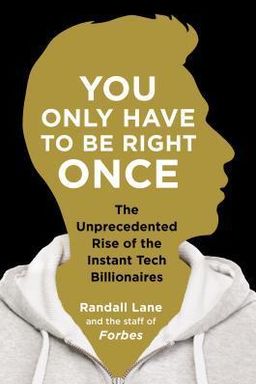
What if being young, untested, and a little reckless were no longer disadvantages but superpowers? In You Only Have to Be Right Once, Forbes editor Randall Lane explores how a new breed of digital entrepreneurs—and the investors who back them—have turned youth, curiosity, and technological obsession into the most potent wealth engine in history. Lane contends that success in the 21st century no longer depends on pedigree or years of experience but on an idea that hits at exactly the right moment — you only have to be right once, and that one success can change everything.
Lane profiles an astonishingly diverse collection of young innovators—Mark Zuckerberg, Elon Musk, Kevin Systrom, Daniel Ek, Jack Dorsey, Brian Chesky, and others—each of whom challenged entrenched industries and reshaped how we communicate, travel, pay, or entertain ourselves. Their journeys are often chaotic, unorthodox, and deeply human, revealing a pattern: big ideas born from personal frustrations, executed with relentless velocity, and sustained by global networks of digital talent. But underlying all the flash and fortune is the same pragmatic mantra—failure is not fatal, and youth’s restless energy can transform entire industries.
From Silicon Valley to Global Disruption
Lane positions Silicon Valley not simply as a geographic hub but as a mindset—a global phenomenon extending from Palo Alto’s coffee shops to Berlin’s coding labs and Tel Aviv’s incubators. This generation doesn’t wait for permission; they hack, build, and iterate publicly. Sean Parker’s journey, from Napster to Facebook and Spotify, shows how being early and loud can set the stage for transformation. Similarly, Daniel Ek’s Stockholm-based Spotify underscores that innovation is no longer confined to American borders—what matters is execution and timing.
Lane asks us to consider an unsettling truth: traditional career paths are crumbling. Young entrepreneurs have made dropping out of college not a stigma but a badge of authenticity—what psychologists might call an act of radical agency. Evan Spiegel, Snapchat’s cofounder, rejected a $3 billion buyout from Facebook at twenty-three, betting that vision mattered more than safe money. In a culture where risk-aversion once dominated, his decision exemplifies the new digital boldness: bet on future relevance, not past comfort.
The Psychology of Endless Creation
Why do these entrepreneurs succeed when others fail? Lane finds patterns of shared obsessiveness. Elon Musk’s fixation on physics and sustainability drove him to reinvent cars and space travel simultaneously. Jack Dorsey’s intellectual restlessness turned Twitter and Square into parallel revolutions. These figures embody a paradox—calculated recklessness. They fail often, pivot constantly, and stay anchored to a core purpose larger than profit. Money arrives as by-product; meaning drives the mission.
Comparing these stories to classic texts like The Lean Startup by Eric Ries or Peter Thiel’s Zero to One, Lane emphasizes application over theory. Unlike earlier generations of entrepreneurs shaped by corporate ladders and MBA frameworks, these coders and creators see business as creative expression. They blend the hacker ethos—build fast, break things—with philosophical depth. Alex Karp of Palantir, a philosopher by training, leverages data analytics while grappling with the moral weight of surveillance technologies. In this world, power is intellectual and cultural, not hierarchical.
What Readers Can Learn
Lane ultimately invites you to rethink the meaning of success. You don’t need to be a genius or have endless capital—you need insight, courage, and timing. When ideas are exponential, one correct call can outweigh a thousand mistakes. These entrepreneurs prove that failure is digital compost: the material from which future innovation blooms. If you’ve ever feared taking a creative leap, Lane’s argument reframes risk as necessity. In a connected world, there’s no longer a distinction between personal ambition and global opportunity—the next billion-dollar idea could start from a laptop in a dorm room.
Core concept: The future belongs to those who act—even if imperfectly. In a networked era, youth, experimentation, and audacity aren’t liabilities but asymmetric advantages. You Only Have to Be Right Once makes a compelling case that innovation isn’t about avoiding mistakes—it’s about making the right one big enough to matter.