
Idea 1
Reclaiming the Real George Washington
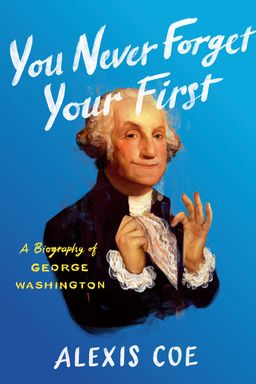
How do we rediscover the human being behind America’s most mythologized face? In You Never Forget Your First, historian Alexis Coe invites you to meet George Washington—not as the marble man of textbooks, nor the untouchable patriarch found on currency, but as a complex, anxious, ambitious, and contradictory figure. Coe’s central argument is simple yet revolutionary: Washington was a man, not a monument, and understanding the real him—his relationships, insecurities, and contradictions—helps us better understand the nation he shaped. Rather than celebrating his perfection, she challenges readers to examine his entire life, from his difficult childhood and deep emotional wounds to his uneasy presidency and entanglement with slavery.
Coe calls out what she playfully names the “Thigh Men of Dad History,” a tradition of male historians who, for centuries, have obsessed over Washington’s physicality, ambition, and supposed stoicism, reducing him to a heroic archetype while ignoring the women, enslaved people, and social context that truly define his story. She sets out to rewrite the script—using fresh humor, empathy, and sharp research to bring George Washington down from the pedestal and back into human proportions.
The Human Behind the Hero
From the start, Coe shows that Washington’s life was marked by grief and precarity. His mother, Mary Ball Washington, lost nearly everyone she loved early in life and struggled as a widowed mother with five children. Her tough pragmatism—and reputation for severity—shaped young George’s worldview, teaching him that survival required appearances of control. Unlike the dutiful “republican mother” later mythologized by patriotic historians, Coe’s Mary is complicated: literate but not highly educated, self-reliant, and constantly maligned by male biographers. Her relationship with her son is foundational to understanding his anxieties around respect, recognition, and reputation.
Washington’s early years oscillated between failure and social aspiration. He dreamed of joining the British Navy, but his mother forbade it after realizing the harsh life of midshipmen. As a result, Washington learned to navigate ambition within constraints—an early hint of the stately composure that later defined his public persona. From a surveyor in the Shenandoah Valley to a young, reckless officer whose fateful ambush ignited the French and Indian War, Washington’s formative experiences taught him to hide uncertainty behind discipline and to equate control with survival.
Unmasking the Myths
Coe skillfully debunks myths that have calcified over generations. The cherry tree, the wooden teeth, the near-divine restraint—each served to turn a fallible man into a national deity. But Washington did not have wooden teeth; he wore dentures made from the teeth of enslaved people and animals. He was not born a self-sacrificing saint; he was deeply ambitious, strategic, and image-conscious. And while he longed for retirement from public life, he also meticulously managed his own legend—editing his letters, guarding his likeness, and even preparing his slave-manumission legacy as a final act of reputation management.
By peeling back the mythology, Coe reveals a leader who was often insecure, sometimes petty, and occasionally cruel. He was a self-taught man obsessed with refinement, social hierarchy, and control—traits that helped him hold together a fragile new nation but also blinded him to his own contradictions.
Reconsidering Power, Legacy, and Contradiction
Coe structures the biography around Washington’s evolving relationship to power—first his craving for it, then his discomfort with it, and finally his attempt to stage-manage its surrender. From his youthful battlefield blunders and uneasy military heroism to his reluctant but precedent-setting presidency, Washington continually wrestled with control: over his troops, his image, and his enslaved labor force. He helped define republican virtue while personally benefiting from exploitation.
Most notably, Coe confronts the complicated truth about Washington and slavery. Although his final will freed some of his slaves, he spent his life buying, selling, and pursuing them—and actively sidestepped emancipation laws during his presidency. The story of enslaved people like Ona Judge and Hercules, who risked everything to escape him, reframes the familiar tale of the Founding Father as a story of theft, denial, and moral evasion.
Why Washington Still Matters
In redefining Washington, Coe invites you to rethink the founding myths of America itself. The same contradictions that marked Washington—idealism mixed with ambition, freedom born alongside slavery, humility coupled with control—still echo in American identity. Recognizing his humanity doesn’t diminish his greatness; it makes it intelligible. As Coe insists, to understand how the United States began and why its ideals remain contested, you have to see Washington not as a statue of perfection but as a man navigating power, privilege, and the limits of his own understanding.