
Idea 1
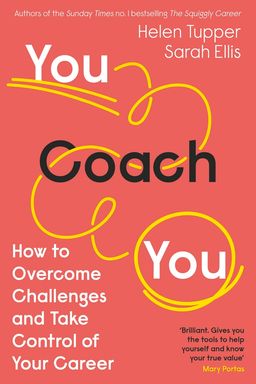
You Coach You – Taking Control of Your Career
How do you navigate a career when there’s no longer a clear ladder to climb? In You Coach You, Helen Tupper and Sarah Ellis pose this crucial question for the modern worker living in what they call “squiggly careers” — careers defined not by predictable linear progression but by flexibility, change, and self-directed growth. They argue that in place of traditional career structures and corporate career ladders, individuals must learn to become their own coaches. Coaching yourself isn’t a luxury; it’s a necessity for thriving in uncertain, dynamic work environments.
Tupper and Ellis contend that everyone — not just executives or those with access to professional coaching — can learn the skills and mindset to guide their own development. Through what they term “self-coaching,” you build self-awareness, resilience, and confidence to face career challenges. The authors’ ambition, born from their work with Amazing If and their popular Squiggly Careers podcast, is to democratize the power of coaching so that anyone can overcome obstacles and design a career that works for them. At its heart, You Coach You is a practical manual for building ownership, direction, and meaning in your work.
The Shift from Ladder to Squiggle
The traditional career ladder has collapsed under the weight of modern life. No longer can we depend on linear ascents toward security and seniority. Instead, we face “squiggly” paths — unpredictable, non-linear journeys where change, experimentation, and flexibility define success. Tupper and Ellis encourage readers to embrace the squiggle, rather than fear it. The book opens by framing the “coaching catch-22”: while everyone recognizes the value of coaching, the cost and inaccessibility mean most people never receive it. Hence, learning to coach yourself closes this gap.
What It Means to Coach Yourself
Coaching yourself means asking the right questions to gain clarity about what matters to you and take positive action. You’re not mentoring yourself (telling yourself what to do), nor merely reflecting (thinking deeply without action). Self-coaching is active inquiry – the skill of questioning, listening, and understanding your emotions and goals so you can move forward. As the authors put it, “Coaching isn’t therapy – it’s product development with you as the product.” You’re constantly iterating and improving yourself, guided not by external validation but inner clarity.
The Coaching Framework
The book organizes coaching into three pillars: mindset, skillset, and toolkit. The mindset involves shifting from a fixed mindset (“I can’t do this”) to a growth mindset (“I can learn how to do this”) and replacing internal critics with constructive inner coaches. The skillset covers listening, questioning, and developing self-awareness — what psychologist Tasha Eurich calls “seeing yourself clearly and understanding how others see you.” Finally, the toolkit introduces practical frameworks such as thinking traps to positive prompts, open questions, and the signature COACH model: Clarity, Options, Action, Confidence, and Help.
Why These Ideas Matter
In an era of constant transformation, no organization can promise stability. Yet you can build a resilient career by focusing on what you can control — yourself. Through self-coaching, you can navigate challenges like burnout, self-doubt, and lack of direction. Tupper and Ellis dismantle myths of “overnight success” and transactional career progress, replacing them with sustainable personal development. Their toolkit doesn’t just show how to survive; it empowers you to thrive — by reframing your challenges, learning from adversity, and creating what they call “career confidence.”
What You’ll Learn From This Book
Across seven coaching topics — resilience, time, self-belief, relationships, progression, and purpose — you’ll explore how to manage each essential area of your career. You’ll learn, for example, to build resilience reserves for when adversity hits, take control of your time rather than letting busyness rule, move from doubt to self-belief, build relationships that sustain you, progress with momentum, and uncover a sense of purpose that drives meaningful work. The book concludes with advice collected from leaders, athletes, and creatives, reinforcing the timeless truth that careers are “works-in-progress.” There’s no fixed endpoint. The end is simply the beginning of continual growth.
“Nothing worth doing is easy,” the authors remind us. Coaching yourself is an ongoing practice of learning, questioning, and growing. If you keep coaching, you keep progressing — and that, ultimately, is what builds a career as brilliant and individual as you are.”