
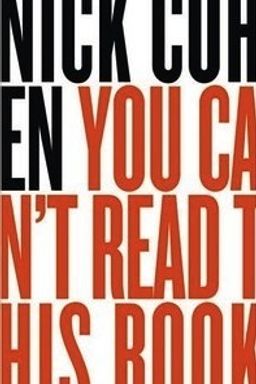
You Can’t Read This Book cover

You Can’t Read This Book

by Nick Cohen

Nick Cohen''s ''You Can''t Read This Book'' delves into the paradox of modern freedom, where censorship thrives despite global connectivity. From governmental overreach to self-censorship, the book reveals how powerful forces still control expression, urging readers to champion true free speech.

Freedom at Risk: The Globalisation of Censorship

Why do free societies censor themselves? The book argues that modern censorship has evolved from state bans to decentralized fear, reaching across borders, markets, and minds. It begins with one seismic event — the 1989 fatwa against Salman Rushdie — and expands to show how threats, legal frameworks, identity politics, and corporate secrecy collectively erode open inquiry. You learn that censorship today doesn’t need a censor’s desk; it needs only fear, risk management, and the rhetoric of respect.

A Turning Point: Rushdie’s Fatwa and Its Reach

Ayatollah Khomeini’s order to kill Rushdie for The Satanic Verses transformed censorship from a national to a global affair. Translators and publishers—like Hitoshi Igarashi in Japan and William Nygaard in Norway—became victims. Cities once considered safe for dissent were no longer secure. The Rushdie affair exposed how violence could compel private companies and governments to compromise on free expression under the pretext of protection. The consequence was a global chill where fear traveled faster than law.

Fear and Internalisation of Threat

After Rushdie, the West internalised fear. Publishers withdrew titles, journalists avoided topics, and politicians invoked “respect” to justify retreat. Penguin’s Peter Mayer fortified offices and received threats to his family; later, Random House canceled Sherry Jones’s The Jewel of Medina preemptively. Fear became industry logic—an unwritten code equating safety with silence. As Kenan Malik notes, liberals began “living with the fatwa,” normalising threat as part of cultural life.

The Manufacture of Outrage

Offence seldom arises spontaneously. Often, it’s manufactured by academics, journalists, and activists who frame works as insults, sparking cascades of outrage. M.F. Husain’s case in India shows this dynamic: sectarian actors revived old art to incite fury, resulting in lawsuits and exile. (Note: The same pattern recurs in the Jyllands‑Posten cartoons and The Jewel of Medina affair.) The book stresses how media incentives—viral conflict and moral panic—inflate fragile disputes into global crises.

From Offence to Violence: The ‘Go‑Postal’ Tactic

Modern censorship no longer requires uniform oppression; it thrives on strategic randomness. The “Go‑Postal” tactic, described by Nick Cohen, uses sporadic violence to enforce silence through unpredictability. When a translator in Milan, a cartoonist in Copenhagen, or a bookstore owner in London can be randomly attacked, everyone learns silence as self-defense. The tactic’s power lies in isolation; victims stand alone while institutions retreat.

Ideological Confusion and Identity Politics

One tragedy of this era is the Left’s retreat from defending individual liberty. In efforts to appear culturally sensitive, some intellectuals confuse critique of religion with bigotry, abandoning figures like Ayaan Hirsi Ali or Gita Sahgal who fight for secular and women’s rights. This inversion—defending collective identity over personal freedom—converts liberalism into quiet complicity. The author warns that universal rights must trump group exceptionalism if equality is to mean anything.

Old Principles Revisited: Milton and Mill

Milton’s Areopagitica and Mill’s On Liberty frame the book’s moral argument. Milton defends truth through open contest, not protection from offence; Mill distinguishes harm from mere discomfort. Both warn that censorship under the guise of “respect” or “safety” corrupts moral inquiry. Their legacy challenges modern laws like UN proposals against “defamation of religion,” which protect abstractions, not humans.

From State Law to Corporate Silence

Censorship now flourishes in cubicles and boardrooms. The author maps how corporate hierarchies and gag clauses breed internal silence. Whistleblowers like Paul Moore at HBOS were expelled for questioning reckless lending, while managers like Fred Goodwin at RBS built authoritarian cultures that punished dissent. The cost of truth-telling—career loss, isolation, litigation—makes silence rational. (Context: after the 2008 crash, executives profited from bonuses even as institutions collapsed.)

Legal Weaponry: England’s Libel Machine

England’s libel law magnifies censorship through cost and burden-shifting. Cases like Singh vs. British Chiropractic Association expose how scientific debate can be criminalized. Wealthy plaintiffs exploit London’s courts (“libel tourism”) to intimidate foreign authors and journalists. Trafigura’s “super‑injunction” epitomizes legal secrecy: a gag so wide even its mention was forbidden. High litigation costs enforce preemptive silence.

Digital Promise and Peril

The Internet extends both freedom and control. Activists like Wael Ghonim and Egypt’s April 6 movement used social platforms to challenge regimes, while states like China and Belarus adapted with surveillance and filtering. WikiLeaks and Paul Chambers’ Twitter case illustrate contrasting lessons—transparency’s risks and how democracies criminalize trivial speech. The Net democratizes publishing but also centralizes data; technology, without politics, cannot guarantee liberty.

Fighting Back

Finally, you are asked to act: defend law, evidence, and courage. Reform libel rules to American standards; protect whistleblowers; insist that respect never overrides argument. Fund independent journalism, demand corporate accountability, and use digital tools wisely. Freedom is a practice, not an inheritance. In an age of intimidation, silence is the victory of the censor; solidarity and reason are your only defences.


Fear as Policy

Fear, once private emotion, is now institutional policy. The book shows how governments, publishers and individuals act not from conviction but precaution. After violent protests or threats, officials justify silencing ideas in the name of safety. This logic spreads invisibly: editors withdraw stories, galleries cancel shows, and broadcasters avoid controversy. Each act looks prudent, yet collectively it transforms open society into a managed one.

How Fear Spreads

You see this pattern begin with Rushdie and ripple through later episodes—the Danish cartoons, Sherry Jones’s novel, and attacks on artists like Deeyah and Husain. Threats start outside institutions but quickly become internalized. Once executives imagine loss and liability, they censor instinctively. Kenan Malik’s phrase “internalizing the fatwa” expresses this evolution: fear becomes bureaucratic procedure.

The Complicit West

Liberal democracies often rationalize self-censorship as cultural sensitivity. Politicians—from Thatcher to modern administrators—blur free expression with social harmony. When the UK extended moral sympathy to offended groups rather than defending the author, it set a precedent: tolerance without openness. Freedom’s guardians—publishers, universities, media—learned to pre‑empt conflict instead of confronting it.

Fear’s Hidden Cost

Self‑censorship masquerades as wisdom but erases voices least able to defend themselves—liberal Muslims, ex‑believers, and secular reformers. Those dismissed as ‘controversial’ often pay the price for everyone else’s comfort.

The lesson for you is clear: institutions cannot reason once they adopt fear as policy. To preserve integrity, you must distinguish genuine prudence (safeguarding people) from capitulation (abandoning principle). Courage is not recklessness but consistency in defending inquiry against intimidation.


The Engine of Manufactured Outrage

You learn that modern offence is rarely spontaneous; it is engineered. Academics, journalists, and political opportunists ignite outrage that spreads through communities and media systems like wildfire. Once moral anger fills the air, reason suffocates. The book maps this machinery—from university warnings to activist amplification to corporate retreats.

The Offence Pipeline

Denise Spellberg’s reaction to The Jewel of Medina is instructive: a scholar’s caution message triggered community alarm, media spin, and violent plots. M.F. Husain’s persecution, fueled by nationalist media and religious litigants, follows the same path. The pattern reveals how moral entrepreneurs exploit outrage for status or control. Once scandal surfaces, reasoned debate disappears. Corporations, focused on liability, yield instantly.

Media Incentives

Modern media converts potential offence into marketable drama. Journalists solicit reactions, activists perform indignation, and audiences consume the spectacle. The result is moral panic culture—emotional storms that incentivize conformity. Outrage becomes content, not conviction.

When Words Become Fire

Once outrage enters radical networks, violence lurks. The attempt to firebomb Gibson Square Books shows how rhetoric escalates into terrorism. A society saturated with fear needs little provocation; sometimes merely naming a topic involving religion or identity suffices to invite danger. The author urges transparent reasoning: respond to threats collectively, not by withdrawing. Truth needs solidarity to survive manipulation.

If you value free inquiry, resist pre‑emptive appeasement. The book insists that you counter engineered offence with open explanation, not retreat—because appeasement, though safe in the moment, multiplies future risks.


The Economics of Silence

Freedom may be moral, but its collapse is economic. The book’s second act shifts from cultural fear to workplace control, exposing how wealth concentration and managerial bureaucracy silence truth. You learn that censorship in business is not imposed by law but by incentives—bonuses, contracts, and hierarchies that make silence profitable and dissent suicidal.

Corporate Secrecy Structures

Employers embed silence through nondisclosure agreements, confidential settlements, and procedural traps in whistleblower laws. The state’s protection nominally exists but rarely works; reporters must alert employers first, turning disclosure into career suicide. This creates a class of insiders who know too much but say nothing—particularly in finance, healthcare, and technology.

The RBS Disaster

Fred Goodwin’s Royal Bank of Scotland becomes emblematic. His authoritarian management prized speed and obedience over critique. Ritual humiliation, rigid branding, and reckless deals culminated in catastrophe—the £48 billion ABN AMRO takeover, the collapse of assets, and the taxpayer rescue. Those who questioned were mocked as “Business Prevention Officers.” The lesson: organisational fear mirrors political censorship, killing truth until collapse forces it back.

Why Staff Stay Silent

Paul Moore’s dismissal at HBOS exhibits the moral economy of silence. Bonuses worth hundreds of thousands outweigh conscience; speaking risks permanent career death. Legal remedies seldom offset lost future earnings. Silence becomes rational and therefore universal. Only structural reform—protecting whistleblowers, rewarding honesty, and unmasking secrecy clauses—can disrupt this culture.

In short, censorship today is not always ideological; it’s transactional. When systems punish truth economically, liberty requires systemic redesign—not just moral exhortation.


Lawfare and the Weaponisation of Reputation

English libel law turns reputation into a sword. The book explains how archaic legal doctrines—like the Duke of Brunswick rule and the reversed burden of proof—made London the global capital of “libel tourism.” Here, the defendant must prove truth; failure means ruin. In practice, the rich and powerful use law to gag critics worldwide.

Legal Mechanics

Because any online access in the UK counts as publication, authors anywhere can be sued in London. The cost of defence—often millions—forces settlement regardless of accuracy. Examples abound: Trafigura’s secret injunction blocking news on toxic dumping, Robert Maxwell’s writs silencing investigations, and bin Mahfouz’s attacks on scholars of terrorism financing. The structure rewards plaintiff aggression and breeds pre‑emptive caution in publishing houses.

Science on Trial: Singh’s Case

Simon Singh’s fight against the British Chiropractic Association reveals how evidence itself can be outlawed. His descriptive phrase “bogus treatments” was interpreted as criminal accusation of dishonesty. Only public mobilisation—thousands of scientists, bloggers, and citizens exposing weak evidence—forced judicial reversal and reform debates. Singh’s victory proves crowds can substitute courage when law fails.

Lesson from Lawfare

Evidence‑based criticism cannot survive under legal systems that privilege reputation over truth. Reform must switch burdens, reduce costs, and protect scientific and investigative speech as public assets.

In democracies, reputation deserves protection, but not at truth’s expense. The author urges adopting US‑style safeguards for public interest reporting and transparent limits on defamation suits. Without them, inquiry becomes privilege, not right.


Digital Power and Its Contradictions

The Internet is freedom’s laboratory and prison. You learn that global networks empower citizens while empowering surveillance. Egypt’s April 6 movement used Facebook to mobilize thousands; yet China’s censors and Western firms supplying them demonstrated how the same tools subdue dissent. Technology changes the terrain, not the rules: authority adapts faster than idealism.

Freedom’s New Toolkit

Connectivity allows publication without gatekeepers. WikiLeaks embodies the promise—information liberated from secrecy—but also exposes risks when unfiltered data endangers individuals. Online mobilisation in the Singh case showed the Net’s democratic strength: distributed knowledge challenging institutional power. Its fragility lies in dependency on platforms and algorithms owned by corporations, not citizens.

How Control Adapts

Regimes respond with infiltration instead of denial. China’s “Big Mamas,” paid to delete and distort; Belarus’s surveillance of protesters; and Western states’ prosecution of citizens for tweets (Paul Chambers) illustrate soft repression. Data trails make resistance traceable. Freedom becomes conditional on encryption, anonymity, and luck.

The author concludes that technology cannot substitute for law or civic courage. To preserve openness online, citizens must demand legal standards for privacy, transparency in platform cooperation, and international guarantees for digital expression. You cannot tweet liberty into existence; you must legislate and defend it.


Principles Worth Defending

The book closes with strategy. After diagnosing fear, lawfare, and managerial conformity, it offers tools for resistance—both institutional and personal. Free speech, the author insists, is sustained not by sentiment but by infrastructure: just laws, brave institutions, and active citizens.

Core Principles

  • Separate political from personal: public ideas must endure scrutiny even when they offend private feeling.
  • Defend individuals, not abstractions: respect for faith or ideology cannot override rights of persons to speak.
  • Tolerance ≠ deference: Milton’s and Mill’s principles demand contest, not comfort.

Institutional Reform

Reform libel laws to curb global bullying; codify whistleblower protection; require worker representation to break managerial secrecy; and adopt First Amendment‑style clarity on speech. These are not cosmetic adjustments—they are the plumbing of liberty.

Citizen Habits

  • Support independent journalism and fund courageous writers.
  • Use the Internet beyond echo chambers; engage publics, not tribes.
  • Refuse to abandon those under threat; solidarity blunts intimidation.

Freedom survives through collective courage. You defend it by acting, not applauding. In an age where fear globalises faster than speech, reclaiming open argument is the most radical act left.

Dig Deeper

Get personalized prompts to apply these lessons to your life and deepen your understanding.

Go Deeper

Get the Full Experience

Download Insight Books for AI-powered reflections, quizzes, and more.