
Idea 1
Healing Your Life Through Self-Love
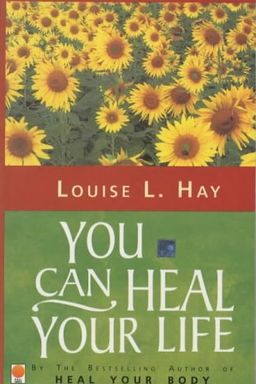
Have you ever wondered why certain problems keep repeating in your life—like an endless loop that never seems to break? In You Can Heal Your Life, Louise L. Hay argues that the root of nearly all suffering, emotional or physical, lies not in circumstances but in the thoughts and beliefs we hold about ourselves. Her central claim is that by changing these thought patterns—especially the deep-seated ones tied to guilt, resentment, and fear—you can transform every area of your life, including your health, relationships, and success.
Hay contends that the mind and body are interconnected in ways most people underestimate. The illnesses we develop, the heartbreaks we endure, and even the financial difficulties we face are mirror reflections of the attitudes we’ve internalized. Healing, therefore, begins not with pills or external fixes but with radical self-acceptance. This message made her one of the pioneering voices in the self-help and metaphysical movement of the late 20th century, alongside figures like Wayne Dyer and Deepak Chopra.
The Power of Thought
Hay’s entire philosophy rests on a deceptively simple foundation: “Every thought we think is creating our future.” She teaches that thoughts are never neutral; they are building blocks of reality. When we fill our minds with self-criticism or fear (“I’m not good enough,” “Nothing ever works out for me”), we unknowingly instruct our subconscious to manifest those beliefs. Conversely, loving thoughts plant seeds that bloom into better relationships, prosperity, and well-being. This idea echoes the core of mental causation found in other spiritual works, such as Norman Vincent Peale’s The Power of Positive Thinking.
Every moment, Hay says, represents a new opportunity to reshape our lives because “the point of power is always in the present moment.” Dwelling on the past only reinforces old patterns. Instead, she invites you to notice your thoughts, forgive yourself, and choose beliefs that feel nurturing rather than condemning. Underneath this teaching is a deep call to reclaim responsibility for one’s experiences—the essential starting point for any transformation.
Illness as a Reflection of Inner Conflict
Perhaps the most provocative part of Hay’s approach lies in her claim that we create even our physical illnesses through mental patterns. Conditions like arthritis, migraines, ulcers, and cancer, she says, are manifestations of suppressed emotions—especially resentment and guilt. Disease (“dis-ease,” as she spells it) reflects a lack of peace within. While such ideas can seem controversial, Hay’s intention is not to blame but to empower: if our thoughts helped create illness, then changing those thoughts can create healing.
Her book provides countless examples. One man healed Hodgkin’s disease after realizing his deep need for approval from a critical father. Another woman overcame chronic pain when she forgave people who had hurt her years before. Through these stories, Hay shows how emotional honesty and compassion can dissolve conditions that seem incurable. She encourages readers to use affirmations—positive statements like “I am healthy, whole, and complete”—to overwrite the negativity imprinted in the subconscious.
Loving the Self: The Ultimate Cure
At the heart of You Can Heal Your Life lies one transformative practice: learning to love yourself. According to Hay, all healing begins with self-approval. She invites readers to look in the mirror, gaze into their own eyes, and say, “I love and accept you exactly as you are.” This simple exercise, repeated daily, exposes the internal resistance we have—the voices that say we’re not beautiful enough, smart enough, or deserving of love. Loving oneself, Hay explains, isn’t arrogance or vanity; it’s the foundation of personal freedom and spiritual growth.
Through forgiveness, affirmation, and mirror work, Hay teaches that the old mental garbage can be cleared, replaced with gentleness and trust. The more we cultivate compassion for ourselves, the more life responds in kind. Relationships improve, money flows more easily, and even the body heals, reflecting this inner harmony.
Why These Ideas Matter
Hay’s ideas matter because they bridge the spiritual and the psychological. In a world often dominated by external solutions—pills, technology, productivity hacks—she reminds us that peace begins within. Modern science continues to confirm elements of her philosophy: research on psychosomatic medicine and the placebo effect demonstrates the power of belief in affecting health. Her teachings, while metaphysical, invite you to view yourself as both the creator and the healer of your own experience.
As readers journey through the book, they encounter exercises, affirmations, and stories that challenge them to rewrite the narrative of “not being good enough.” In the end, You Can Heal Your Life is not just about healing the body—it’s about awakening to the truth that you are worthy, creative, and infinitely loved by Life itself. Hay’s message is both timeless and practical: change your thoughts, and you change your world.