
Idea 1
Free Your Mind from Deceptive Brain Messages
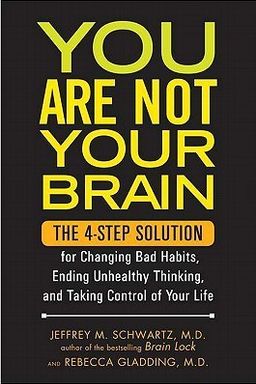
Why do you feel so often trapped by thoughts that don't seem like yours but feel real and commanding? In You Are Not Your Brain, Jeffrey Schwartz and Rebecca Gladding explain that many of our painful mental loops—anxiety, guilt, compulsion, worry, craving—arise from what they call deceptive brain messages. These are false alarms generated by automatic circuits in the brain that convince you something is wrong or urgent when it isn’t. When you confuse those signals with your true self, you end up acting against your real values and reinforcing unhealthy neural pathways.
The book’s core claim is profoundly empowering: with awareness, focused attention, and deliberate practice, you can literally retrain your brain. Through what Schwartz calls Self-Directed Neuroplasticity, you can strengthen neural circuits that reflect your values—reducing the power of unwanted impulses, habitual behaviors, and distorted thinking. This process lies at the heart of the Four Steps: Relabel, Reframe, Refocus, and Revalue. Each step teaches you to notice, explain, redirect, and finally dismiss deceptive messages so your brain begins to serve your mind, not dominate it.
Deceptive Brain Messages and Their Grip
A deceptive brain message can take many forms: a thought (“I’m unlovable”), an image (“I’ll fail this test”), a sensation (“This pit in my stomach means disaster”), or a craving (“I need that drink to calm down”). These alarms trigger intense emotions or physical reactions and push you toward automatic relief behaviors—checking, bingeing, arguing, or numbing distractions. The relief feels real and short-lived but wires the pattern more strongly each time.
Kara’s story illustrates this cycle well. She felt disgust and panic whenever she thought her body wasn’t perfect. Restriction and bingeing brought momentary calm, but each episode reinforced the link between anxiety and those behaviors. The key insight is that your sensations and urges are real, but their message is false. When you understand that difference, change becomes possible.
Your Wise Advocate: The Voice of the True Self
Schwartz and Gladding invite you to cultivate the Wise Advocate—the rational, compassionate inner voice that aligns with your long-term values. The Wise Advocate helps recruit the brain’s Assessment Center (lateral prefrontal cortex), which can observe and reappraise false alarms from the Uh Oh Center (amygdala/insula). Instead of believing “This is me,” you learn to say, “This is my brain, not me.” For Ed, a performer overwhelmed by stage fright, invoking his Wise Advocate let him see fear as a protective brain reflex, not proof of inadequacy. That shift opened the door to calmer and more authentic behavior.
The Neuroscience of Change
The book shows how brain circuits shape both suffering and recovery. When the Uh Oh Center sounds false alarms and the Habit Center repeats quick fixes, your Executive Center loses authority. Through Self-Directed Neuroplasticity, however, deliberate attention reestablishes control. In neurobiological terms, “neurons that fire together wire together” (Hebb’s law): every time you choose awareness and a healthy response, you strengthen the neural links that embody that choice.
The authors even reference the quantum Zeno effect to describe how sustained attention stabilizes new patterns: by repeatedly attending to wise choices, you hold those brain states long enough for reorganization to occur. What might sound abstract carries deep practical implications—your power lies not in suppressing or resisting impulses but in where you place and sustain attention.
Emotion, Sensation, and the Cycle of Relief
The authors distinguish between true emotions (proportionate responses to real events, like grief after loss) and emotional sensations (distress caused by deceptive brain messages). You’re meant to feel true emotions and process them. Emotional sensations, by contrast, demand the Four Steps. This distinction keeps you from chasing relief from false alarms and helps channel attention toward genuine healing.
Understanding this distinction parallels cognitive therapy’s insight (as in Aaron Beck’s work) that feelings follow beliefs. Yet Schwartz goes further: he connects feeling, thought, and habit loops to measurable brain activity that you can shift with attention. In this way, self-observation and compassion become tools not just for coping but for literal brain remodeling.
Motivation through Meaning
Finally, the book argues that motivation is sustained not by mere desire but by meaningful goals. Drawing on Viktor Frankl’s insight (“He who has a why can bear almost any how”), Schwartz and Gladding show that change depends on aligning daily choices with what truly matters to you. Connie, recovering from a stroke, used her love of animals and teaching to guide months of difficult rehabilitation; those meaningful goals fueled the attention density required to rewire her brain. In psychological terms, meaning is the antidote to habitual distraction.
Putting It Together: Freedom through Attention
At its core, You Are Not Your Brain is a manual for reclaiming choice. You cannot always control the thoughts or feelings that appear, but you can control your relationship to them. By cultivating mindfulness (Relabel), insight (Reframe), deliberate behavior (Refocus), and compassion (Revalue), you reconstruct both identity and neural structure. The deceptively simple message—“This is a brain signal, not me”—restores agency.
Key idea
Freedom arises when awareness replaces automaticity. By recognizing false brain messages, invoking your Wise Advocate, and repeatedly redirecting attention to meaningful goals, you reshape your brain to reflect your truest self.