
Idea 1
Hope, Politics, and the Fight for Truth in Modern America
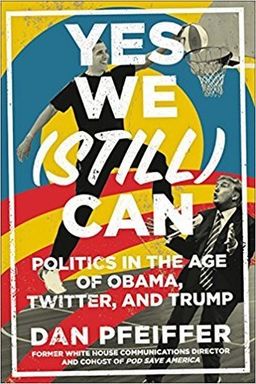
What does it mean to keep believing in progress when cynicism seems to rule politics? In Yes We (Still) Can, Dan Pfeiffer—longtime senior advisor to Barack Obama and cohost of Pod Save America—takes you behind the scenes of the Obama White House and the years that followed to argue that effective leadership, honest storytelling, and digital media savvy can still drive change in a divided America. Pfeiffer contends that Barack Obama’s presidency was both a product of—and an ongoing struggle against—the political, cultural, and technological forces that later enabled Donald Trump’s rise.
Through humor, candor, and deep political insight, Pfeiffer explains how Obama’s hopeful politics collided with a changing media landscape, a radicalizing Republican Party, and an emerging right-wing propaganda machine. Yet he insists that by understanding these forces—the disruption of journalism, the rise of Fox News and fake news, the power of social media, and the corruption of bipartisanship—you can still help rebuild a movement grounded in truth, compassion, and strategic thinking.
Why Understanding the Obama Years Matters
Obama’s story, as Pfeiffer frames it, is less a nostalgic political memoir and more a field manual for modern democracy. His presidency was defined by contrasts: idealism versus cynicism, collaboration versus confrontation, and aspiration versus obstruction. Through intimate stories—from helicopter conversations with Obama predicting Trump’s rise to the frustrations of trying to negotiate with Mitch McConnell—Pfeiffer demonstrates how America’s political institutions and media systems turned into battlegrounds for truth itself.
If you’ve ever wondered why politics feels louder, meaner, and less productive today than even a decade ago, Pfeiffer’s account connects the dots. The same dynamics that torpedoed Obama’s agenda—24-hour news cycles, partisan media bubbles, obstructionist Republicans, and the algorithmic incentives of Facebook and Twitter—didn’t disappear. They metastasized.
A Candid Tour Through American Power
Pfeiffer blends memoir and political analysis, walking you through his journey from a skeptical operative interviewing for Obama’s campaign in 2007 to his years as White House communications director. Along the way, he recounts absurd moments (like splitting his pants in the Oval Office or holding up the President’s birth certificate to a stunned press corps) that humanize the often surreal experience of governing in the Internet age. Each anecdote leads to a larger insight: that leadership in today’s media environment requires both authenticity and emotional resilience. Obama’s successes—his disciplined campaign culture, innovative digital strategy, refusal to compromise values—offer a template for how progressives can organize and communicate now.
But Pfeiffer doesn’t sugarcoat Obama’s presidency. He argues that Democrats misread the scope of right-wing media’s influence, underestimated the racial backlash to a Black president, and overestimated bipartisanship. More importantly, they couldn't fully adapt to a fractured digital ecosystem where falsehoods spread faster than facts. Pfeiffer’s firsthand account of the "birther" conspiracy, and how Trump exploited it with help from Fox News, reveals the early formation of post-truth politics—a phenomenon that now defines public discourse.
Why This Book Still Feels Urgent
Pfeiffer argues that while Trumpism is the symptom, the disease is older: decades of Republican radicalization, fueled by fear, racism, and the media’s failure to call it out. Obama’s presidency, he writes, illuminated both America’s progress and its backlash. The country that elected its first African American president also created the environment that could elect his polar opposite. Yet Pfeiffer insists these aren’t signs of failure—they’re reminders of how fragile democracy can be.
Ultimately, Yes We (Still) Can is a political memoir with an activist’s heart and a strategist’s brain. Pfeiffer shows how you, as a voter or citizen, can engage differently: learn how media ecosystems shape perception, how cynicism aids demagogues, and how storytelling can reclaim truth. Like Obama's message of hope, Pfeiffer’s book argues that change doesn’t come from politicians alone but from ordinary people acting with purpose. In a time when outrage seems easier than optimism, he makes a compelling case that hope—anchored in truth and strategic action—is still the most powerful political force in America.