
Idea 1
Improvisation as a Philosophy for Work and Life
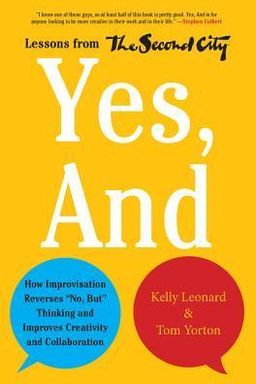
What would happen if you approached life not as a series of instructions to follow, but as a performance—one where you and everyone around you were constantly co-creating in real time? In Yes, And, Kelly Leonard and Tom Yorton of The Second City argue that the principles of improvisation are not just for actors on a stage—they’re essential for anyone who wants to be more creative, more collaborative, and more adaptive in work and life. Drawing on decades of experience running the world’s most famous comedy institution, the authors show that the same techniques that helped launch the careers of Tina Fey, Stephen Colbert, Bill Murray, and Steve Carell can also help you tackle business challenges, lead teams, and even handle personal setbacks with insight and humor.
Leonard and Yorton contend that improvisational thinking isn’t about being funny or reckless; it’s about being fully present, listening deeply, and being willing to build on what others offer you. In their world, creativity thrives in environments where people say “Yes, And” rather than “No, But”; where failure is treated as learning; and where listening becomes an act of empathy. Improv, they argue, is like yoga for your professional and emotional intelligence—a practice that strengthens flexibility, resilience, and collaboration.
The Second City Experiment
Founded in 1959 in Chicago, The Second City began as a radical experiment: a theater that used improvisation to satirize politics, relationships, and the absurdities of everyday life. What started in a small cabaret above a Chinese laundry grew into the premier training ground for generations of comic talent. Beyond the laughs, however, Leonard and Yorton discovered something profound. The same collaborative methods that created breakthrough comedy also nurtured innovation, empathy, and trust—skills now recognized as vital in 21st-century organizations like Google and Nike. Businesses, they argue, are essentially acts of improvisation: despite plans and forecasts, success depends on how well people respond to the unexpected.
Why Improvisation Matters Beyond the Stage
Improvisation offers something that traditional business education often neglects: the ability to navigate ambiguity with grace. Where MBA programs emphasize analysis and control, improv emphasizes adaptation and connection. For instance, at Major League Baseball’s rookie camp, Second City actors help young athletes build communication and self-awareness by role-playing difficult scenarios. The goal isn’t to rehearse lines but to learn how to think on your feet, listen for emotional subtext, and respond authentically.
As the authors note, this is increasingly essential in a business world that values emotional intelligence as much as technical expertise. Modern leaders must “follow the follower”—allowing status to shift fluidly within teams based on expertise rather than hierarchy. Improvisers understand how to do this instinctively, creating what the authors call an “ensemble,” a group that performs better together than any one member could alone.
Seven Elements of Improv That Transform Work
Leonard and Yorton identify seven core elements of their craft that can transform work and leadership: Yes, And (accepting and building on ideas); ensemble (a shared accountability that lifts everyone); co-creation (dialogue over monologue); authenticity (truth and irreverence balanced with respect); failure (redefining mistakes as creative opportunities); follow the follower (dynamic, inclusive leadership); and listening (the muscle that powers all the rest). Each element becomes a lens for reimagining everyday challenges—from brainstorming sessions and client meetings to how you handle conflict or lead change.
Throughout Yes, And, the authors interweave stories from The Second City and its collaborations with organizations like Farmers Insurance, Norwegian Cruise Line, and the U.S. Department of Education. Whether navigating political sensitivities or corporate compliance training, they demonstrate that laughter—rooted in truth and connection—can defuse fear, build trust, and accelerate innovation. What’s radical about their message is that these soft skills aren’t secondary; they’re the foundation of real creativity.
Improvisation as a Mindset
Ultimately, Leonard and Yorton ask you to stop seeing creativity as a product of genius and start seeing it as a social process. You don’t need to be witty or extroverted to improvise well; you just need to listen, affirm, and add. When people adopt this mindset, something magical happens: meetings become dialogues; mistakes become discoveries; and organizations evolve to be more human, inventive, and resilient.
Improvisation isn’t about pretending without rules—it’s about collaboration with trust. And once you say “Yes, And” to life, you start rewriting the script in ways that make work less fearful and far more creative.
In the chapters that follow, Leonard and Yorton explore how these improv principles can transform everything from team building to leadership, from confronting failure to fostering authentic communication. Their invitation is simple yet profound: stop rehearsing, start connecting, and discover what’s possible when you live—and lead—like an improviser.