
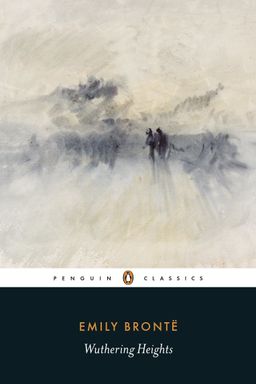
Wuthering Heights cover

Wuthering Heights

by Emily Bronte

Set against the hauntingly beautiful Yorkshire moors, Emily Bronte''s Wuthering Heights delves into the intense and destructive romance of Heathcliff and Catherine. This classic tale explores themes of passion, revenge, and the supernatural, captivating readers with its emotional depth and dramatic family saga.

Love, Identity, and Power in Wuthering Heights

How can love destroy the very people it binds together? In Wuthering Heights, Emily Brontë constructs a world where passion, revenge, and social order collide in a self-contained moorland society. The heart of the novel lies in the claim that love is not only emotional but existential—Catherine and Heathcliff do not simply love each other; they are each other. Yet this unity, when tested against class, property, and mortality, warps into obsession and violence. Brontë transforms the gothic romance into a philosophical experiment: what happens when identity depends entirely on another soul?

You read the story through two narrators—Lockwood, the curious southerner renting Thrushcross Grange, and Nelly Dean, the housekeeper and eyewitness to decades of turmoil. Their layered testimonies form an intricate frame that constantly challenges you to question what is true, what is exaggerated, and what is suppressed. Brontë gives you no omniscient moral voice; instead, she teaches you to distrust authority, making the very act of interpretation part of the novel’s drama.

Love and Existential Fusion

At the moral center of the tale stands Catherine Earnshaw’s declaration that she and Heathcliff are the same being. This unity generates ecstasy and destruction alike. Her marriage to Edgar Linton gives her social grace but severs her from her spiritual double. When she cries that without Heathcliff the world itself would be alien, Brontë stretches love to its metaphysical edge—it becomes the force that sustains being and the source of ruin when broken. (Note: this anticipates existential concepts of identity and dependency later explored by writers like Sartre.)

Social Order and Class Revenge

Around this passion rises a social edifice of property, inheritance, and patriarchy. Heathcliff, found as a penniless orphan, grows up in humiliation—callout of England’s class rigidity—and shapes his adulthood into a calculated project of revenge. By the time he returns, wealthy and powerful, he has converted emotional wounds into a systematic takeover of the Earnshaw and Linton estates. Law, marriage, and economics become his weapons. Through mortgages, coerced wills, and forced marriages, Heathcliff’s vengeance exposes how Victorian society allows cruelty to wear the mask of legality.

The Frame of Voices

Lockwood’s naive misreadings and Nelly’s self-justifying recollections shape how you piece together this history of destruction and renewal. Each narrator filters events through temperament: Lockwood’s genteel curiosity contrasts Nelly’s domestic pragmatism. Their partial truths force you to act as a moral judge, reconstructing motives from biased testimony. That formal device makes the narrative polyphonic. Brontë refuses moral finality and replaces it with human relativity.

Nature, Setting, and the Gothic Spirit

The setting is more than backdrop. The Yorkshire moors pulse with symbolic weather—storms that echo vengeance, wind that carries cries across graves, and seasons that track generations. Wuthering Heights embodies brute vitality; Thrushcross Grange civilizes and imprisons. The moor itself, open and ungoverned, mirrors Heathcliff and Catherine’s unbounded emotion. Ghosts and hauntings literalize inner states; when the dead return, it is the psyche insisting that love and injury have outlived mortal form.

Cycles of Destruction and Renewal

The second generation—Catherine Linton, Linton Heathcliff, and Hareton Earnshaw—repeat and revise the sins of their elders. Through Catherine’s forced confinement and Hareton’s reeducation, you watch violence resolve into compassion. Their union quietly undoes Heathcliff’s work and ends the cycle of revenge. In teaching Hareton to read, Catherine restores dignity through learning, redeeming a house built on abuse.

Mortality and Afterlife

Death is never final here. Graves open symbolically and literally; the dead haunt the living. Heathcliff’s macabre wish to be buried beside Catherine—so that their dust may intermingle—embodies the gothic refusal of separation. Rumored sightings of their spirits wandering the moor suggest that reconciliation comes only beyond social and physical law. (Note: This imagery connects Brontë to Romantic traditions of spiritual continuity found in Shelley’s and Wordsworth’s visions of nature.)

By the time you close the book, you sense that Brontë’s moorland world is both miniature and universal: a laboratory for testing the boundaries between love and possession, justice and vengeance, nature and law. She leaves you not with moral closure but with haunting equilibrium—the graves are quiet, but the wind still speaks of passion that refuses to die.


Framed Voices and Unreliable Truth

The twin narrators of Wuthering Heights—Lockwood and Nelly Dean—form the book’s architecture of doubt. You never hear a direct, unmediated voice; instead, you overhear testimony layered through memory and bias. That framing technique makes you part detective, part judge, forced to reconstruct meaning from contradicted impressions.

Lockwood as Outsider

When Lockwood arrives from the South to rent Thrushcross Grange, he approaches the Heights with urban curiosity and arrogance. His first visits—harried by dogs and misreading Joseph’s dialect—reveal his alienation from this raw northern world. His dream of the ghost-child “at the window” initiates the book’s central chain: curiosity becomes obsession. Yet his notebook-like record is incomplete; he misunderstands most of what he sees.

Nelly Dean’s Domestic Chronicle

Nelly’s inner narrative dominates the novel’s middle and lends vivid moral texture. As housekeeper, she observes love, abuse, and gossip firsthand, but her voice carries social prejudice. She approves propriety and distances herself from passion, judging Catherine’s behavior as childish and Heathcliff’s as monstrous. But her omissions—like minimizing her own enabling role—reveal complicity. The narrative becomes a moral mirror: how do ordinary people sustain cruelty through routine obedience?

Interpretive Lesson

Every major confession or act of violence reaches you twice—through Nelly’s recollection and Lockwood’s retelling—ensuring that no viewpoint remains absolute.

Reading as Ethical Act

Because every narrator filters events, you become the ethical center. Understanding depends on skepticism: when Nelly moralizes, ask what she cannot admit; when Lockwood laughs, note what frightens him. This system turns reading into moral labor—you weigh judgment as if you live among these people. (Note: The device parallels later modernist works like Heart of Darkness and The Turn of the Screw, where narration itself is contested ground.)

Through these unreliable voices, Brontë reveals that truth in human life is never single-toned. It echoes through repetition, memory, and silence—the real “heights” you climb are interpretive ones.


Love as Identity and Destruction

You witness in Catherine and Heathcliff’s relationship the novel’s most audacious idea: love as self-definition. Catherine declares “I am Heathcliff,” implying that separation equals self-extinction. That metaphysical connection fuels both ecstasy and apocalypse. When society denies its expression through class and marriage norms, it mutates into hatred.

The Promise of Unity

Their childhood on the moors creates a pre-social Eden of shared identity with nature. Their bond feels elemental—wild and free, linked to the moor’s openness. This makes her later marriage to Edgar not just betrayal but ontological dismemberment. She seeks comfort and respectability but loses her metaphysical mirror. (Note: critics often connect this to Romantic calls for union between self and nature in Wordsworth.)

The Ruin of Unity

When Catherine chooses Edgar, she chooses a divided existence: decorous Grange life against the elemental Heights. Her illness becomes Brontë’s metaphor for identity fracture—a body sickened by inward contradiction. Heathcliff’s subsequent vengeance and her ghostly persistence dramatize that their love cannot survive in the social world but refuses oblivion. Love here becomes both divine hunger and demonic possession.

The Insight

Absolute unity promises transcendence but produces self-erasure—the novel asks if human passion must remain partial to remain livable.

Cathy’s death and Heathcliff’s tormented survival confirm that identity built entirely on another cannot endure social time. Yet Brontë lets haunting perform the impossible: the love survives as spectral continuation, proving that emotional truth outstrips moral institutions.


Revenge, Law, and Social Machinery

Revenge in Wuthering Heights is not spontaneous rage—it is institutionalized cruelty. Heathcliff converts trauma into property strategy. Through legal instruments—mortgages, wills, marriage—he engineers generational humiliation. Brontë exposes how 19th‑century law can become extension of personal vendetta rather than justice.

Legal Power as Vengeance

When Hindley mortgages Wuthering Heights to support gambling, Heathcliff seizes the chance to become mortgagee—turning the social system that once degraded him into his weapon. Each debt, will, and coerced signature binds others in psychological servitude. He uses Linton, his sickly son, and even Isabella as instruments to expand this dominion. Property ownership becomes moral captivity.

Domestic Power and Gender

Women in this world suffer from structural confinement. Catherine’s marriage choice is her only social mobility; Isabella’s romantic rebellion ends in abuse. The home becomes a miniature of the wider patriarchal order. Violence moves inward: kicks, curses, and coercion in parlours embody the collapse of moral refuge. Brontë turns domesticity into battlefield—a critique far ahead of its era.

Cycles and Limits of Revenge

Heathcliff’s decades-long plan poisons every relationship, yet it cannot control the residue of decency embodied by Hareton. The younger generation endures but resists. Hareton’s rough dignity and willingness to learn mark revenge’s failure to finally corrupt. The system of vengeance collapses not by punishment but by moral exhaustion.

Takeaway

Through law’s machinery, Brontë shows how social systems can legalize cruelty; yet moral repair arises from interpersonal compassion, not from vengeance fulfilled.

In treating property and inheritance as engines of suffering, Brontë ensures that Gothic terror emerges not from castles but from paperwork—modern society’s hidden horror.


Space, Weather, and the Moral Landscape

Every physical detail in Wuthering Heights carries psychological significance. The contrast between Wuthering Heights and Thrushcross Grange dramatizes the conflict between raw passion and social polish, nature and civilization. The moors themselves act as mediator between these realms—a place of freedom and danger, where identity forms and boundaries dissolve.

Two Houses, Two Moral Systems

The Heights is defensive, storm-beaten, and masculine; the Grange is cultured, luminous, and feminine. Catherine’s movement between them mirrors her divided self. Each domestic space teaches habits—at the Grange she learns etiquette, at the Heights she experienced intensity. Brontë’s houses become moral architectures, shaping temperament as powerfully as family.

The Moor as Identity Space

The moor is open terrain, a living metaphor for freedom and exile. When young, Cathy and Heathcliff run wild there; later, their children’s journeys repeat those paths. Weather mirrors emotion: storms accompany violence, calm follows revelation. (Note: This environmental symbolism connects Brontë’s realism to Romantic natural philosophy, where weather and mood are intertwined.)

Death and Earth as One Continuum

Graves and soil link setting to mortality. The open grave, the commingled dust, and rumors of spirits wandering the moor all dissolve borders between life and land. The final scene—quiet graves under rustling turf—turns landscape into moral closure: peace only when humanity merges again with the natural world it tried to master.

In this way, setting serves as both symbol and agent. Space in Brontë’s novel judges its inhabitants; weather records their sins. The wind over the Heights becomes the book’s moral voice long after its human voices cease.


The Second Generation and Redemption

The story’s final movement belongs to Catherine Linton and Hareton Earnshaw, whose relationship revises the violence of their elders. Brontë shifts tone from vengeance to renewal, showing that tenderness and education can reconstruct what hatred destroyed.

Catherine’s Captivity and Awakening

Catherine’s secret meetings with her cousin Linton—engineered by Heathcliff—lead to physical imprisonment at Wuthering Heights. Her filial devotion to her dying father traps her into coerced marriage. Yet her courage under duress reveals new dimensions of moral agency: she negotiates, resists, and eventually survives her ordeal without collapsing into either passivity or wrath.

Hareton’s Degradation and Education

Heathcliff deliberately keeps Hareton ignorant, turning the rightful heir into a servant. His rough speech and illiteracy embody generational revenge. But when Catherine begins tutoring him, humility and affection grow where scorn once ruled. That act of teaching undermines Heathcliff’s entire system, replacing domination with understanding.

The Quiet Ending

As Catherine and Hareton plan to marry and move to Thrushcross Grange, redemption arrives without miracle or sermon. Education restores dignity; love regains humanity. Even Heathcliff senses rest and allows death to claim him. The rumored ghosts that wander the moor now signify peace, not torment. (Note: The ending’s calm anticipates later Victorian reconciliations, turning Gothic despair into moral resolution.)

In their union, Brontë imagines that culture, learning, and affection—not blood feud—constitute the true inheritance. The Heights finally quiets, but the wind that once carried cries now carries lessons of endurance.


Authorship and Legacy

Wuthering Heights closes not only as narrative but as artifact of its author’s struggle against literary convention. The appended biographical notice by Charlotte Brontë reframes Emily’s achievement within a 19th‑century world hostile to women writers. Published under male pseudonyms—Currer, Ellis, and Acton Bell—the sisters sought anonymity to secure credibility in a market that distrusted female genius.

Gender and Authorship

Charlotte’s preface reveals that this secrecy was strategic, not coy. Critics originally misread Wuthering Heights as unladylike or coarse. By attributing it to a male author, the sisters exposed gendered bias in publishing. Emily’s violence, spirituality, and disregard for decorum shattered Victorian expectations of feminine writing.

Poetry and Inner Vision

The appended poems—like “No coward soul is mine”—show the same fusion of defiance and faith that animates the novel. They reveal how her imagination drew moral strength from isolation and landscape. Charlotte’s portrayal of Emily as untamed spirit of the moors confirms that the novel’s raw vitality mirrored its author’s own temperament.

Lasting Impact

Today you can read Wuthering Heights as both modern psychological novel and transcendental myth. Its multi-voiced structure foreshadows narrative experiments from Conrad to Faulkner; its gender critique aligns with feminist readings of property and power. Above all, it survives because it locates the supernatural within psychology—the hauntings we fear most are our own undying passions.

Understanding this context deepens your grasp of Brontë’s originality: she transformed gothic fiction into moral philosophy, proving that literature can speak equally of souls and of societies.

Dig Deeper

Get personalized prompts to apply these lessons to your life and deepen your understanding.

Go Deeper

Get the Full Experience

Download Insight Books for AI-powered reflections, quizzes, and more.