
Idea 1
Letters as Mirrors of Humanity’s Story
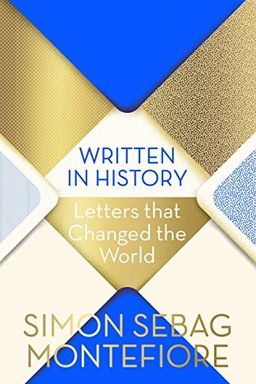
What do letters reveal that history books often hide? In Written in History: Letters That Changed the World, Simon Sebag Montefiore argues that handwritten letters are humanity’s most vivid testimony—our spontaneous, unfiltered records of love, power, creation, and loss. Through his curated selection of letters from emperors, revolutionaries, artists, and ordinary people, Montefiore shows how correspondence captures human truth in ways that political records or historical chronicles rarely can.
Montefiore contends that the letter form—whether scratched on clay tablets in ancient Mesopotamia or tapped out in a modern presidential communiqué—echoes the rhythms of history itself. Letters offer a meter of our deepest ambitions and anxieties: they show the moments when private emotion collided with public consequence. His chosen letters span four millennia, from Babylonian kings and Egyptian pharaohs to modern figures like Nelson Mandela and Donald Trump, illustrating how written words have shaped empires, movements, and hearts. The book is not simply a collection but a mosaic that reflects how human beings have tried to make meaning out of time, power, and emotion.
Letters as Living Time Capsules
Montefiore invites you to view each letter as a living artifact. The act of writing, he notes, is more than communication—it’s an assertion of existence against oblivion. He sets this within an emotional archaeology that ranges from the clay tablets of Rameses the Great to the despairing note of Kafka ordering the destruction of his works. Each letter carries its sender’s pulse forward across centuries. Montefiore points out that when Chekhov writes from Sakhalin about children forced into prostitution, or when Rosa Parks quietly narrates her defiance from Montgomery, time collapses between “then” and “now.” You feel the immediacy of moral witness: the letter makes past suffering and courage entirely present.
A Universal Chorus of Voices
Across his global panorama, Montefiore arranges letters thematically—Love, Family, Creation, War, Blood, Power, Downfall, Goodbye—to show that emotion and intellect, poetry and statecraft, always intertwine. In Love, Frida Kahlo writes in vivid color-drenched metaphors to Diego Rivera; Emperor Suleiman crafts immortal verses to his concubine Hürrem; and Henry VIII’s fervent, possessive words to Anne Boleyn ignite the English Reformation. War unfolds through the dispatches of Napoleon from Austerlitz and Peter the Great to Catherine I, portraying how generals sought both victory and domestic affection. And under Downfall, we see figures writing from the edge of their own extinction—Abd al-Rahman III measuring joy in only “fourteen days,” or Bukharin begging Stalin for mercy. Together, these letters trace emotional truth across civilizations.
Why Letters Matter Today
In an age dominated by fleeting digital messages, Montefiore’s work reminds you of what is lost when communication leaves no physical trace. Letters are deliberate; they require time, reflection, and risk. By committing their voice to paper, the writers of these letters made themselves vulnerable—and therefore unforgettable. Montefiore mourns this near-lost art, noting that even modern power brokers resort to handwritten or couriered letters when words truly matter. His examples—from Trump’s theatrically menacing letter to Kim Jong Un in 2018, to George H.W. Bush’s warm handwritten note welcoming Bill Clinton into the Oval Office—underscore that authenticity and legacy still depend on words you cannot instantly delete.
The Moral and Emotional Thread
At its heart, the book connects two kinds of history: the intimate and the imperial. Montefiore claims that while conventional history tells of decisions, letters reveal the feelings behind those decisions. When Maria Theresa scolds her daughter Marie Antoinette for frivolity, she unknowingly writes the prelude to revolution. When Émile Zola pens his open letter “J’accuse,” moral duty becomes political detonator. And when Nelson Mandela writes to his wife from prison, his tone of serenity and steadfastness becomes a manifesto on how to endure injustice. Letters, Montefiore insists, are both historical documents and existential mirrors. They show the human hand trembling as it shapes the fate of nations—and of hearts.
Reading Written in History therefore feels like entering a vast conversation across time. Its letters are confrontations, confessions, and testaments of love, courage, folly, and power—proof that civilization is, at its core, a chain of messages written in human blood and ink. As you turn its pages, you’re reminded not only of what these correspondents achieved, but of what all of us lose when we stop writing words meant to last.