
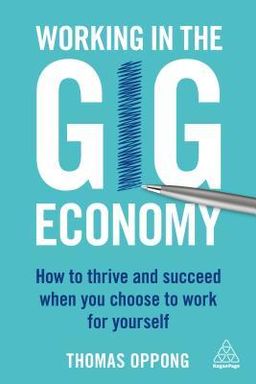
Working in the Gig Economy cover

Working in the Gig Economy

by Thomas Oppong

Working in the Gig Economy is your essential guide to thriving in self-employment. Discover how to leverage technology, build your brand, manage finances wisely, and harness your skills to find satisfaction and success in today''s flexible job market.

Thriving in the Age of Independent Work

What would your life look like if you could work entirely on your own terms—choosing when, where, and for whom you work? In Working in the Gig Economy, Thomas Oppong argues that this is no longer a distant dream but a practical option in today’s rapidly changing labor landscape. He contends that technology, shifting employer attitudes, and people's desire for autonomy have converged to create a new world of work where flexibility and independence are not luxuries but mainstream choices.

Oppong’s central idea is that work itself is transforming from long-term employment to short-term, project-based engagements that emphasize skills, adaptability, and self-management. The gig economy—spanning everyone from Uber drivers to digital consultants—represents a fundamental shift in how we view productivity, career progression, and personal purpose. But succeeding in this new system requires a complete change in mindset: seeing yourself not as an employee but as a ‘business of one.’

The Rise of the On-Demand Workforce

Oppong begins by highlighting how global economic forces, advances in technology, and cultural priorities have combined to make flexible work a new norm. Platforms like Upwork, Fiverr, and FlexJobs act as digital marketplaces where individuals can exchange their skills for short-term engagements. This system rewards agility over permanence. Workers can piece together careers from multiple gigs—often earning comparably to full-time employees while enjoying far greater control.

According to Oppong, approximately one-third of Western workers already participate in this model either by choice or necessity. This change isn’t confined to creative freelancers; it touches all sectors, from software design to logistics. Even major firms like Microsoft and Accenture rely heavily on contractors, blending traditional and contingent workforce models. (In parallel, scholars at McKinsey and PwC note similar trends: the future “liquid workforce” will consist of fluid collaborations rather than rigid employment structures.)

Freedom, Flexibility, and Trade-Offs

Freedom is the gig economy’s greatest selling point—and also its greatest challenge. Oppong paints a balanced picture: while freelancers can work from anywhere and pursue projects that excite them, they also shoulder responsibilities once held by employers—like paying taxes, managing finances, and seeking health coverage. The ideal gig worker is self-directed, persistent, and purpose-driven. Success, Oppong emphasizes, doesn't come from luck but from discipline and strategic planning.

Gig work rewards adaptability. The most fulfilled independent workers don’t chase quick cash but build meaningful, purposeful careers. They learn continuously, cultivate networks, and find alignment between what they do and what gives them satisfaction. Oppong warns against taking every job that appears; instead, freelancers must apply priority filters—choosing projects that advance expertise and align with long-term goals.

Technology as Enabler and Disruptor

Technology, Oppong argues, is both a force of liberation and disruption. Tools such as Uber, Didi-Chuxing, Fiverr, and TaskRabbit automate the connection between worker and client, reducing barriers but also increasing competition. Algorithms match skills to needs faster than ever, yet this efficiency creates pressure for constant visibility and performance. The author reminds us that adaptability will determine who thrives: workers must re-skill frequently and treat change as normal, not threatening.

For businesses, technology enables cost savings and global access to talent. For workers, it provides opportunity but also volatility. Oppong sides with optimism—he sees technology democratizing work, allowing anyone with relevant skills to tap into global demand. The challenge, he notes, is that governments and policies must catch up to protect rights and ensure fair treatment of gig workers (referencing the UK’s Uber rulings and the EU’s evolving labor guidelines).

Building a Sustainable Independent Career

Oppong’s book serves as both analysis and manual. He walks readers through building portfolios, finding clients, cultivating purpose, and managing finances. His blueprint blends entrepreneurial thinking with practical discipline: treat yourself as a brand, market your work strategically, and manage cash flow carefully. He offers step-by-step advice on creating proposals, negotiating rates, nurturing relationships, and turning personal projects into revenue streams.

“Every gig worker is a business of one.”

Oppong urges readers to adopt an entrepreneurial model: think ahead, act strategically, and build assets—like a strong personal brand and a rich network—that compound over time. Flexibility is powerful only when supported by long-term focus and professional consistency.

Ultimately, Oppong’s vision of the gig economy isn’t of instability but empowerment. For the self-motivated, it offers pathways to independence, creativity, and personal meaning. Yet for the unprepared, it can be unforgiving. His message is clear: the future of work belongs to those who embrace learning, adaptability, and purpose—and redefine “career” not as a single job, but as a portfolio of meaningful experiences that evolve alongside the world.


Designing Your Personal Brand

Your reputation in the gig economy isn’t built by luck—it’s engineered through consistent branding. Thomas Oppong insists that independent workers must think like entrepreneurs and present themselves as credible experts. In a world where thousands compete for the same project online, your personal brand is the differentiator that turns skill into opportunity.

Defining Your 'Business of One'

Oppong challenges you to stop thinking of yourself as an employee and start thinking of yourself as the CEO of your own career. Every gig worker is a ‘business of one,’ managing marketing, operations, and finances single-handedly. This mindset fosters self-reliance and long-term growth. You’re not just selling time; you’re selling outcomes and credibility.

To solidify your personal brand, Oppong emphasizes goal-setting. Borrowing from productivity frameworks like SMART (specific, measurable, attainable, realistic, time-bound), he asks freelancers to define both short- and long-term objectives. For example, in one year you may aim to secure three anchor clients or publish thought leadership articles in your niche. Treat these as corporate milestones.

Harnessing Online Media

Online visibility is crucial. Oppong encourages professionals to use LinkedIn, Medium, and Twitter to share insights that demonstrate expertise. A blog can serve as a central hub for your brand—the place where your ideas, case studies, and portfolio converge. Oppong gives his own example: by publishing productivity articles on Medium, he attracted partnerships with Business Insider, Inc., and CNBC. It’s proof that consistent thought leadership builds trust and reach.

Your digital presence must be authentic, consistent, and professional. Google yourself regularly, he advises, and monitor what potential clients see. Publish content that reflects your voice and values. Make it easy for people to find your best work and understand your unique value proposition. Tools like Klout (for influence tracking) or analytics built into platforms can help you measure your impact.

Reputation as Currency

Oppong likens reputation to currency—you earn it through excellent results and relationships. Reputation creates recurring clients and word-of-mouth referrals. To protect it, treat every client interaction with integrity and precision. Underpromise, overdeliver, and communicate transparently. Honest feedback loops, polite boundaries, and punctual results reinforce your credibility.

Over time, a trusted reputation compounds your influence. As Dorie Clark (in Stand Out) notes, building authority around your expertise attracts people who want to hire you—not just for your skill but for your judgment. Oppong echoes this: consistent professionalism transforms freelancers into brands that clients seek out, rather than ones that merely respond to job boards.

Your personal brand, Oppong concludes, is the ultimate form of career insurance. When cultivated thoughtfully, it positions you above the noise of crowded marketplaces and gives you control over the narrative of your career—a narrative built on trust, authenticity, and value, not mere availability.


Finding Work That Fits

Oppong acknowledges that finding your first client can be intimidating. But instead of asking for work, he recommends asking for advice. Approach potential customers as a learner, not a salesperson. This method builds relationships rather than transactions—and eventually converts curiosity into contracts.

Positioning Yourself for Success

To stand out, freelancers must communicate clear value. Your portfolio should show not only what you’ve done but what problems you’ve solved. List outcomes, not just activities. Share testimonials from satisfied clients. Oppong emphasizes storytelling—turn every project into evidence of growth. Once positioned properly, clients can easily see why you’re different from competitors.

Learn to lead with solutions. When contacting potential clients, highlight how your ideas improve their current operations or visibility. “Lead with solutions, not problems,” Oppong writes. For instance, instead of saying “I write articles,” offer “I craft stories that increase audience engagement and drive conversions.” Then showcase measurable results.

Mastering Multiple Channels

Use different strategies simultaneously—email outreach, job boards, networking events, and digital communities. Sites like Upwork, PeoplePerHour, or Freelancer act as entry points, while local meet-ups create face-to-face trust. Oppong calls these hybrid approaches the “fire-horse of pitches,” reflecting the need for persistence. When rejected, follow up professionally—clients remember reliable communicators.

He uses real-life examples like Luisa Zhou, who grew a $1.1 million business by helping Facebook group members with free advertising advice before becoming a paid consultant. Similarly, Michelle Schroeder leveraged her blog on personal finance to attract clients organically. Oppong’s point: share expertise generously, and opportunities will follow.

Building Referrals and Networks

Referrals are the lifeblood of freelance growth. Oppong urges you to nurture relationships with past clients and fellow freelancers. Partnering with other professionals creates synergy—for instance, a web designer teaming up with an SEO consultant to deliver complete packages. The gig economy rewards collaboration over competition.

“Don’t just rely on cold emails—connect, learn, and offer solutions.”

Oppong emphasizes long-term relationships over quick wins. Keep contact lists active and offer genuine help even when not immediately profitable. Loyalty breeds consistency, and consistency breeds financial stability.

Ultimately, finding gigs is less about competition and more about visibility and reputation. When clients know you as a problem solver, they’ll return repeatedly. Oppong’s approach to career growth is cumulative—every project, connection, and collaboration builds a self-reinforcing network that ensures steady work and long-term fulfillment.


Financial Mastery for Freelancers

Cash flow, Oppong explains, is king in the gig economy. Managing your finances properly determines whether your independent career thrives or fails. Unlike traditional employees, freelancers must act as their own CFOs—tracking income, planning savings, and preparing for uncertainty.

Smart Saving and Budgeting

Oppong advises saving twice as much for emergencies—at least six months of expenses, ideally a year. This safety net enables you to choose meaningful projects instead of accepting low-paying gigs out of desperation. It also shields you from delayed payments, seasonal income swings, or health setbacks. He emphasizes a mindset shift: savings represent freedom, not sacrifice.

Budgeting, he says, separates business from personal life. Maintain distinct accounts and pay yourself a “salary” based on past averages. This creates consistency and prevents emotional spending. Oppong endorses Elizabeth Warren’s 50/20/30 rule: allocate 50% of income to essentials, 20% to savings, and 30% to discretionary spending. Simplifying expenses into three categories clarifies priorities and builds financial resilience.

Automation and Systems

Automation is the secret weapon for busy gig workers. By setting up automatic transfers, direct debits, and scheduled invoices, you free mental bandwidth for creative work. Apps like FreshBooks, FreeAgent, and Expensify help you manage finances seamlessly—logging receipts, sending invoices, and tracking taxes. Oppong encourages freelancers to “put your finances on autopilot” but review periodically for errors.

Separate your bill-pay, income, and savings accounts. Use technology as your invisible accountant. This approach creates structure in a fluid career and transforms unpredictable cash flow into manageable rhythm.

Preparing for the Future

Retirement planning is often neglected by freelancers, yet Oppong insists it’s non-negotiable. Citing Teresa Ghilarducci’s research, he warns that anyone aiming to work into their 60s should start saving early—10% of income in their 30s, rising to 40% in their 50s. Pension plans like SEP IRA (in the US), SIPPs, and ISAs (in the UK) offer tax advantages and long-term stability. Diversify investments and combine short-term liquidity with long-term risk exposure.

Financial mastery isn’t glamorous, Oppong admits, but it’s empowering. The freelancers who thrive aren’t necessarily the most talented—they’re the ones who treat finance like science. Controlled savings, automated systems, and retirement planning ensure not just survival but sustained independence and peace of mind.


Managing Time, Focus, and Productivity

Without a manager watching over you, self-discipline becomes your greatest skill. Oppong devotes an entire chapter to productivity, showing how independent workers can maintain momentum even amid distractions. Freedom, he warns, doesn’t automatically equal effectiveness—it requires structure.

Build Routines That Work

Start your day intentionally. Oppong cites Stephen Altrogge’s advice: create morning and evening routines to prime focus. Plan tasks before bed to avoid “reactive work,” where external demands dictate your day. Define personal office hours—even freelancers need boundaries. Remember Parkinson’s Law: work expands to fill available time, so set deadlines earlier than clients expect.

He recommends dividing tasks into three categories: creative, collaborative, and connecting (borrowed from Kevin Kruse’s productivity methods). This segmentation prevents chaos when dealing with multiple projects. For large tasks, break them into smaller milestones, following John Reeve’s “manageable task” framework.

Tools and Techniques

Oppong champions the Pomodoro Technique—working in 25-minute sprints with 5-minute breaks—to enhance focus. Time-tracking tools like Toggl and RescueTime reveal hidden inefficiencies. Calendars and checklists create accountability. He praises Atul Gawande’s The Checklist Manifesto for illustrating how structured checklists prevent errors even among experts.

He also stresses energy management. Morning hours are prime time for creative work, backed by neuroscientific findings from Steve Kay. Schedule demanding tasks during peak hours and reserve afternoons for administrative or networking duties. Combine mental discipline with planned breaks—Charles Dickens’s habit of walking after writing exemplifies how intentional downtime fuels creativity.

Limit Distractions

Self-employment tempts constant interruptions—emails, notifications, social media. Oppong advises “batch processing”: handle communications at specific intervals rather than reacting constantly. Turn off alerts and treat focus as sacred. According to McKinsey’s study, workers lose almost 13 hours weekly to email; this can be reduced with strict scheduling.

Ultimately, productivity isn’t about doing more but doing the right work efficiently. Oppong’s formula is simple: combine intentional planning, energy awareness, and disciplined communication, and you’ll transform freedom into sustained performance.


Overcoming Fear and Building Independence

Oppong closes with psychological encouragement: the hardest part of freelancing is starting. Fear of failure, rejection, or financial instability paralyzes many would-be freelancers. But these fears, he argues, dissolve through small, consistent actions and preparation.

Common Freelance Fears

He outlines four major anxieties: fear of getting started, lack of confidence, rejection, and financial insecurity. Each can sabotage progress if unchecked. Fear of leaving a steady paycheck is understandable, but Oppong encourages planning—a three-month financial cushion and a well-defined portfolio mitigate risk. “Never quit impulsively,” he warns; readiness builds courage.

Building Confidence and Resilience

Confidence grows through practice, not reassurance. Treat your first client as rehearsal, not judgment. Small wins lead to momentum. Reach out to mentors or coaches if needed—established freelancers often share knowledge freely. Studying success stories like those of Paul Jarvis or Jessica Greene reveals patterns: focus, authenticity, and financial discipline outweigh flashy marketing.

Rejection, Oppong says, is inevitable but harmless. It’s data, not defeat. Iterate proposals, improve messaging, and keep pitching. Successful freelancers see rejection as feedback on positioning rather than capability.

Turning Fear into Action

Preparation extinguishes uncertainty. Plan for work pipelines, continuous learning, and emergency finances before diving fully into self-employment. Financial stability eases anxiety: save early, diversify clients, and raise rates gradually as credibility grows. Oppong’s personal mantra—‘tenacity pays off in the end’—captures the spirit of the gig economy.

“Every beginning is hard—but not impossible.”

Oppong’s message is deeply motivational: persistence and patience transform fear into mastery. The freelancing path may be uncertain, but small disciplined steps—pitching, saving, learning—create unstoppable progress.

Ultimately, fear is simply resistance to change. Once you start, Oppong reassures, momentum builds, opportunities appear, and self-employment stops feeling risky—it becomes freedom earned through deliberate preparation and persistence.

Dig Deeper

Get personalized prompts to apply these lessons to your life and deepen your understanding.

Go Deeper

Get the Full Experience

Download Insight Books for AI-powered reflections, quizzes, and more.