
Idea 1
Work Rules: Building a High-Freedom, High-Performance Culture
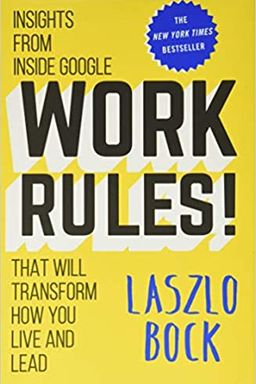
Laszlo Bock’s Work Rules! distills lessons from Google’s transformation into one of the world’s most admired organizations. The book’s core argument is simple but radical: if you want to build a culture where people perform brilliantly and stay engaged, build systems that maximize freedom, trust, and evidence rather than control and tradition. Bock frames this idea through practical examples—from hiring and learning to rewards and failure—showing how small data-backed choices create extraordinary behavior change at scale.
You learn how Google’s founders shaped a moral mission that extends beyond profit, how data replaced managerial instinct in hiring and performance decisions, and how deliberate transparency and employee voice make people feel ownership over the organization itself. The narrative builds on behavioral science, organizational psychology, and grounded business results, converging on one insight: culture is built through design, not slogans.
From Founders’ Ethos to Organizational DNA
Larry Page and Sergey Brin didn’t just launch a search engine; they embedded a set of principles—freedom, curiosity, transparency—that became the social operating system of Google. Montessori education shaped their belief that exploration beats command. Weekly all-hands meetings, equity for all, and open code repositories were deliberate signals that everyone mattered. For you, this means defining the moral mission behind your work, crafting rituals that reinforce identity, and rejecting hierarchical micromanagement. Mission-first framing gives meaning; founder-shaped constraints protect fairness; rituals keep stories alive when leadership changes.
Culture’s Three Cornerstones
Bock condenses Google’s cultural architecture into three pillars: mission, transparency, and voice. A moral mission motivates beyond paycheck. Transparency builds trust through information access—roadmaps, budgets, even executive Q&As. Voice invites people at all levels to suggest and implement change, using tools like Bureaucracy Busters and Googlegeist. Together, these cornerstones handle tension and risk: they anchor decisions in consistent values even when facing global controversies or hard tradeoffs. In your own company, mission tells people why things matter, transparency shows you trust them, and voice lets them act on what they see.
Evidence Over Instinct
For Bock, the shift from intuition to analytics is nonnegotiable. Schmidt and Hunter’s 85-year review found that work samples and structured interviews predict performance better than charisma or gut feel. Google institutionalized this with qDroid interview guides, score rubrics, and the Rule of Four—collecting standardized data instead of relying on charm. The takeaway for leaders: design repeatable hiring systems rather than chasing hunches. Data doesn’t kill humanity—it protects fairness and elevates truth.
Freedom as a Management Philosophy
Empowerment, not coercion, drives innovation. Managers lose sole authority over hiring, pay, and promotion, replaced by committees and peer input. Removing status cues like reserved parking and executive cafeterias models equality. This decentralization increases trust and accountability. If you fear chaos, think of these as guardrails for autonomy: structured freedom fosters ownership and creativity.
Performance and Growth Through Fairness
Google’s performance philosophy separates evaluation from development. Continuous feedback improves skill; separate pay discussions preserve honesty in coaching. Calibration sessions ensure rating fairness, while Project Oxygen’s research defines eight empirically proven manager behaviors—coaching, empowerment, communication, and care. Manage both tails of performance: nurture the bottom 5% compassionately and study the top 5% to amplify excellence.
Learning That Scales
Learning at Google is peer-powered. The G2G program trains internal experts to teach thousands, proving that knowledge scales best when practitioners teach practitioners. Programs like Search Inside Yourself (by engineer Meng) show how cultural fluency matters in learning design. Ericsson’s deliberate practice research shapes micro-skills with feedback and repetition. Teaching becomes the ultimate multiplier—each expert mentors several future experts, transforming learning into exponential growth.
Pay and Recognition That Reflect Reality
Performance follows a power law: a few people create outsized impact. Fair pay means paying unevenly—aligned with contribution, not uniformity. Procedural justice matters as much as distribution: transparent criteria and peer input sustain trust. Experiential rewards outperform cash; peer bonuses democratize recognition. When everyone can publicly thank anyone (via gThanks), gratitude becomes contagious.
Perks, Nudges, and Environment Design
Bock reframes perks as purposeful levers for efficiency, community, and innovation. Bike repair and shuttles remove friction; “Take Your Parents to Work Day” and ERGs build belonging; microkitchens and cross-team cafés create serendipitous collisions that spark ideas. Small behavioral nudges drive big outcomes: onboarding emails improve productivity by 25%, opaque candy jars reduce calories by 30%, retirement reminders add millions in savings. These low-cost behavioral tweaks show how design beats decree.
Translating People Operations Into Strategy
Finally, Bock reimagines HR as People Operations: a fusion of data, psychology, and design. The department’s pyramid of needs starts with flawless basics (accurate pay and offers), then scales through data analytics and relentless experiment. Google’s three-thirds People Ops model—HR veterans, consultants, and statistical experts—embodies multidisciplinary strength. The takeaway: HR becomes strategic when it predicts outcomes, operates flawlessly, and experiments like a product team.
A Book About Designing Better Work
Across all chapters, the message persists: treat people as founders, scientists, and students all at once. Build evidence-based systems that offer freedom and purpose. When you design culture intentionally—missions that inspire, hiring that’s rigorous, rewards that fit impact, and learning that spreads peer-to-peer—you create an ecosystem where great work becomes normal. (Comparable to Peter Drucker’s insight that “culture eats strategy,” Bock shows that with the right design, culture is strategy.)