
Idea 1
Language Is Always on the Move
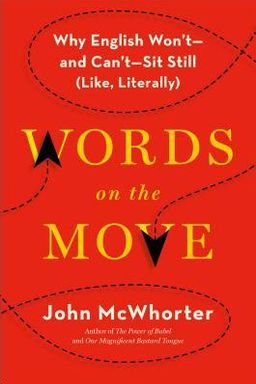
Why do we grumble when someone says “literally” to mean “figuratively,” or cringe when teenagers end every sentence with “like”? In Words on the Move, linguist John McWhorter invites you to rethink those reactions. He argues that English, like every living language, is constantly transforming—not deteriorating—and that what sounds like linguistic chaos is, in fact, the natural process of language evolution. Words are not static things; they are events, continually reshaped by speakers’ habits, emotions, and social contexts.
McWhorter contends that we misunderstand language because we’ve spent centuries treating writing as its true form. Since the eighteenth century and the rise of dictionaries, English has been perceived as something fixed on the page—“embalmed,” to borrow Samuel Johnson’s phrase. But writing is merely a snapshot of speech at one moment in time. Real language, McWhorter says, is like a parade: ever-moving, ever-changing. When we insist on keeping English stationary, we’re like spectators demanding that the parade stop marching halfway down the street.
How Speech Becomes ‘Frozen’
McWhorter recounts how the invention of the dictionary contributed to our obsession with linguistic permanence. Lexicographers such as Samuel Johnson aimed to preserve “proper” English against corruption, creating the illusion that words have sacred meanings that should never drift. Yet Johnson himself admitted the futility of this task—no nation, he observed, has ever preserved its language from change. Despite this recognition, modern speakers continue to treat dictionary definitions as eternal truths. We see deviations as errors rather than reflections of ongoing transformation.
The Nature of Linguistic Change
Every language in human history evolves. Some changes are visible: new words enter the lexicon to name technologies and cultural trends—think “selfie,” “vape,” or “emoji.” Others are invisible but profound: sounds shift, meanings drift, grammar morphs. McWhorter demonstrates that even in a completely isolated cave society, speech would mutate over centuries. Just as wind reshapes clouds, human habits reshape words. For example, Old English gahstlitch (“spiritual”) became our modern ghostly, while Middle English blessed subtly transformed from “holy” to “fortunate.” Words don’t simply sit still; they wander through meanings and pronunciations like travelers changing routes as they age.
The Problem of Print Thinking
Writing, McWhorter explains, distorts our perception of language’s fluidity. Because written words stay put, we mistake them for the language itself. We even imagine that we “speak writing” rather than “write speech.” This confusion makes us equate change with decay. If spelling or usage shifts, it feels as though civilization itself is unraveling. But speech predates writing by at least 143,000 years. Most languages—roughly 5,800 of the world’s 6,000—exist primarily in spoken form and have never been “frozen” by literacy. Real language lives and breathes in conversation, where speakers constantly retool words to match emotional nuance, rhythm, and social connection.
Why Linguistic Fluidity Matters
Recognizing that English is dynamic changes how you listen. Those “wrong” usages—“literally” for emphasis, “like” as filler, “nucular” for “nuclear”—become signs of evolution, not decline. McWhorter urges you to view them as stages in the same process that produced Shakespeare’s English from Beowulf’s. The gap between “ghostly” and gahstlitch may seem ancient, but the same forces operate today as teenagers coin “hangry” or “textaholic.” To complain about linguistic change, McWhorter quips, is a bit like scolding the weather for shifting from rain to sun.
The Five Paths of Change
Throughout the book, McWhorter explores five major forms of linguistic evolution. Words become personal, taking on emotional tones (well, like, totally). They shift meanings through implication—as when “awful” moved from reverent to unpleasant. They erode into grammar—ordinary words such as did or like shrink into suffixes and particles. Sounds change in systematic patterns, seen in historical vowel shifts from Chaucer’s “leet” to today’s “light.” Finally, new compound words—like blackboard or hangry—emerge as earlier phrases fuse into single units. In each case, the push for intimacy, efficiency, or clarity rewires English from within.
Why McWhorter’s Argument Feels Necessary
By the end of the book, McWhorter has reframed linguistic irritation as wonder. Complaining about “incorrect” usage, he says, is the last socially acceptable form of classism—a way to express superiority over those who speak differently. Understanding language as a living process dissolves this hostility. It replaces disgust with curiosity, and fear of change with the joy of watching English evolve. Like clouds in motion, words are beautiful precisely because they never stand still. Language lives, and the more we learn to love that movement, the richer our connection to humanity becomes.