
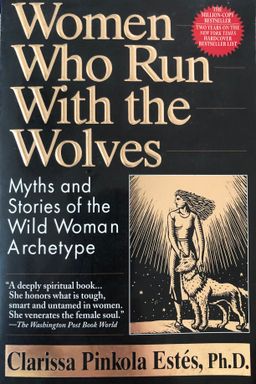
Women Who Run with the Wolves cover

Women Who Run with the Wolves

by Clarissa Pinkola Estes

Women Who Run with the Wolves offers a transformative exploration of the Wild Woman archetype, inviting readers to connect with their inner power and intuition. Through captivating myths and stories, Clarissa Pinkola Estes guides women on a journey to reclaim their authentic selves and embrace the wisdom, creativity, and instinct that lie within.

Reclaiming the Wild Woman Within

At the heart of Clarissa Pinkola Estés’ Women Who Run with the Wolves is the call to reclaim the instinctual feminine—what she names the Wild Woman. Estés, a Jungian analyst and storyteller, argues that every woman carries an ancient, intuitive force that knows how to live, love, create, and renew. Yet modern culture’s pressures toward conformity, politeness, and productivity have exiled this wildness, leaving many women depleted and spiritually dry.

The Wild Woman Archetype

Wild Woman—La Loba, La Que Sabe, the She Who Knows—is not a personality trait or mood but an archetypal presence. She embodies instinct, cycles, and deep knowing lodged “in the bones.” Estés introduces her through global mythologies—from the desert-nesting bone gatherer to Baba Yaga of Slavic tale—each representing creative endurance and fierce intuition. When you touch this inner presence, life feels animated again: boundaries clarify, creative fires return, and your vitality restores. Losing contact produces symptoms like fatigue, chronic compliance, or shame—psychic signals that the wild nature has gone underground.

Stories as Soul Medicine

Estés structures the book around storytelling because stories transmit psychic healing. In her cantadora tradition, tales act as medicine, maps, and initiation scripts that lead you back to instinct. Through fairy-tale forensics—restoring lost details and meanings—she revives old stories like “Bluebeard,” “Vasalisa the Wise,” and “Skeleton Woman” to show processes of awakening, creative repair, intuition training, and relational renewal. You don’t just analyze these stories; you enter them, using imagination, art-making, and dream-work as pathfinding tools.

Cycles of Life, Death, and Renewal

Throughout the book, Estés returns to the principle of the Life/Death/Life cycle. Wild Woman embodies natural rhythms of change—growth, decline, rest, and rebirth. In “La Loba,” the Bone Woman sings life into scattered remains; in “Skeleton Woman,” intimacy revives through embracing death and renewal; and in “The Handless Maiden,” severance becomes regeneration. Each cycle restores vitality by honoring endings rather than resisting them.

Healing from Exile and Shame

Modern women often live as exiles from their natural instincts. Through “The Ugly Duckling” Estés reframes alienation as an apprenticeship in clarity—you learn endurance and discover your “true pack,” people or communities that recognize your real nature. She extends this to mother complexes and secret wounds: ambivalent mothers, shame-bound secrets, and creative famine all require active tending. The healing prescription includes storytelling, ritual, art, and the courage to face the psychic underworld instead of bypassing pain.

Return to Embodied and Creative Life

Wild Woman’s reclamation is ultimately embodied. Estés celebrates the joyous, sensing body as wise flesh—not an image to fix but an archive of memory and emotion. Creativity too is portrayed as an ecosystem: a clear river connected to soul depth that must be protected from pollutants such as inner critics, exhaustion, and lost boundaries. The animus—the inner masculine steward—must learn renewal and rhythm, just as wolves rest after long hunts. The Wild Woman restores this balance through solitude, laughter, craft, ritual, and community; she teaches that genuine holiness includes the “dirty Goddesses,” those irreverent, laughter-filled forces that cure despair.

The Arc of Retrieval

Taken together, the tales form a map of descent, transformation, and return. You begin with loss—Bluebeard’s bloody key or La Loba’s desert bones—descend into initiation tasks with Vasalisa and Baba Yaga, confront death and love with Skeleton Woman, endure exile and famine in the Ugly Duckling and Red Shoes, and finally return homeward with the seal woman’s regained pelt. This trajectory mirrors Jungian individuation and mythic hero’s journeys (comparable to Joseph Campbell’s monomyth), but Estés reframes it through feminine creativity and relational wisdom. The Wild Woman doesn’t conquer; she sings, grieves, crafts, and reclaims.

Why It Matters

Estés’ lifelong project is cultural and spiritual repair. She insists that without the wild feminine, cultures become sterile, abusive, or manic. Reclaiming your instinctive psyche reconnects you not only to personal vitality but also to the ecology of human creativity. The Wild Woman archetype restores feeling, boundary, imagination, and soul depth—the necessary foundations for wholeness. The book concludes with “Homing,” the sealskin metaphor for returning to the sea-soul where you belong. When you live from this wild ground, you create art, love, and community that renew both self and world.

In essence, this work teaches that your instinctual life is not lost—it waits beneath the cultural ice. By gathering stories, tending your bones, laughing out loud, and practicing solitude, you awaken La Que Sabe within: the old knowing woman who reminds you when to live, when to let die, and when to sing life back again.


Stories as Medicine

For Estés, story is not mere entertainment; it is remedy. Like herbs and charms in folk medicine, tales carry encoded healing instructions. Learning to use them intentionally restores lost instincts and fractured creativity.

The Cantadora Lineage

Estés is a cantadora, a keeper of stories passed through generations of women. In this tradition, stories arise from survival: exile, labor camps, migrations. They remember hardship while preserving vitality. When you listen deeply or retell a tale, you activate communal wisdom stored in narrative form.

Active Story-Work

Story-work involves engagement. Estés teaches three crafts—the craft of questions, stories, and hands. You ask soul-opening questions, follow motifs that mirror your psyche, and create tangible anchors like dolls or talismans to manifest change. Entering a tale through imagination allows its living matrix to teach directly. (This resembles Jung’s active imagination and the shamanic idea that stories are spirit-teachers.)

Why Story Heals

Stories “set the inner life into motion.” They grease psychological pulleys by externalizing conflict and showing archetypal solutions. A myth like Bluebeard instructs boundary formation; Skeleton Woman teaches intimacy; Vasalisa models intuition training. You learn experientially rather than didactically.

To practice, read tales aloud, note bodily sensations and images, and act upon small inspirations. Each story becomes a medicine kit for the stage of development you occupy. Over time story-work regenerates the Wild Woman’s connection between psyche, imagination, and creativity.


Facing the Predator: Bluebeard’s Lesson

The tale of Bluebeard provides Estés’ model for recognizing psychic predation—the inner or external forces that destroy women’s creativity. The locked room of corpses symbolizes murdered instincts. Your task is to name, question, and render this intruder’s power into usable insight.

Recognizing the Intruder

The predator appears as chronic doubt, sabotage, shame, or fascination with abusive power. It thrives on secrecy. Once identified—by dream images or persistent life patterns—you must confront it. The key that bleeds represents consciousness: the moment you open the forbidden door and refuse to deny what you find.

Using the Key Question

Transformation begins by asking “What stands behind?” Proper inquiry dissolves illusion and reveals the predator’s workings. Consciousness, once awakened, cannot be scrubbed away—you must integrate this painful knowledge to safeguard your creative life.

Rendering the Predator

Estés recommends dismantling rather than hating the predator. You redirect its energies—rage, cunning, endurance—toward protecting your boundaries and powering creative effort. Call upon your inner “brothers,” symbolic animus strength, to act decisively. This balanced approach crafts immunity instead of perpetual war.

Bluebeard reminds you that curiosity is sacred. Knowing the truth of your psychic house prevents further murder of instinct. By keeping the key visible and conscious, you reenter your own authority—the Wild Woman’s watchful intelligence.


Intuition and the Wise Doll

Through the story of Vasalisa, Estés designs a full initiation for awakening intuition. Using the mother’s doll, the witch Baba Yaga, and the trial tasks, she shows how intuition is cultivated—not mystical gift but practiced discernment.

Feeding the Doll

The small doll embodies inner guidance left by the mother’s blessing. You must feed it with attention and small acts—listening, honoring dreams, keeping creative rituals—so it remains alive. Ignoring it dulls perception. (Compare this to cultivating the daimon in James Hillman’s writings—both stress relational care with an inner figure.)

Baba Yaga’s Tasks

In Baba Yaga’s hut you perform seemingly menial chores—washing, sorting poppy seeds, tending fire. Each is metaphor for inner organization: cleaning psychic clutter, separating life from dead matter, maintaining creative flame. Intuition requires ordered inner space, not chaos.

Stages of Transformation

The three riders—black, red, and white—represent initiation phases: descent, transformation, and renewal. The skull gift at story’s end gives clear vision, ancestral light that guides future intuition. Practicing these metaphors—tasks, discernment, measured questions—builds steady intuitive strength.

Vasalisa’s lesson is practical: tend your inner helper, perform conscious sorting, and respect cycles of knowing. When you do, intuition becomes a reliable lifelong companion rather than transient feeling.


Love, Death, and the Skeleton Woman

Love in Estés’ vision follows the Life/Death/Life rhythm. The Arctic tale of Skeleton Woman models how genuine intimacy requires meeting death—emotional endings, vulnerabilities, and rebirths—with courage rather than avoidance.

Meeting the Skeleton

A fisherman hooks a corpse from the sea, flees in terror, then carefully untangles her bones. His compassion and patience restore her form. Through his tear she gains life; his heart-drum resurrects love. The story shows how intimacy matures only when both partners attend to wounds together.

Seven Stages of Loving

Estés outlines seven tasks—from the accidental catch to awakening, fear, compassion, trust, nourishment, drumming of life, and union. Each stage corresponds to learning endurance with the dying aspects of love. In every long relationship, something must die so something else may grow.

Staying Through Death

The fisherman’s tear symbolizes empathy—the willingness to be moved. Estés insists, “To love means to stay.” Real partnership requires staying through fear, decay, and renewal. Rituals of song, shared silence, or compassionate weeping reanimate connection. Skeleton Woman becomes the midwife of enduring love.

Relationships built on wild principles thrive not through perpetual bliss but through cyclical death and rebirth. Accepting this rhythm transforms eros into lasting soul companionship.


Creative and Bodily Wildness

Estés reclaims creativity and the body as sacred wild realms. Both have been colonized by cultural control—beauty myths, work obsession, perfectionism—and must be liberated to restore wholeness.

The Creative River

Creativity, the “river beneath the river,” flows from soul depth. Pollution—criticism, ideological toxins, inner sabotage—blocks its life. Through tales like La Llorona, Estés teaches how to diagnose contamination and clear the source. You protect this river by naming poisons, practicing daily creation, and maintaining supportive community.

Renewing the Animus

Your animus—the inner masculine mover—must also rest. When weary, bring it to La Que Sabe, the old woman healer. “Throw three hairs to the floor,” Estés says, meaning prune excess tasks, focus purpose, and rock the idea gently until clarity returns. Renewal arises from rhythm, not endless drive.

Wild Flesh

The body is an intelligent sensor and archive, not an aesthetic object. Through figures like La Mariposa, the butterfly woman dancer, Estés celebrates embodied joy beyond cultural norms. Movement, dance, and laughter restore vitality. Loving your inherited body is both spiritual act and cultural resistance.

Together, creative and bodily reclaiming reestablish Wild Woman’s ecology—clear waters, strong bones, and joyous flesh. These are the vehicles by which the soul experiences flight.


Exile, Belonging, and Homing

Late chapters turn toward belonging—the journey from exile to homecoming. Through “The Ugly Duckling” and the sealskin tale, Estés explores how displacement teaches clarity and how returning to soul-home completes the cycle.

Exile as Initiation

Exile begins when wild nature clashes with conformity. The child mocked as odd becomes apprentice to endurance. Winters of isolation forge strength and perception. Estés recasts alienation as alchemy: under pressure psychic diamonds form. When recognition finally arrives—from your true pack—you understand belonging as chosen, not automatic.

Finding Your Pack

Belonging depends on resonance, not bloodline. Notice who nourishes your inner life, create rituals of connection, and form “soul kin” that honor creative wildness. Biological families may fail; chosen communities sustain. Estés herself modeled multicultural packs—story circles, artistic cohorts—that mirrored Wild Woman’s inclusive nature.

Homing and the Soulskin

The sealskin story closes the book: retrieving the stolen pelt symbolizes returning to instinctual coherence. Intentional solitude—walks, song, ritual time—is necessary home-time. The medial woman who emerges bridges spiritual sea and land realities, carrying knowledge between worlds.

Homing teaches you to plan regular returns to soul-depth. When you honor that rhythm, Wild Woman’s presence remains embodied and creative, continually replenishing your life.

Dig Deeper

Get personalized prompts to apply these lessons to your life and deepen your understanding.

Go Deeper

Get the Full Experience

Download Insight Books for AI-powered reflections, quizzes, and more.