
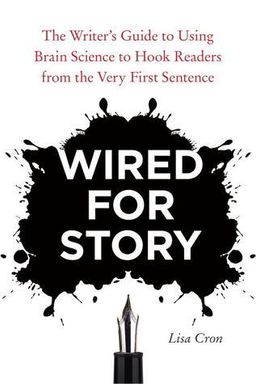
Wired for Story cover

Wired for Story

by Lisa Cron

Wired for Story reveals how the latest findings in brain science can turn any writer into a master storyteller. By understanding what captivates readers, you can craft narratives that engage, educate, and entertain. Unlock the secrets of storytelling that have been hardwired into our brains, and learn to write stories that truly resonate.

We Think in Story: The Brain’s Design for Narrative

Have you ever wondered why a gripping novel or movie feels so alive—why you forget time and place as you turn the pages? In Wired for Story, Lisa Cron argues that storytelling isn’t merely entertainment; it is a survival mechanism hardwired into the human brain. She contends that story evolved as humanity’s ultimate learning tool—the way our brains simulated experience, practiced problem-solving, and predicted the future long before science existed. We don’t just enjoy stories because they’re fun; we need them to make sense of life.

Cron begins by dismantling the myth that good prose or clever plots alone hold readers. What actually grips us, she explains, is the brain’s innate craving for narrative structure—a pattern of cause, effect, goal, and emotional consequence that mirrors how we process the world. She calls this combination of neuroscience and artistry “fire plus algebra”: emotional passion fused with cognitive logic. Fire ignites our desire to tell stories; algebra ensures we do it in a way that satisfies the reader’s brain.

The Evolutionary Roots of Story

Cron recounts how early humans used storytelling for survival. A tale warning against poisonous berries or recounting a neighboring tribe’s attack wasn’t idle gossip; it was life-saving data. Over millennia, the brain developed circuitry that rewarded the listener with pleasure whenever a narrative delivered insight—via dopamine surges for curiosity and pattern recognition. This ancient system explains why modern humans gravitate to novels, television, and even anecdotes. Story remains our cognitive playground for learning without risk.

The Brain’s Hardwired Blueprint for Story

According to Cron, every reader’s brain expects certain signals in any story: a protagonist pursuing a clear goal, mounting conflict that forces adaptation, emotional stakes that measure risk, and a cause-and-effect sequence that builds meaning. These elements are not literary conventions—they are neural design. When they’re missing, our cognition rebels. That’s why well-written but aimless manuscripts fail: they ignore the internal logic the brain demands.

The Dual Power of Fire and Algebra

Cron’s metaphor—borrowed from Jorge Luis Borges—illustrates two halves of storytelling genius. Fire represents the writer’s passion, instinct, and creativity. Algebra represents the disciplined understanding of how the brain reads patterns. A tale with only fire burns bright but fizzles; one with only algebra feels mechanical. True mastery requires balancing emotional resonance with cognitive precision.

What Readers Are Wired to Seek

Readers subconsciously hunt for meaning, not beauty. They want to feel tension and resolve uncertainty. Story offers safe simulation—experiencing risk, heartbreak, courage, and transformation without real-world cost. When you read about a character’s struggles, mirror neurons in your brain fire as if you lived those experiences yourself (research by neuroscientist Marco Iacoboni confirms this). That’s why stories can expand empathy and reshape beliefs.

The Promise of Neuro-Storytelling

The book’s twelve chapters each decode one cognitive principle—called “Cognitive Secrets”—paired with practical “Story Secrets.” Together, they reveal how to align your writing with how readers’ brains learn, focus, and feel. From the first sentence to the last, Cron argues that stories must continually satisfy these evolutionary expectations. Every chapter ends with checklists that help writers refine their drafts, diagnose dull passages, and craft narratives that feel inevitable yet surprising.

Ultimately, Wired for Story reframes storytelling not as mystical art, but as applied psychology. Cron invites you to see narrative as the way humans think—the universal language of emotion, logic, and change. Understanding how the brain processes story, she says, doesn’t limit creativity; it unleashes it. Once you grasp that your reader’s neurons are waiting for specific cues, your writing becomes not just entertaining but irresistible.


Hooking the Reader’s Brain from Sentence One

Cron insists that a story must grab the brain immediately. Readers are busy, distracted, and evolutionarily wired to focus only on relevant information. To hold attention, you must trigger the survival system: curiosity and the anticipation of outcome. The first sentence or paragraph should suggest that change is coming—that all is not as it seems.

Why Surprise Works

Neuroscience writer Jonah Lehrer notes that surprise sharpens focus by activating dopamine neurons. Cron explains that when we encounter something unexpected in fiction—a sudden pain, a secret, a hint of trouble—our brains eagerly seek explanation. This biological reaction is why we turn pages. For instance, Caroline Leavitt’s Girls in Trouble begins with an anxious teenage girl in labor during a speeding car ride. The reader instantly senses crisis and consequence, compelling the brain to crave resolution.

Three Questions Every Reader Asks

  • Whose story is this?
  • What’s happening right now?
  • What’s at stake?

From page one, readers unconsciously demand answers. Lisa Cron shows how the best openings—like Elizabeth George’s “Joel Campbell began his descent into murder with a bus ride”—answer all three simultaneously. We know the protagonist, the event, and the dire consequence. The brain rewards this clarity with engagement, since it immediately recognizes a pattern with meaning.

Cut the Boring Bits

Cron echoes Elmore Leonard’s advice: leave out the parts readers skip. Anything irrelevant to the protagonist’s goal fails the “And so?” test—if the reader can’t see why it matters, it’s boring. She illustrates with Dan Brown’s The Da Vinci Code: regardless of flat prose, the book’s power lies in relentless questions. Readers stay hooked because they’re constantly anticipating what happens next.

The Fire of Curiosity

Story engagement isn’t cerebral; it’s emotional. When curiosity ignites, dopamine creates pleasure and urgency. Every beat of your story should feed that hunger. Cron encourages writers to build narrative tension from the start, not by withholding information, but by posing compelling questions that promise an emotional payoff.

“From the very first sentence,” Cron writes, “the reader must want to know what happens next.” Nothing else counts until that happens.

The takeaway: you only have seconds to convince your reader’s brain that your story offers survival-level insight. Begin in motion, connect to consequence, and leave a breadcrumb trail of curiosity. Without tension from the start, even beautiful writing remains a “Who cares?” novel.


Focus: The Point Behind Every Word

Once you’ve hooked the reader, Cron warns: clarity is everything. The human brain filters out irrelevance to conserve energy. To maintain focus, every sentence must serve the story’s point. She calls this the So what? factor—the underlying meaning that lets readers interpret events and decide what matters.

Three Elements of Focus

  • Protagonist’s Issue: the internal struggle that forces change.
  • Theme: what the story says about human nature.
  • Plot: the external gauntlet that tests both.

Cron integrates these elements through examples like Scarlett O’Hara in Gone with the Wind. Scarlett’s issue—her self-absorption—clashes with the theme of survival via gumption. The Civil War plot forces her to confront this flaw. Her external pursuit of land mirrors her internal blindness to genuine love. Focus emerges when all three elements synthesise into a single driving question: “Will Scarlett realize what truly matters before it’s too late?”

Theme Defines the Universe

Theme isn’t philosophical abstraction; it defines what’s possible in your story’s world. Margaret Mitchell’s “survival through gumption” shapes how characters act and what moral choices matter. The universe reacts accordingly—rewarding resilience, punishing conformity. This thematic lens lets both writer and reader evaluate meaning.

Plot Is Not Story

Cron dismantles another myth: plot is not synonymous with story. Plot delivers events; story reveals how those events change a person. She uses the film Fracture—where a murder trial tests prosecutor Willy Beachum’s integrity—as proof. The external trial is plot; Beachum’s moral awakening is story. True narrative focuses on transformation, not spectacle.

How to Maintain Focus

Cron offers a pragmatic strategy: before drafting, articulate your story’s point in one paragraph. This acts as a map ensuring every scene drives that point. If characters wander or subplots stall, reference your core theme and issue—then cut anything irrelevant. “Everything must be on a need-to-know basis,” she writes. In story, clarity equals empathy; without it, readers can’t connect.

Focus transforms scattered events into cause-and-effect insight. It’s what makes a 1000-page saga coherent. When readers instinctively know why each moment matters, they stop navigating sentences and start living the story.


Emotion: The Engine of Consciousness

Cron cites neuroscientist Antonio Damasio’s case study of a patient named Elliot—an intelligent man who lost his ability to feel emotion. He could list pros and cons endlessly but couldn’t decide anything, including lunch. Without emotion, reason collapses. That’s the heart of her argument: story’s meaning emerges only through feeling.

Emotion Creates Meaning

Every fact in life carries emotional weight: will it help or hurt me? When readers absorb fiction, they rely on emotion as their compass. A protagonist’s reactions tell us what matters. A neutral hero—one who doesn’t feel shock, shame, or joy—makes everything meaningless. Cron urges writers to render every moment through the protagonist’s emotional lens.

How to Show What They Feel

Whether writing in first or third person, emotion should be visible in thought, action, and body language. Cron illustrates with examples from Elizabeth George and Anita Shreve, who fuse internal monologue with physical reaction. Readers should mirror those feelings through the power of empathy and mirror neurons. Narrative isn’t observation—it’s participation.

Beware Editorializing

Never tell readers what to feel. Instead, show actions that evoke emotion. Overbearing adjectives or exclamation points push readers away. Cron reminds writers: judgment belongs to readers, not narrators. When authors “explain” emotion, they deny the reader’s instinctive experience—and the story’s realism vanishes.

Write What You Know—Emotionally

Cron revises an old maxim: don’t merely write what you know factually; write what you know emotionally. Authentic understanding of fear, desire, and conflict creates empathy. It’s not about expertise—it’s about honesty. She cautions against the “curse of knowledge”: assuming readers know your world as you do. Emotional clarity bridges that gap.

Key Insight

“If we’re not feeling, we’re not reading.” Story doesn’t just convey emotion—it is emotion made conscious.

Emotion transforms narrative logic into lived experience. It’s how the brain recognizes relevance and value. A story that feels nothing means nothing—because emotion is literally the mark of consciousness itself.


Goals, Desire, and the Protagonist’s Agenda

Every story, Cron says, begins with desire. Our brains evolved to pursue goals, to interpret others’ intentions and align them with our own survival. Without a clear objective, the reader’s brain can’t predict or invest. That’s why a protagonist must want something specific, visible, and emotionally charged from page one.

The External and Internal Goal

Characters usually chase two intertwined goals: one external (win the trial, find the treasure, escape the city), and one internal (seek respect, feel worthy, learn love). The external goal drives plot; the internal goal defines meaning. In It’s a Wonderful Life, George Bailey’s external goal is to leave Bedford Falls and do “big things.” His internal goal—to feel valuable and make a difference—keeps him tied to his community. The two collide until his epiphany unites them.

Conflict Between the Goals

Cron argues that stories thrive on the tension between what your protagonist wants and what they need. When the external goal eventually fails, it forces reckoning with the internal struggle. George Bailey realizes his true impact lies not in adventure, but in compassion—a transformation readers feel as their own.

Generic vs. Specific Desire

General desires—wanting happiness, success, survival—are empty because our brains can’t visualize them. Specificity creates simulation. Scarlett O’Hara doesn’t merely want to “survive”; she wants to keep her plantation, Tara. That tangible goal mirrors her emotional blindness. The reader instinctively measures progress and stakes through that concrete lens.

The Inner Conflict

The protagonist’s fears and misconceptions inevitably sabotage their pursuit. Cron calls this the “inner issue,” the false belief forged in the past that distorts their worldview. The plot exists to dismantle that delusion through escalating obstacles. For the reader, watching this internal confrontation delivers the real reward: emotional growth through empathy.

Every action in your story should answer a simple neurological question: how will this help or hurt the goal? When readers see clear intentionality, they don’t just understand what’s happening—they experience why.


Conflict: The Catalyst for Change

Humans resist change—it threatens stability. Yet story exists to force it. Cron calls conflict the brain’s mechanism for evolution. We’re wired to avoid disruption in life but crave it in fiction, because it lets us rehearse transformation without risk.

The “Versus” Principle

Every story contains a “versus”—opposing forces that trap the protagonist. It may be desire vs. fear, truth vs. denial, self vs. society. Cron insists that tension must exist from the first sentence. Readers sense impending collision and keep reading to see how it unfolds. Conflict isn’t a fight scene—it’s contradiction embodied.

Realistic Conflict Hurts

Neuroscience shows that social rejection activates the same pain centers as physical injury. That’s why emotional betrayal resonates so deeply: our brains treat it as survival threat. When Kathryn in Anita Shreve’s The Pilot’s Wife learns her husband hid a secret life, the pain feels unbearable. Readers’ mirror neurons make them flinch right with her.

Don’t Hide the Real Struggle

Writers often “shield” characters out of kindness—resolving problems too easily, introducing fake tension that dissipates. Cron warns this robs the reader of catharsis. Conflict should escalate relentlessly, each solution spawning deeper trouble, until change becomes inevitable. In Sullivan’s Travels, the director’s failed attempts to “experience poverty” culminate in imprisonment—the true suffering he needed to evolve.

The Reader’s Paradox

In life we avoid pain; in story we seek it. Conflict draws us because it teaches survival. Watching characters suffer and adapt lights up our neural empathy circuits, preparing us for our own challenges. “No pain, no gain,” Cron writes—literally. If your protagonist escapes hardship, your reader escapes meaning.

Conflict is never chaos for its own sake—it’s the precision instrument that drives transformation. Every turning point should answer: how does this pain reveal truth? When readers feel that answer resonate, change feels earned—and unforgettable.


Cause and Effect: The Brain’s Logic of Story

Cron translates neuroscience into storytelling algebra: the brain demands cause and effect. Without it, narrative feels random and meaningless. “If, then, therefore” is storytelling’s core formula—action, reaction, decision. This sequence governs both plot and psychology.

Why Logic Matters

Human cognition organizes experience like film editing—it links events into coherent sequences. When your story skips connections, readers feel physical discomfort. That’s why every scene must arise logically from the one before and propel the next. Otherwise, tension collapses.

Show, Don’t Tell—Reconsidered

Cron redefines a classic rule. “Show, don’t tell” doesn’t mean illustrate emotion—it means reveal cause. Don’t tell me John cried; show me what made him cry. This approach mirrors how the brain learns—from seeing why something happens, not just what happens.

The “And So?” Test

Anything that doesn’t trigger consequence fails the reader’s unconscious logic. Each event must provoke change, decision, or insight. Cron’s example: if George Bailey had a random fly-fishing scene, we’d ask, “And so?” That question measures relevance and weeds digressions.

Predictability vs. Inevitability

Cron clarifies that predictable stories bore; inevitable ones satisfy. Surprises should still obey emotional logic. When readers reexamine twists, they should see they were set up all along. Hitchcock’s Vertigo succeeds because its shocking reveal aligns perfectly with prior clues—the payoff retroactively makes every scene more meaningful.

Story logic isn’t optional—it’s biology. The human brain builds reality from cause and effect; your narrative must do the same. When each “if” naturally produces its “then,” readers experience truth rather than coincidence—and that truth is addictive.


Memory, Subplots, and Foreshadowing: Weaving Time

Life isn’t linear, and neither is mind. Cron shows how stories mimic the brain’s memory system: we interpret the present through the past to predict the future. Flashbacks, subplots, and foreshadowing aren’t distractions—they’re how consciousness works.

The Crow’s Spiral

She describes story movement as the “crow’s flight”: looping through memory and anticipation while progressing forward. Each look backward or sideways must reflect the protagonist’s struggle. Irrelevant detours—like random nostalgia—break the flow and confuse the reader. Timely flashbacks, however, deepen understanding of motives and fears.

Purposeful Subplots

Subplots exist to mirror, reinforce, or complicate the main question. In Cron’s example, Neil’s history teacher subplot (failing an unfair exam) heightens tension in his quest to enter Yale. Readers grasp Neil’s injustice and root for him more fiercely. Every subplot must affect the main story emotionally or thematically—otherwise it’s filler.

Flashbacks as Cause and Effect

A flashback should appear only when the present demands it. The reader must know why this information matters now. When done right, it resolves confusion or creates irony. Poorly timed flashbacks, Cron warns, yank readers out of story—like switching theaters mid-film.

Foreshadowing: Trust and Anticipation

Foreshadowing restores coherence. By hinting at future capability or flaw, writers prepare readers for later events. Cron’s “claustrophobic protagonist in the closet” example demonstrates how early cues make later scenes believable and satisfying. Foreshadowing isn’t prediction—it’s pattern recognition for the brain’s craving for logic.

For Cron, memory isn’t just backstory—it’s the connective tissue of humanity. When story mirrors that structure, readers feel immersion: past, present, and future entwined. That depth turns plot into life itself.


Rewriting: The Writer’s Brain on Story

Cron concludes with a truth as scientific as it is creative: writing equals rewriting. Just as the brain learns by trial and feedback, stories evolve through revision. Neuroscience shows mastery becomes intuitive only after thousands of mental repetitions. Rewriting trains your cognitive unconscious to recognize story logic instinctively.

The Elation and the Reality

After a first draft, writers feel triumph—then despair when their masterpiece seems banal. Cron normalizes this shock. It’s not failure; it’s brain science. The initial draft externalizes raw intuition (fire). Later drafts refine algebra—the logical framework that beginner’s enthusiasm overlooks.

Feedback and Objectivity

She outlines methods for objective review: ask test readers simple predictive questions (“What do you expect next?” “Who matters?” “What confused you?”). Their answers expose gaps between your intention and what’s on the page. Cron also encourages professional critique—editors who understand story mechanics rather than friends who love you too much to be honest.

The Neuroscience of Expertise

Cognitive scientist Herbert Simon’s “ten thousand chunks of skill” theory defines mastery: after a decade of practice, intuition replaces conscious effort. Damasio calls it outsourcing to the brain’s basement—the unconscious execution of learned patterns. Writing is no different: revision builds automatic story instinct, transforming craft into art.

Reject Perfection, Embrace Process

Cron quotes Hemingway—“All first drafts are shit”—to remind us that creation and correction are one. The writer’s brain learns through failure, not avoidance. Revision is how creative fire meets structural algebra, and how the story finally speaks its truth.

“There’s no writing,” Cron promises, “only rewriting.” The miracle of story isn’t in inspiration—it’s in reformation.

By connecting neuroscience to creative perseverance, Cron reframes authorship as pattern recognition—our brain’s relentless drive to make meaning from chaos. When the writer learns to mirror that process consciously, rewriting becomes evolution itself.

Dig Deeper

Get personalized prompts to apply these lessons to your life and deepen your understanding.

Go Deeper

Get the Full Experience

Download Insight Books for AI-powered reflections, quizzes, and more.