
Idea 1
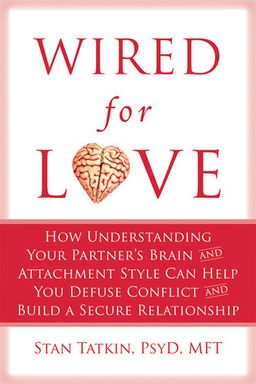
Wired for Love: Creating Lasting Security in Relationships
What if you could understand your partner’s brain as well as their heart—and use that knowledge to make your love last? That is the radical promise of Wired for Love by Dr. Stan Tatkin, a psychotherapist who integrates neuroscience and attachment theory to show how we are literally wired, biologically and behaviorally, for both love and war. The book argues that the success or failure of modern relationships comes down to how partners manage their brains under stress and learn to create safety, ease, and connection—what Tatkin calls the “couple bubble.”
Tatkin contends that most people approach relationships with blind theories—personal explanations for love and conflict that feel right but don’t actually help. He proposes that enduring connection depends not on personality or compatibility but on how partners use the evolved parts of their brains to override primitive survival mechanisms. By understanding our neural wiring, attachment styles, and biological responses, couples can create emotional security strong enough to withstand life’s inevitable challenges.
Why Understanding the Brain Matters
Relationships are not purely emotional—they are regulated by biology. Tatkin connects cutting-edge research in psychobiology, showing how our nervous systems react to threat cues faster than we can think. The same primitive systems that kept our ancestors alive can sabotage intimacy now. When the brain perceives danger, it moves to a warring state rather than a loving one. Unless we consciously override this wiring with empathy and communication, our most vital relationships can fall prey to ancient fight-or-flight reflexes.
Tatkin’s approach therefore reframes love as a neurobiological skill: when partners understand how their brains process emotion, perceive threat, and regulate arousal, they can rewire themselves for closeness rather than conflict. This “psychobiological approach to couple therapy,” or PACT, emphasizes early learning and attachment models as templates for adult behavior.
From War to Love: The Promise of the Couple Bubble
The cornerstone of Tatkin’s theory is the “couple bubble”—a mutually protective zone of safety created when both partners make the relationship their top priority. A healthy couple bubble is built on explicit and implicit agreements: never to frighten each other purposely, to repair distress immediately, and to value the relationship above ego battles or competing commitments. Within this bubble, partners become one another’s primary go-to people, the first person each turns to for comfort or celebration. The bubble acts as a secure base similar to an infant’s attachment to a parent—close, reliable, and calming.
Without this shared protective zone, Tatkin warns, modern couples operate like autonomous individuals whose primitive brains are constantly on alert. They fight, withdraw, or turn to outsiders for soothing. But when the relationship comes first—when couples move from “you do your thing, I’ll do mine” to “we come first”—they create a sense of tethering that transforms love into something sturdy and healing.
Attachment Styles and Rewiring
Tatkin applies attachment theory to adult intimacy, identifying three primary styles: anchors (securely attached), islands (avoidant and self-reliant), and waves (ambivalently attached and anxious). By learning your own and your partner’s attachment style, you gain insight into predictable patterns—whether you withdraw when stressed or cling for reassurance. Understanding these tendencies allows partners to become “expert managers” of one another’s needs, rewiring insecurity into safety through responsiveness, not argument.
The goal isn’t to change your personality or erase childhood wounds; it’s to provide corrective experiences that retrain the brain for trust. Couples learn that you are hurt by people but healed only by people—a concept echoed by therapists such as Harville Hendrix and John Gottman. Secure functioning partnerships offer both partners the chance to become anchors through deliberate acts of care and repair.
Why It Matters: The Neuroscience of Love and Healing
Tatkin’s message is both scientific and deeply human: love is a biological event unfolding between two nervous systems. Partners continually regulate each other’s arousal, stress, and emotional state, acting as co-managers of their shared wellbeing. When done skillfully, this mutual regulation lowers stress hormones, strengthens immunity, and fosters physical and psychological health. In secure relationships, couples literally heal one another’s brains.
Ultimately, Wired for Love is a manifesto for conscious partnership. It urges you to move beyond the fantasy of perfect compatibility to the reality of everyday neuroscience: two imperfect yet committed brains learning to soothe, delight, and protect each other. Tatkin’s ten guiding principles—ranging from fighting well to using morning and evening rituals—provide a hands-on manual for transforming love from instinctual reaction into mindful connection. In doing so, you don’t just improve your relationship; you rewire your brain for love itself.