
Idea 1
The Science of Human Connection
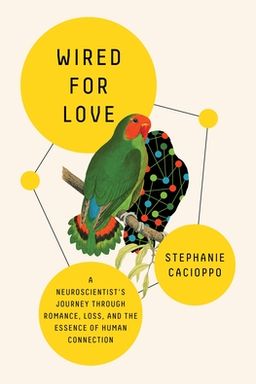
Why does love feel so essential—so necessary that life without it seems incomplete? In Wired for Love, neuroscientist Stephanie Cacioppo invites you to explore that question not as a sentimental musing but as a scientific investigation. Her bold claim is that love is not optional or decorative; it is a biological necessity. Our brains, she argues, are literally wired for connection—and every neuron, hormone, and emotional response evolved to help us form and sustain bonds with others.
Drawing on her decades of work in social neuroscience, Cacioppo combines autobiography and rigorous science to explore how human connection shaped our species, transforms our brains, heals our bodies, and defines what it means to live fully. She guides you from the most intimate brain circuits to universal stories of love, loneliness, resilience, and grief—arguing that to truly understand ourselves, we must understand the biology of love.
Love as Biology, Not Poetry
Cacioppo begins by dismantling the romantic myth that love lives in the heart. Ancient poets and philosophers described being "heartbroken" or having a "change of heart," but modern neuroscience points elsewhere. Feelings of love—longing, attachment, passion—arise from neural networks that link emotional and cognitive systems. By mapping this circuitry through brain imaging, she shows that love triggers both primal areas (the limbic system and reward centers releasing dopamine and oxytocin) and higher cognitive regions associated with identity, imagination, and future planning. Love, she says, is not just a feeling—it’s a mode of thinking.
Throughout the book, she insists that love’s biology does not cheapen its mystery; it deepens it. Just as understanding how stars form doesn’t diminish their beauty, understanding how love shapes the brain can expand your appreciation for how extraordinary and complex human connection truly is.
From the Individual to the Species
Cacioppo zooms out from the individual brain to the long arc of evolution. She proposes that our ancestors’ survival depended less on claws or speed and more on cooperation and bonding. Love—first as pair bonding for child-rearing, later as friendship and community—literally sculpted human intelligence. In her words, “Love made the brain.” The same neural capacities that allowed early humans to nurture partners or offspring evolved into social cognition and empathy—the core of culture, language, and morality. Without love, there is no humanity.
The book then interweaves her personal story: a shy, solitary girl fascinated by the stars in the French Alps who grew into a neuroscientist convinced that connection was the universe’s most intricate design. Through her research and her own life, she illustrates how the brain both craves and creates connection—whether through family, friendship, work, or romance.
The Power and Peril of Connection
Cacioppo’s own love story with Dr. John Cacioppo—a leading researcher on loneliness—anchors the book emotionally and intellectually. Their marriage becomes a real-world experiment testing their theories about attachment, empathy, and resilience. As John’s groundbreaking research revealed how loneliness harms the body as severely as smoking, Stephanie’s research demonstrated how love strengthens neural pathways, creativity, immunity, and longevity. Together they proved that human connection heals—literally.
But she doesn’t idealize love. She examines breakups, heartbreak, and grief through an empirical lens—showing how loss activates the same brain regions as physical pain, how loneliness can rewire the brain toward hypervigilance, and how compassionate action and physical touch can reverse harm. The book evolves into a meditation on loss and recovery after John’s death, transforming scientific insight into lived wisdom: even when love ends, its imprint remains in the brain and body, continuing to guide us.
Why It Matters Now
While Cacioppo’s story is deeply personal, her argument resonates across an era marked by rising loneliness, digital disconnection, and post-pandemic isolation. She reframes social connection as a public health issue—essential for emotional stability, physical well-being, and societal resilience. Her message to you is clear: love, in all its forms, is not indulgence but infrastructure. Whether through friendship, purpose, or romance, we can activate the same life-giving neural networks that sustain human flourishing.
“Love is not optional. It is food for the brain.” —Stephanie Cacioppo
In sum, Wired for Love is both an intellectual journey and a love letter—to science, to humanity, and to her late husband. It challenges you to see relationships as an expression of biology, evolution, and meaning-making. To nourish those connections is to fulfill your neurological destiny as a social species. This overview sets the stage for the book’s ten central ideas: how love built our minds, reshapes our brains, sustains our bodies, and can even light the way through loss.