
Idea 1
The Architecture of Winning
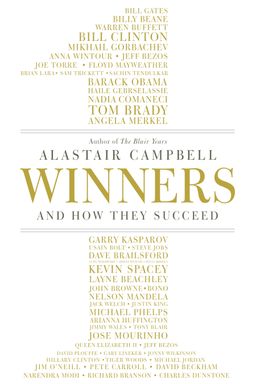
Why do some people, teams, and organizations win while others with comparable talent fail? Alastair Campbell’s Winners: And How They Succeed argues that winning is not a question of charisma, luck, or genius — it is a craft built on clear strategy, resilient mindset, effective leadership, and team cohesion. Campbell, drawing from politics, sport, and business, builds a framework that explains not only how winners succeed but how you can design conditions for success in your own field.
The core argument: success is deliberate, not accidental
Winning results from a deliberate interplay of Strategy (clarity of objective and plan), Leadership (focus, authenticity, discipline), Teamship (collaboration and culture), and Mindset (mental toughness under pressure). These core elements, when aligned, create repeatable success. A fifth component — Adaptability — runs through them all: the capacity to adjust without breaking integrity.
Campbell learned these ideas firsthand advising Tony Blair’s government, managing communications for complex crises, and interviewing top achievers — from José Mourinho and Floyd Mayweather to Angela Merkel, Dave Brailsford, and Richard Branson. He calls this integrated logic OST: Objective, Strategy, Tactics — a concise framework that keeps ambition coherent under pressure.
Strategy, leadership, and teamship as an ecosystem
Everything begins with strategy: define where you’re going and how to get there. Then comes leadership: establish the cultural and emotional tone, instill discipline, and model authenticity. Finally, teamship: mobilize the right mix of skills and temperaments within a supportive culture. Campbell insists these three must interlock; strategy without leadership collapses into confusion, and leadership without team cohesion produces burnout or rebellion.
For example, New Labour’s transformation under Blair depended on a simple strategic idea — modernization — expressed through clear tactical systems like the pledge card and communications grid. Similarly, in sport, Dave Brailsford’s marginal-gains culture at Team Sky only worked because leadership, data, and team psychology were aligned into one disciplined machine.
Mindset: pressure, focus, and obsession
At the personal level, winners think differently. They see pressure as proof that “this matters” (as performance coach Andy McCann says). Fear of losing can fuel mastery as much as the hunger to win — it depends on whether you channel that fear into disciplined preparation. Campbell’s interviews with athletes show that those who rehearse adversity, visualize every outcome, and stay obsessed with incremental improvement outperform the merely talented. Michael Phelps planned for failure — such as fogged goggles — and rehearsed recovery; when it happened, he executed calmly.
Extreme minds, balance, and the management of obsession
Campbell also acknowledges the dark side of winning psychology. Many top performers possess “extreme minds” — restless, risk-taking, or even manic energies. Such traits yield innovation and resilience but can also drive burnout or ethical collapse (Lance Armstrong’s story illustrates both). The leadership challenge is to build structures — honest feedback loops, psychological support, routines — that keep extreme drive productive rather than destructive.
From pressure to poise: learning resilience
Resilience, for Campbell, is the ability to turn setbacks into renewal. Through figures like Nelson Mandela, Layne Beachley, and Joe Torre, he shows that recovery is not luck but an active choice: reflect, learn, adapt, and re-engage. Beckham’s recovery from public vilification after the 1998 World Cup exemplifies how social support, reflection, and renewed focus create comeback strength. Mandela’s forgiveness, meanwhile, demonstrates the supreme discipline of mental composure under historic pressure.
Courage, curiosity, and continuous innovation
The later parts of the book extend the winning framework into innovation, data, and crisis response. Boldness is reframed not as stunt-taking but as calculated courage: the ability to act decisively when opportunity aligns with preparation (Blair’s Clause 4 reform or Branson’s airline launch). Innovation, meanwhile, is presented as practical iteration — small improvements across many domains that compound over time — rather than mythic inspiration. Brailsford calls it “a hundred things one percent better.”
Data becomes the bridge between analysis and creativity. From Billy Beane’s sabermetrics to Obama’s digital campaign, those who ask the right questions — not simply collect data — derive predictive advantage. Campbell argues that in modern sport or politics, the people who win know what to measure, what to ignore, and how to turn insight into action before rivals adapt.
The moral and cultural dimension of winning
Finally, Campbell situates winning within broader culture. Australia’s national resurgence after the 1976 Olympics shows how shared values and strategic investment combine to create durable success. It is not enough to have champions; you must build institutions that support excellence while keeping humanity intact. In crises — political, corporate, or personal — the same principles apply: get focused, tell the truth, centralize leadership, and communicate with empathy. In sum, Winners is a manual for turning ambition into organized courage — strategy anchored by humanity, obsession tempered by ethics, and vision translated into collective performance.