
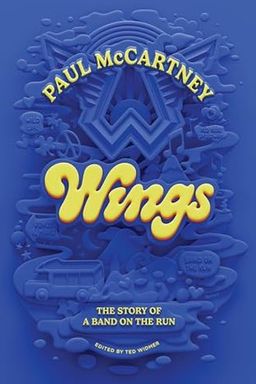
Wings cover

Wings

by Paul Mccartney

An oral history of the rock band formed after the dissolution of the Beatles and its run during the 1970s; edited by Ted Widmer.

Reinventing A Life After The Beatles

How do you rebuild a self when the world knows you as one-quarter of an institution? This book argues that Paul McCartney’s post-Beatles years aren’t a straight line from breakup to triumph; they’re a lived laboratory where identity, love, law, leadership and art collide. The core claim: McCartney turns crisis into a system of renewal by using music as therapy, family as anchor, law as shield, bands as community experiments, and touring/studio craft as narrative engines to reassert who he is beyond The Beatles.

You watch McCartney unravel at High Park Farm—unable to lift his head some mornings—then claw back through homemade recording and domestic rituals. You also see him march into court to protect Apple, endure tabloid intrusions, form Wings as a makeshift fellowship, escalate from guerrilla campus gigs to stadium epics, and turn unusual locations (Lagos, New Orleans, the Virgin Islands, Lympne Castle) into creative catalysts. Alongside breakthroughs—Band On The Run, Wings Over America, Mull Of Kintyre—come scars: substance chaos, Japan’s 1980 arrest, critical snobbery, and the Beatles-shaped shadow that never vanishes.

Identity after collapse

The book opens on disorientation: legal brawls with Allen Klein, the surreal “Paul Is Dead” frenzy, and domestic scenes that don’t match the myth. McCartney retreats to a lean-to, Rude Studio, and records McCartney (1970) like a private diary—four-track improvisations, towels on drums, the sound of someone relearning joy without an audience. It’s not perfection; it’s survival. That choice—make something now, polish later—becomes a blueprint. (Note: Dylan often reinvents through public persona; McCartney’s arc is more intimate, tactile and legally entangled.)

Love and a portable home

Linda McCartney emerges as stabilizer and co-creator. She plants the garden, nurses him through panic, sings harmonies on Ram, and—controversially—joins Wings. Their family-first touring (kids on the BAC One-Eleven jet doing homework) costs “cool” points but reframes Paul as a principled parent over a strutting star. This domestic insistence later collides with rock’s hazards (backstage cocaine, cockpit misbehavior, security fears after Lennon’s murder), yet it keeps Paul’s compass set toward ordinary life amid absurd fame.

Bands as identity rehearsal

Wings starts scrappy: Denny Laine, Denny Seiwell, Henry McCullough, later Jimmy McCulloch, Geoff Britton and Joe English. They busk universities with no notice, split door money, and refuse to play Beatles songs at first to prove they’re a real band. The ideal is communal; the reality is McCartney’s auteur gravity—he sets tempos, picks takes, and pays retainers with a hippie handshake. That paradox (democracy vs direction) creates churn but also momentum.

Crafting public myth with live shows

By 1976, Wings Over America reframes him as an arena powerhouse: lasers, a four-piece brass section, helicopter shots, three trucks hauling 12.5 tons of gear, and a customized BAC One-Eleven fitted with video, bedrooms and a disco. He opens with the hush of Venus And Mars into Rock Show, adds acoustic breaths (Blackbird, Yesterday), and earns a 15-minute ovation before the first chord in Fort Worth. It’s spectacle engineered to prove substance.

Studios without walls

McCartney treats environment as instrument. In Lagos, thieves steal tapes so he and Geoff Emerick reconstruct Band On The Run from memory—pressure births coherence. In New Orleans, Sea-Saint’s Labelle-inspired punch informs Venus And Mars. In the Virgin Islands, the Fair Carol yacht becomes a sunny lab for London Town; in Scotland, the barn studio yields Mull Of Kintyre with the Campbeltown Pipe Band. Later, the Replica basement emulates Abbey Road to bring craft home.

Law, image, and the Beatles shadow

When Klein arrives, Paul—counseled by Lee Eastman and even warned by Mick Jagger—breaks ranks, sues for a receiver (granted by Mr Justice Stamp; James Spooner installed), and fights Lew Grade over songwriting credits. He’s a reluctant CEO who learns that without contracts, legacy evaporates. Meanwhile, paparazzi bait him (SS France diner scold, Q Awards scrum), and headlines (“Paul Quits The Beatles”) script him without consent. Reunion offers—from $50 million to Lorne Michaels’ $3,000 SNL joke—underscore that the world wants the old story. John’s 1980 murder ends the question and forces Paul into public grief and private vows about ending feuds.

The book’s proposition

Reinvention is a system: make art fast to heal; use family to steady; build teams but define authority; choose locations that spark; master the business; and curate the story before others do. The result isn’t mythic perfection; it’s a workable life that makes enduring work.


From Breakdown to Blueprint

McCartney’s first post-Beatles chapter is messy and human. You meet a man whose body keeps score—mornings when he can’t lift his head, shakes from anxiety, nights of chain-smoking and heavy drinking. Two pressures converge: interpersonal/legal chaos as Allen Klein takes control at Apple, and internal collapse as the identity “Paul the Beatle” dissolves. Instead of therapy on a couch, he invents therapy in a lean-to: Rude Studio. That choice becomes a repeatable blueprint—when the world gets loud, make music small, personal, and immediate.

Music as self-rescue

He rolls a four-track into the living room, muffles toms with towels, and discovers songs by play, not pressure. McCartney (1970) feels like a home movie—more about process than polish. You hear domesticity in the tape hiss and accidental textures, and you see a habit form: show up, tinker, recover. The lesson for you is practical: when stakes and scrutiny spike, shrink the arena until you can move again. (Note: This mirrors creative recovery strategies in Julia Cameron’s The Artist’s Way—daily practice over perfection.)

Myths, media, and the cost of silence

As he hides in Scotland, the absurd “Paul Is Dead” conspiracy surges: backward messages, barefoot Abbey Road photos, number-plate numerology. The Life magazine shoot—intended as normalcy—becomes a megaphone when he says, “the Beatle thing is over.” What he frames as private clarity turns into a global resignation letter. You learn how quickly quiet decisions metastasize into headlines, and why he later embraces controlled statements (e.g., the mock Q&A press release packaged with McCartney) to shape the narrative.

Law as identity reassertion

Facing a Klein-managed contract he distrusts, Paul takes an unthinkable step: he petitions the High Court to appoint a receiver for Apple. In court, David Hirst QC interrogates Klein’s conduct, Morris Finer defends him, affidavits fly from Lennon, Harrison and Starr, and Mr Justice Stamp rules for McCartney, naming James Spooner as receiver. Ringo even personally delivers a letter asking him to delay his solo album release. That legal win is more than money; it’s Paul saying: I choose my future. If you’ve ever avoided conflict at the cost of your agency, you recognize the price and payoff of stepping into a fight you didn’t start but must finish.

From secrecy to a new band life

He tests independence with secrecy: booking as “Billy Martin” at Morgan Studios, making Ram with session aces like Hugh McCracken and David Spinozza, and exploring orchestration via George Martin on Live and Let Die. Gradually, solitude gives way to community with Wings. But the step isn’t triumphant; it’s tentative. He won’t lean on Beatles songs; he prefers transit vans and unannounced university gigs. He wants the stakes small again so he can feel the floor under his feet. Think of it as exposure therapy for fame.

A slow, workable pattern

Across these pages you see a pattern you can borrow: reduce scope (home studio), reclaim story (press Q&As), assert boundaries (court), and rebuild community (Wings) under terms that protect your energy. When tapes are stolen in Lagos, he repeats the pattern—start again fast—and Band On The Run becomes stronger. Recovery here is not a grand reinvention; it’s weekly reassembly.

Blueprint to copy

When crisis breaks identity, build a small room where you can win daily. Then defend that room legally and publicly enough to keep making the work that remakes you.


Linda, Family, and Reframing Fame

If you want to know how McCartney survives, follow Linda. The book presents her as nurse, gardener, bandmate and reputational foil. She drags Paul from the couch, renovates High Park Farm, plants parsnips and turnips, and helps build Rude Studio. Domestic rituals—meals, childcare, animals—become a therapy protocol. Paul’s line is direct: “Linda saved me.” For you, it reframes “support” as deliberate, daily acts that stabilize a high-output life.

From anchor to collaborator

Linda moves from behind the camera to the microphone. Early on she hits a high note on Let It Be; later she sings harmonies on Ram, co-writes (sparking Lew Grade’s lawsuit over credits), and appears on stage despite brutal press (“Fuck Linda” graffiti). Paul insists on her presence for emotional reasons (a “security blanket”) and to reject gatekeeping: he refuses to let tastemakers dictate who belongs in his band. This costs critical capital but gains moral coherence—he prioritizes loyalty over optics.

Family as operating system

Touring with kids on the BAC One-Eleven jet—complete with a small disco—sounds decadent, but the intent is ordinary: homework on planes, home-cooked food backstage, smaller houses over mansions. High Park, the Peasmarsh Waterfall cottage, and Blossom Wood Farm become work-life solutions: build a barn studio (Spirit of Ranachan) so recording stays near bedtime stories; move rehearsals to places that minimize disruption. Linda develops pottery and photography alongside music, further embedding art into family rhythms.

Costs of choosing normality

Normality isn’t free. Paparazzi trail them; a woman scolds Paul on the SS France for wearing sunglasses at dinner; at the Q Awards he needs security just to reach a lavatory. Backstage culture intrudes—cocaine lines in dressing rooms, crew misbehavior in cockpits that nearly ends in disaster. The 1980 Tokyo arrest—219 grams of marijuana in Paul’s luggage—terrifies the family, cancels a tour, and burns nearly half a million pounds. He calls himself an “idiot,” and Japanese officials deport him after ten days, deeming him “sufficiently punished.” The family carries the shock and the bill.

Reputation, reauthored

Linda’s presence recasts Paul: not just pop princeling, but husband-father with consistent values. Critics mock; fans recognize steadiness. “Family man” becomes a durable brand that weathers punk’s spit and tabloids’ glee better than a brittle rock-god image would. It also buoys Paul after John’s murder, when safety concerns spike and private rituals matter most.

  • Creative dividends: harmonies on Ram, Seaside Woman’s genesis, and the confidence to test orchestral spoofs like Percy Thrillington.
  • Legal/PR trade-offs: the Lew Grade dispute over credits; tabloids weaponizing jokes (the “biggest mistake” quip about Heather later) to sell copy.

Actionable frame

Build the life you want to protect, then let your work fit around it. That order—life first, work second—can look uncool, but it compounds resilience.


Wings: Leadership, Culture, Risk

Running Wings means being both auteur and tour CEO. McCartney tries to host a democratic vibe (“members are free to pursue their own careers”) while quietly making the calls that matter: who plays, what makes the album, how the show runs. That paradox creates a culture that’s energizing when aligned and brittle when stressed. If you’ve led creative teams, you’ll recognize the friction between freedom and finish.

People problems are strategy problems

Hiring choices trace the band’s arc. Denny Laine offers continuity but feels underpaid by decade’s end. Denny Seiwell and Henry McCullough anchor early sounds, then depart. Geoff Britton, miscast culturally, clashes (“bastard,” “cunt” thrown privately) and gets sacked in New Orleans. Joe English’s heroin use hides in plain sight, though he often plays well; Jimmy McCulloch’s brilliance is shadowed by volatility—DUI in Nashville, smashing a control-room window with a Coke bottle, fights (including with David Cassidy in Paris), and a tragic 1979 death with morphine, cannabis and alcohol in his system. Each personnel shift forces Paul to toggle between compassion and control.

Contracts, cash, and culture

Haunted by the Beatles’ legal quagmire, Paul resists formal long-term contracts (notably in Nashville), preferring session-by-session deals. It lowers risk and costs, but it also breeds insecurity and walkouts. In the studio, he’s magnanimous and exacting—making sandwiches during Ram sessions, then reading the riot act after a plane-safety fiasco. He docks Jimmy McCulloch for amp hire after outside sessions; Jimmy fumes. Without clear agreements, fairness feels arbitrary. The leadership takeaway: policy by vibe eventually becomes policy by conflict.

Drugs as operating risk

The book refuses to treat drugs as colorful atmosphere; they’re an operational liability. Dressing rooms see whisky, pre-show joints, and conspicuous cocaine among non-McCartney members. Jo Jo Patrie steals tickets in San Francisco to buy an ounce. Joe English disappears for 24-hour “zonked” stretches. McCartney’s own marijuana use culminates in the 1980 Tokyo arrest, detonating plans and finances. When leaders model risk, the org multiplies it.

Guerrilla beginnings to grown-up demands

Early Wings delight in unannounced university gigs, transit vans, and counting 50p coins after shows. It’s identity rehearsal—Paul relearning to be one of the band. But success scales fragility. By the arena phase, three trucks, lasers, and a brass section mean tiny lapses create big headlines. McCartney bans drunk crew from cockpits after a dive stunt; scaffolding scares in Houston drive home that rock glamour sits on industrial safety protocols.

  • What works: clear musical direction, family-grounded culture, production discipline.
  • What breaks: ambiguous compensation, unmanaged addictions, and mixed messages about autonomy.

Leadership takeaway

Creative freedom needs guardrails you actually enforce—on time, on paper, and in person—or culture writes its own dangerous rules.


Stagecraft as Strategy

McCartney uses live performance to rewrite his story in public. The early Wings tours are designed to dodge scrutiny: arrive unannounced at Nottingham or York universities, plug in, split the door money, and refuse Beatles songs. It’s part humility, part experiment—can he be “a guy in a band” again? When the charm wears thin and the press catches up, he pivots. By 1976, Wings Over America is a masterclass in how to scale without losing soul.

Designing the big show

The stadium tour fuses engineering with emotion: lasers, backdrop films, a four-piece brass section, CB radios, helicopter filming, and three trucks hauling 12.5 tons of gear. The BAC One-Eleven jet is kitted with video, bedrooms and a disco so family and work live together. He opens with the hushed Venus And Mars into Rock Show—quiet to blast—then threads Beatles staples among Wings hits. The setlist is a thesis: respect the past, prove the present.

Authenticity amid spectacle

Amid confetti and brass, Paul steps alone with an acoustic—Blackbird, Yesterday—to remind you a song survives without lights. Critics from the LA Times and the New York Times, primed to sneer, acknowledge the recalibration. The Fort Worth opener’s 15-minute ovation before note one—pure expectation management—signals that the audience wants the whole Paul, not a tribute act or a recluse.

Operational risks and rules

Big shows multiply danger. Scaffolding issues in Houston, Paul’s fear of snipers, and a cockpit dive stunt force him into tour-CEO mode: no intoxicated crew near critical systems, period. You also see the fragility of momentum: drugs backstage, in-fighting, and logistics can unravel what lasers can’t fix. Yet the discipline pays off—Wings Over America grosses $5 million in seven weeks and yields a triple-live album that cements his live authority.

Setlist as narrative control

At first, banning Beatles songs is a boundary that protects new work. Later, integrating them is a bridge that respects fans and reframes the past as part of a continuum. This flexibility—when to draw lines, when to connect dots—is a strategic muscle you can apply to any legacy brand refresh.

  • Principle: marry spectacle with intimate proof points.
  • Practice: invest in production, but script moments that demonstrate core craft without adornment.

What you can copy

Design your “arena” to deliver both awe and assurance. Make the crowd feel the scale—and then convince them, up close, that the song still breathes without it.


Studios, Places, and Pressure

For McCartney, studios are not just rooms; they’re mindsets. He toggles between homemade rigging and world-class facilities, and he treats location like a co-writer. That approach—playful, opportunistic, place-aware—yields a catalogue that sounds like movement itself.

Home ingenuity, pro play

At home he wheels in a four-track, towels toms, moves cymbals to tame splash, and even mics an arrow’s swish in Harrods for an effect. In professional rooms (Morgan, A&R, Olympic, AIR) he stays playful: sandwiches at A&R during Ram, spontaneous arrangement ideas with Hugh McCracken and David Spinozza, and pragmatic orchestral firepower via George Martin on Live and Let Die. The mantra is not “perfect plan” but “flexible craft.”

Lagos: pressure as editor

In Lagos, thieves steal demo tapes. Instead of paralysis, Paul and engineer Geoff Emerick reconstruct Band On The Run from memory, distilling the songs into tighter forms. The album becomes a post-Beatles pinnacle—proof that constraints can cohere. If you’ve lost drafts or faced a sudden resource cut, you know the jolt; this chapter teaches you to rebuild faster, not smaller.

Cities and sounds

Location choices aim at feel. New Orleans’ Sea-Saint Studio—vibing on Labelle’s “Lady Marmalade”—gives Venus And Mars a punchier drum footprint; the city’s swagger sneaks into the grooves. Nashville resets band chemistry after turmoil and auditions Joe English when Geoff Britton falters. Scotland’s Spirit of Ranachan barn pairs pastoral calm with community, birthing Mull Of Kintyre and its pipe-band grandeur, which sells 2.5 million UK copies and surpasses She Loves You.

The yacht lab and the castle

The Virgin Islands’ Fair Carol floats a studio under daylight; bandmates commute by dinghy, snorkel between takes, and jam at night. Songs for London Town bloom in salty air—though US Customs visits and local noise complaints show paradise has paperwork. Later, Lympne Castle’s gothic rooms foster Back To The Egg’s collage eccentricities. Finally, Replica, the Abbey Road lookalike in his basement, brings control home: world-class sound on family time.

  • Improvisations-turned-classics: Maybe I’m Amazed, Uncle Albert/Admiral Halsey, Band On The Run material.
  • Strategic misses: keeping Goodnight Tonight off Back To The Egg hurts US momentum—art-market tension made visible.

Portable lesson

When you’re stuck, change the room—sound, light, people. But plan the unromantic parts (permits, logistics, neighbors). Creativity loves novelty; delivery demands systems.


Law, Media, and Shadow

The post-Beatles era teaches that art rides inside law and public story. McCartney’s distrust of Allen Klein—reinforced by Lee Eastman and even Mick Jagger—pushes him into court. David Hirst QC attacks Klein’s conduct; Morris Finer defends; Mr Justice Stamp appoints James Spooner as Apple’s receiver. The win preserves assets but scorches friendships and public goodwill. Soon, Lew Grade’s ATV sues over Linda’s co-credits; later, Columbia’s deal (22% royalty, $2 million advance) validates his solo market power while ratcheting corporate expectations.

PR: smile as shield, statement as scalpel

John Lennon calls Paul “a good PR man,” and the book shows why. McCartney crafts narratives—family man, farmer, whimsical eccentric—through controlled appearances, handwritten invitations, and press-release Q&As. But the press weaponizes slips: a private joke morphs into a headline; Melody Maker and the Daily Mirror inflame feuds (“Paul Quits The Beatles”). Paparazzi ambushes—long-lens holidays, tails in New York—force him into rituals: never feed the quote, manage exits, own the frame when possible.

The reunion mirage

Despite Wings’ success, The Beatles’ shadow stalks every move. Offer sheets balloon—a $50 million one-off, then higher; Lorne Michaels jokes on SNL with a $3,000 check if they reunite “right here.” Paul oscillates between curiosity and caution: music over money, or not at all. His last attempt to see John—late April 1976 at the Dakota—ends with a rebuff (“Please call before you come over”). After John’s murder in December 1980, the question dies with him. Publicly, Paul grieves; privately, he vows not to nurture long feuds again.

Critics, commerce, and control

Commercial peaks—Band On The Run’s multi-millions and Grammys; Wings Over America’s $5 million in seven weeks; Mull Of Kintyre’s UK record—collide with critical crosswinds. Punk recasts him as establishment. Cheeky experiments like Percy Thrillington (the Ram orchestral spoof) show his appetite to toy with perception, while choices like omitting Goodnight Tonight from Back To The Egg expose the risk of art-first calls in a hits-driven system. He’s free and constrained at once—by contracts, culture, and a legend too large to escape.

  • Media reality: if you don’t tell the story, someone else scripts you into theirs.
  • Legal reality: rights, royalties, and receiverships decide what your art enables next.

Enduring tension

Legacy is leverage and leash. McCartney’s post-Beatles life works because he learns to use the former while refusing to be choked by the latter.

Dig Deeper

Get personalized prompts to apply these lessons to your life and deepen your understanding.

Go Deeper

Get the Full Experience

Download Insight Books for AI-powered reflections, quizzes, and more.