
Idea 1
The Age of Mass Collaboration
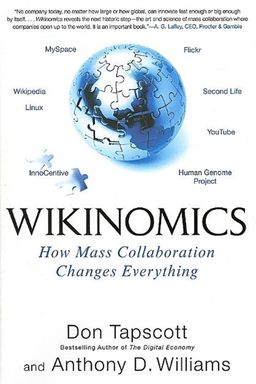
How can you build organizations that innovate faster, attract global talent, and adapt to constant change? In Wikinomics, Don Tapscott and Anthony Williams argue that the answer lies in mastering mass collaboration—a new economic paradigm powered by openness, peer production, shared intellectual resources, and global connectivity. Firms, scientists, and individuals are no longer isolated nodes in a competitive hierarchy; they are participants in vast networks that co-create value across borders and sectors.
The perfect storm of technology, culture, and globalization
Three structural forces converged to create this new order. First, the programmable Web turned the Internet from a reading medium into a platform for participation (Web 2.0). APIs, blogs, wikis, and mashups let millions co-develop services and content. Second, the Net Generation—raised on instant messaging, multiplayer games, and social networks—expects to collaborate and co-create rather than consume passively. Third, globalization integrated billions of new minds into the digital economy, reducing transaction costs and eroding boundaries between firm and market. Together, these forces form Tapscott’s “perfect storm,” a planetary-scale environment for collaboration.
From hierarchies to networks
Traditional corporations operated like pyramids—formal hierarchies focused on control, secrecy, and internal efficiency. But digital networks reward transparency, participation, and speed. Wikipedia updates in minutes while Britannica cycles through long editorial delays. Linux outperformed proprietary operating systems through meritocratic peer review. As transaction costs fall (a reversal of Coase’s law), firms shed layers and turn to external networks for innovation, production, and customer engagement.
Four principles defining Wikinomics
Tapscott frames this revolution around four guiding ideas: openness (sharing information and standards), peering (collaboration among equals), sharing (treating selected intellectual property as commons), and acting globally (harnessing global talent and reach). Goldcorp’s open geological-data challenge, IBM’s embrace of Linux, and P&G’s “connect and develop” strategy illustrate how these principles yield faster innovation and lower costs.
Openness invites people outside your walls to solve problems you cannot alone. Peering replaces command hierarchies with self-organized communities. Sharing constructs common resources to accelerate discovery. Acting globally ensures diversity and scalability from the outset. Together they define the organizational DNA of the collaboration economy.
Peer production and ideagoras
Peer production—the decentralized creation of goods by volunteers or loosely coordinated groups—is central to this shift. Wikipedia, Linux, and Goldcorp’s challenge show how digital infrastructure enables thousands to self-select tasks based on expertise and interest. Ideagoras extend this principle to business: marketplaces like InnoCentive or yet2.com match R&D seekers with global solvers, monetizing the exchange of ideas and dormant IP.
Global webs and modular production
These collaborative ecosystems manifest physically too. Manufacturing moves toward a “global plant floor” where modular components are designed across continents and integrated via shared digital platforms (Boeing’s 787 program, Chongqing’s motorcycles). The orchestrator firm focuses on integrating rather than owning every stage of production, leveraging a flexible network of specialized peers.
From customers to prosumers
Even customers now co-create. Prosumers—users who produce—design Lego kits, develop Second Life content, or remix digital music. Companies must decide whether to resist or empower them. Smart firms supply toolkits, SDKs, and APIs so prosumers enhance the brand ecosystem rather than compete with it (Lego’s Mindstorms and Apple’s app store showcase contrasting approaches).
Managing incentives and leadership
Sustaining participation requires thoughtful incentives: contests (TopCoder, InnoCentive), revenue shares (Amazon affiliates), recognition systems, or open reputation hierarchies (Wikipedia editors). Leaders must move beyond control to orchestration—setting fair rules, balancing openness with IP protection, and cultivating trust-based partnerships. IBM’s transition from proprietary stacks to open-source participation illustrates how major firms can thrive by giving before they take.
Core message
Wikinomics is not about giving away control; it’s about redefining it. When you open appropriately, peer effectively, share constructively, and act globally, you transform fixed assets into dynamic networks of capability. The firms, scientists, and citizens who master this new logic build resilient ecosystems that innovate faster and adapt better than traditional hierarchies.
In short, Tapscott and Williams show that collaboration is not a fad—it’s the new foundation of competitiveness. Whether you lead in business, science, or civic life, the central question of our era is: how open can you be without losing coherence, and how connected can you become without losing focus? The answer defines the next frontier of innovation.