
Idea 1
The Biology of Stress and the Human Condition
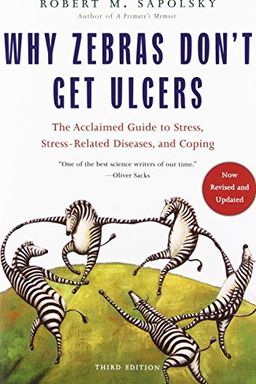
What makes stress the defining disease of modernity? In Why Zebras Don’t Get Ulcers, Robert Sapolsky argues that the very biological toolkit that saves us in emergencies has turned against us in everyday life. The same hormonal surges that help a zebra escape a lion now damage our arteries, suppress our immune systems, and erode our brains because we activate them endlessly for psychological and social threats. Sapolsky’s project is to explain how this paradox unfolds across biology, psychology, and society—and to show what you can do about it.
You’ll encounter a grand tour of stress science: the hypothalamic–pituitary–adrenal (HPA) axis that mobilizes energy, the sympathetic-adrenal burst that sharpens reflexes, and the many ways chronic activation—“allostatic load”—undermines health. The book intertwines evolutionary logic, primate fieldwork, and human clinical stories to reveal why stress responses that once guaranteed survival now destabilize hearts, metabolisms, and minds.
From Homeostasis to Allostasis: Predictive Regulation
Early chapters introduce homeostasis—keeping internal variables constant—and its modern correction, allostasis: achieving stability through change. Instead of maintaining one rigid equilibrium, your brain continually predicts needs and adjusts blood pressure, glucose, and hormone levels before the challenge hits. This predictive flexibility, coordinated by the HPA axis and autonomic nervous system, is the reason evolution equipped vertebrates with stress hormones. But these same mechanisms inflict damage when used too often or without physical resolution (e.g., worrying for months without moving a muscle).
The Cost of Chronic Adaptation
Sapolsky calls the cumulative wear of repeated stress activation allostatic load: small, repeated hits that corrode multiple systems. In animals, stressors end when the threat passes; in humans, psychological anticipation replays them endlessly. Each episode jacks up heart rate and blood pressure, shunts blood from digestion, suppresses immunity, and floods tissues with glucose and fat. When there’s no “lion” to defeat, the chemistry lingers as silent damage rather than salvation. Over time this fosters heart disease, metabolic syndrome, immune disorders, reproductive dysfunction, and hippocampal atrophy—the unifying theme of every chapter.
Brains, Hormones, and Feedback Loops
At the hormonal command center, the HPA axis operates like an emergency intercom: the hypothalamus releases CRH, the pituitary sends ACTH, and the adrenals secrete cortisol, which redistributes energy and dampens inflammation. Under normal conditions, cortisol’s rise feeds back to shut the system down—a built-in brake. Chronic stress, early trauma, or certain genetic backgrounds can blunt this feedback, locking the body into a high-cortisol loop. Sapolsky draws on experiments by Wylie Vale (CRH discovery) and Bruce McEwen (allostatic load) to show the biochemical choreography behind every stress symptom you’ve ever felt.
Why Humans Are the Problem
Animal models—baboons in unstable hierarchies, rats deprived of outlets—prove that most mammals suffer transient physiological stress, not chronic anxiety. Humans, however, abuse the system cognitively. You can trigger full fight-or-flight simply by imagining humiliation or worrying about bills. Culture, inequality, and imagination make our species uniquely capable of self-inflicted stress disease. That distinction anchors Sapolsky’s blend of biology and sociology: stress physiology becomes a mirror for modern civilization itself.
Setting Up the Story Ahead
The rest of the book explores how chronic activation of the stress-response unloads damage system by system—heart, metabolism, digestion, immunity, brain—and how early-life experience, personality, social rank, and inequality determine your vulnerability. Each physiological story repeats the same evolutionary irony: what helped the zebra survive a lion now helps you develop hypertension, ulcers, and depression. In closing chapters Sapolsky reclaims agency: understanding mechanisms reveals leverage points—control, predictability, social support, sleep, exercise, and fairness—to break the loop.
Core theme
Stress is not merely a feeling—it’s a full-body prediction error. You evolved an elegant emergency network, but modern life turns it on for too long. The cure lies in learning when to let it rest.
This framework—how adaptive biology becomes pathology through chronic activation—shapes every insight that follows. Whether Sapolsky is dissecting a warthog’s ulcer or explaining depression’s chemistry, he returns to the same moral: you can’t live as if under siege without paying a price in flesh and mind.