
Idea 1
The Human Meaning of Work
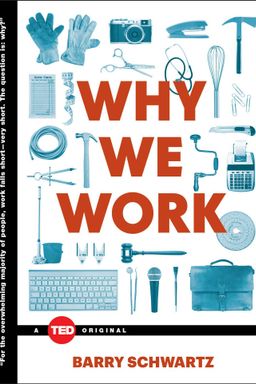
Why do you drag yourself out of bed every morning to go to work? Is it only for the paycheck—or to feel that your work matters? In Why We Work, psychologist Barry Schwartz takes this deceptively simple question and turns it into a profound exploration of human motivation. His answer challenges centuries of economic dogma: work isn’t just something we endure for money; it’s something that can—and should—bring meaning, engagement, and dignity to our lives.
Schwartz argues that our modern workplaces are built on a false idea of human nature, inherited from Adam Smith and reinforced by the industrial revolution. This outdated assumption—“people work only for pay”—has shaped everything from assembly lines to law firms and hospitals. These systems, driven by rules, scripts, and incentives, strip people of the autonomy and purpose that makes work meaningful. The tragedy, Schwartz says, is that when organizations treat people as if they only care about money, people start acting that way. The false idea becomes true.
A World of Disengagement
Drawing on a sweeping array of research—from Gallup’s 25 million-employee survey to psychological studies of motivation—Schwartz reveals that nearly 90 percent of workers worldwide are “not engaged” or “actively disengaged.” They spend half their waking lives doing something they would rather not be doing. This isn’t just an economic problem—it’s a moral one. We’ve built a world that denies people the chance to find joy and pride in what they do. And ironically, the workplaces designed for efficiency often end up less productive.
The Qualities of Good Work
What, then, makes work good? Schwartz identifies five essential features: engagement, challenge, autonomy, learning, and meaning. These are the nonmonetary motives that drive truly satisfied workers—the custodians who bring cheer to hospital rooms, the factory teams that innovate for sustainability, or the hairdressers who find fulfillment in helping clients feel confident. When people can connect their daily efforts to a broader purpose, they do better work and live better lives.
Schwartz’s argument echoes thinkers like Daniel Pink, whose book Drive similarly concludes that humans are motivated most by autonomy, mastery, and purpose. Both scholars agree that the carrot-and-stick logic of incentives often backfires, crowding out intrinsic motivation. But Schwartz goes further, showing how centuries of social science and management practice have reshaped society’s moral expectations around work.
When Work Loses Its Soul
Schwartz’s framework unfolds through vivid examples. Schoolteachers forced to read from scripts rather than teach creatively, doctors incentivized to perform too many or too few procedures, and lawyers tempted to pad billing hours—all reveal a common theme. When we organize work around pay and rules instead of trust and integrity, people lose their moral compass. Their callings become jobs, and jobs become drudgery.
The book also explores how misguided incentive systems didn’t just emerge—they were designed, based on scientific “idea technologies” that treat human beings as selfish calculators of reward. From Adam Smith’s pin factory to Frederick Taylor’s scientific management, work became fragmented and dehumanized. As this ideology spread to schools, hospitals, and offices, it transformed the meaning of work itself—and even changed who we are as people.
Why It Matters
Recovering the meaning of work isn’t just about personal happiness; it’s about restoring social integrity. Schwartz insists that workplaces can be redesigned to foster trust and autonomy, leading not only to better performance but to better moral citizens. Organizations like Toyota, Interface, and Market Basket prove that treating workers as whole people—capable of judgment, creativity, and purpose—pays off both ethically and financially.
The heart of Why We Work is its call for a new social contract: one that recognizes work as an expression of human nature, not a transaction between selfish agents. Schwartz’s message is clear and urgent—when you design workplaces that give people the chance to care, they will. And when people care, work stops being just a job. It becomes a path toward human flourishing.