
Idea 1
Memory as a Tool for the Future
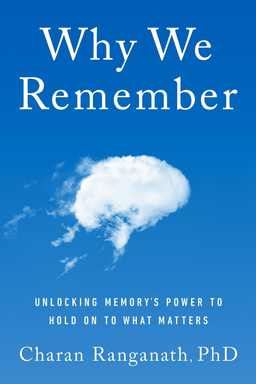
Why do you forget so much, and why does it matter? In Why We Remember, Charan Ranganath argues that memory’s purpose is not to create a flawless archive of your past but to guide your future. Your brain evolved not as a recorder but as a prediction engine, selectively preserving experiences that will help you act, decide, and survive. Forgetting, far from being a flaw, is a crucial feature of that system.
The Functional Purpose of Forgetting
Ranganath opens by dismantling the myth that a good memory is one that remembers everything. Drawing on Ebbinghaus’s forgetting curve and his own experiences (like filming his daughter’s birthday parties), he shows how routine, overlapping events blur together. The mind preserves distinctive, emotionally salient details—what stands out, not what repeats. Evolutionarily, remembering which fruit was poisonous mattered more than the color of every leaf. Your hippocampus and prefrontal cortex work together to prioritize information that aids survival and decision-making.
This selectivity, Ranganath explains, means you can shape what sticks. Paying attention, engaging your prefrontal cortex, and creating distinct cues help you encode lasting memories. Conversely, distraction and monotony yield weak traces quickly pruned away. Forgetting is your brain’s way of staying efficient—it protects relevance over redundancy.
Memory Systems in Concert
The brain doesn’t store a single “memory center.” Instead, it orchestrates many parts: the hippocampus binds context, the perirhinal cortex signals familiarity, the amygdala adds emotion, and the prefrontal cortex directs focus and strategy. The hippocampus enables your ability to reassemble a moment—the smell, the faces, the room—so powerfully you feel transported in time. But that vividness depends on how intentionally the prefrontal cortex guided encoding in the first place.
Patients with hippocampal damage (like H.M. or Vargha-Khadem’s developmental cases) highlight its role: they can learn facts (semantic memory) but lose episodic recall—the lived sense of experience. The prefrontal cortex, by contrast, acts as your central executive, keeping goals in mind, blocking distractions, and deciding what to remember. Injuries or stress that impair it can leave memory seemingly intact yet unreliable in the real world.
Emotion and the Shaping Power of Feeling
Emotions often determine what rises above the noise. The amygdala, noradrenaline, and dopamine systems intensify encoding under conditions of excitement or danger. That’s adaptive: it ensures you remember the fight, the fall, or the triumph vividly. But these same systems can distort recollection or trap you in cycles of intrusive replay, as seen in PTSD. Ranganath emphasizes that emotional memory is double-edged—it saves lives, but unmanaged stress can erode hippocampal health and warp PFC control.
Reconstruction and Imagination
Bartlett’s early psychology and modern imaging agree: every memory is reconstructed. You never “play back” an event; you rebuild it using schemas and imagination, guided by your current goals and context. That same machinery that helps you remember also allows you to simulate futures, fueling creativity but also enabling false memories. Through examples from Shereshevsky’s synesthetic mind to Loftus’s implantation studies, Ranganath shows that memory’s flexibility is what makes it both powerful and vulnerable.
Learning, Updating, and Social Shaping
Finally, Ranganath takes you beyond the brain’s inner workings to its social and dynamic life. He explores how spaced repetition, sleep, and error-driven testing engrain durable memories; how curiosity and novelty trigger dopaminergic reinforcement loops; and how social retelling reshapes collective memory. Every recollection you share or story you retell slightly changes the neural pattern, embedding your past into a new narrative. Memory is not a vault—it is a living system of continual editing and reinterpretation.
The book’s radical message is liberating: memory’s job is to serve the future, not the past. By understanding how different neural systems cooperate, how emotion and attention steer encoding, and how reflection remodels recollection, you can design habits—sleep, curiosity, testing, meaningful attention—that make memory work with your goals, not against them. You stop blaming forgetfulness and start using your brain as it evolved to work: selectively, creatively, and adaptively.