
Idea 1
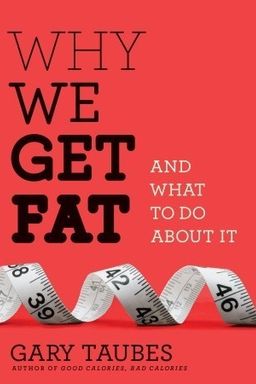
Why We Get Fat: The Hormonal Truth Behind Weight Gain
Why is it that so many of us try to eat less, move more, and yet remain overweight—or even gain more fat? Gary Taubes’s Why We Get Fat: And What to Do About It addresses this pervasive question with meticulous scientific reasoning and historical insight. He argues that obesity is not caused by overeating or laziness, as we’ve long been taught, but by a biological malfunction driven by hormones—mainly insulin—and triggered by the carbohydrates we eat.
Taubes dismantles the conventional wisdom of “calories-in, calories-out,” replacing it with a hormonal view of fat accumulation. We don’t get fat because we indulge ourselves; we get fat because certain foods—especially refined carbohydrates and sugars—disrupt our body’s internal regulatory system. In his telling, obesity is a disorder of fat storage rather than of energy balance. The difference is profound: it shifts blame from willpower to metabolism, from morality to biology.
The Collapse of the Calorie Paradigm
For more than half a century, public health authorities have claimed that excess weight results when we consume more calories than we expend. The cure, they told us, was simple: eat less, move more. But Taubes, echoing earlier scientists such as Hilde Bruch and Gustav von Bergmann, shows this model to be inadequate. If all it took was a small adjustment—hundreds fewer calories burned or eaten—why do millions struggle despite decades of dieting?
Taubes uses examples from historical studies on obesity, like Dr. Bruch’s 1930s case studies of obese children who were physically incapable of losing weight through eating less. He highlights paradoxes such as the obesity epidemic among the poor or among early twentieth-century Native American tribes, who were not consuming excess calories but were living on cheap refined flour and sugar. These contradictions, he argues, reveal that overeating and inactivity are symptoms—not causes—of fat accumulation.
Biology, Not Physics
Taubes contends that obesity must be understood through biology—through the hormones and enzymes that regulate fat storage—not through physics or thermodynamics. While the laws of energy conservation are universal, they don’t tell us why fat accumulates in the body. They merely describe what happens when it does. He compares the logic of calories-in/calories-out to explaining why a room gets crowded by saying more people entered than left—it’s true but meaningless.
Instead, Taubes directs our attention to insulin, the hormone that determines whether calories are burned or stored. When insulin levels rise—especially after consuming carbohydrates—fat cells lock away energy and prevent its release. When insulin levels fall, those fat stores are released and burned. This simple principle overturns decades of advice about “balanced diets” and “fat-free living.”
The Promise and Peril of Carbohydrates
From bread to soda, from potatoes to fruit juice, Taubes identifies carbohydrates as the driving force behind insulin secretion. “Carbohydrate drives insulin drives fat,” as Harvard’s George Cahill once summarized the science. Taubes reintroduces this forgotten truth, showing that when insulin is chronically elevated, we accumulate fat continuously—even at normal caloric intake. This helps explain why obesity rates have soared during an era of low-fat dietary recommendations: we replaced fats with refined carbs and sugars.
Why It Matters
Taubes’s argument is more than nutritional correction—it’s a moral rehabilitation of the overweight. He demonstrates that fatness is not a failure of character but a failure of public health theory. Understanding why we get fat means freeing ourselves from shame and focusing instead on biochemical triggers. His solution is straightforward and ancient: return to the dietary wisdom known before the 1960s—avoid carbohydrate-rich foods, eat real food, and let biology heal itself.
Throughout Why We Get Fat, Taubes sets out to rewire your understanding of dieting. You’ll learn why exercise rarely produces lasting weight loss, why fat storage is hormonally regulated, and how specific foods distort that regulation. Finally, he provides a new framework for eating: one that controls insulin, liberates your fat cells, and redefines what healthy truly means. By the end, you’ll not only grasp why we get fat—but you’ll know what to do about it.