
Idea 1
Metabology and the Science of the Weight Set‑Point
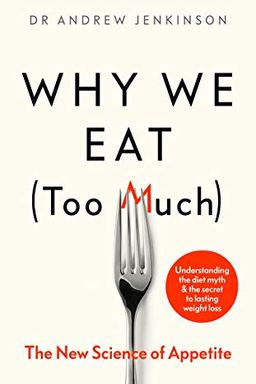
Why do some people regain weight so easily while others maintain a steady physique for decades? In Why We Eat (Too Much), bariatric surgeon Andrew Jenkinson argues that the answer lies in a newly framed science he calls metabology—the study of how appetite, metabolism and environment interact to defend a biologically programmed weight set-point. This is not a moral or willpower problem; it’s an evolved survival system governed by your brain’s regulation of energy intake, hormone signaling and fat storage.
The Two Biological Rules
Jenkinson begins with two core rules. The first is the familiar energy balance equation: energy stored equals energy in minus energy out. But most of what you expend—roughly 70%—is your basal metabolic rate (BMR), not voluntary exercise. The second rule, less intuitively, is the principle of negative feedback regulation. Your brain continually adjusts hunger and metabolic rate to maintain stability—like a thermostat maintaining room temperature. If weight drops below the set-point, appetite hormones surge and energy burn decreases; if it rises, the opposite occurs.
Controlled studies prove this. In the Vermont Prison overfeeding study, men forced to eat massive surpluses struggled to gain much because metabolism rose to meet intake. Conversely, in the Minnesota Starvation Experiment, BMR crashed and hunger spiked, leading participants to quickly regain and even overshoot their original weight. This explains why dieting alone so often fails: it triggers physiology to fight back.
The Brain and Hormonal Control
Your hypothalamus is the central command center. It constantly monitors chemical messages from fat (leptin), the stomach (ghrelin), and the intestine (PYY and GLP‑1). These hormones determine hunger, satiety and metabolism on different time scales. Ghrelin rises before meals to encourage eating and surges when you diet. PYY and GLP‑1 signal fullness, but dieting depresses them. This biochemical conversation between gut and brain—what scientists call the gut–brain axis—explains why hunger after restraint feels overwhelming.
Leptin Resistance and the Vicious Cycle
Leptin normally tells the brain you have stored energy. Yet in obesity, despite high leptin levels, the brain behaves as if you are starving—a dysfunction termed leptin resistance. Jenkinson attributes this resistance to chronic inflammation and high insulin from modern diets rich in sugar and seed oils. These factors interfere with the hypothalamus’s interpretation of leptin, raising the weight set-point even higher. The result is a physiological “vicious cycle”: inflammation → leptin resistance → hunger → weight gain → more inflammation.
Genes, Epigenetics and Environment
Not everyone’s set-point reacts equally because genetics and epigenetics shape how sensitive this system is. Studies by Jane Wardle show BMI heritability at 70–75%, but early-life conditions also program vulnerability. During the Dutch Hunger Winter, children born to underfed mothers developed higher obesity and diabetes risk as adults—proof that famine cues can set a higher defensive weight later in life. Similarly, maternal obesity or gestational diabetes primes offspring for lifelong metabolic dysregulation.
A Dynamic, Not Fixed, Set‑Point
Your set-point isn’t fixed at birth. It adjusts to your diet, stress, sleep, and environment. Rapid dieting convinces your brain that food scarcity is common, nudging the set-point upward “just in case.” That’s why yo‑yo dieting often ends with increased weight. Conversely, calming metabolic alarm signals—through stable sleep patterns, reduced inflammation, and balanced nutrition—can persuade your brain to lower the defended weight without internal resistance.
Key Takeaway
Your body isn’t broken or weak; it’s exquisitely well designed for survival. The challenge is not to fight the set-point, but to reprogram it by changing the biological inputs your brain uses to calculate that target weight.
Jenkinson’s metabology reframes obesity as the predictable outcome of hormonal miscommunication between evolved physiology and an industrialized food environment. His core argument—echoing thinkers like Robert Lustig and Stephan Guyenet—is that the road to sustainable weight loss lies not in discipline but in recalibrating biology itself. The remainder of the book explores how to do exactly that through food, hormones, culture and everyday habits.