
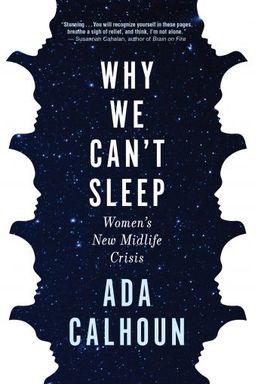
Why We Can’t Sleep cover

Why We Can’t Sleep

by Ada Calhoun

Why We Can’t Sleep delves into the modern midlife crisis faced by Gen X women, revealing the societal pressures, financial burdens, and caregiving demands that shape their experiences. Ada Calhoun offers a compelling narrative that exposes the unseen struggles and empowers readers to navigate midlife challenges with resilience.

Generation X Women and the Quest for Meaning in Midlife

Have you ever looked around at your life—career, home, family—and wondered, “Wait, wasn’t this supposed to feel better than it does?” In Why We Can’t Sleep: Women’s New Midlife Crisis, journalist Ada Calhoun explores how Generation X women—those born roughly between 1965 and 1980—arrived at middle age with success stories on paper yet deep anxiety in their hearts. Through hundreds of candid interviews and compelling cultural analysis, Calhoun argues that this generation’s carefully constructed promise of ‘having it all’ has turned into a chronic state of exhaustion and self-doubt.

What’s behind this modern malaise? Calhoun contends that Gen X women were raised on a powerful cultural narrative: we could—and should—do everything better than our mothers. Title IX told us girls could be athletes; Enjoli perfume ads played while Mary Tyler Moore tossed her hat in the air, declaring we were the women who could bring home the bacon and fry it up in a pan. The message was intoxicating but dangerous. By the time these women reached their forties and fifties, they discovered that carrying all those expectations—career success, devoted partnership, perfect parenting, social consciousness, and eternal youth—was unsustainable. Their so-called independence has come at an emotional, financial, and physical price.

The Cultural Setup: Promised Everything, Given Little Support

Calhoun begins with the generational setup. Born between the assertive Baby Boomers and the idealistic Millennials, Gen X became America’s neglected “middle child.” While Boomers celebrated liberation and Millennial optimism blossomed under digital connectivity, Gen X women quietly inherited both the responsibilities and contradictions of feminism. They were pushed to attain more than previous generations—better jobs, equal pay, dynamic relationships—but without any systemic reform to support that vision. Paid parental leave remained rare, child care costs soared, and the supposed wage equality still lagged decades behind. The result: a cohort of women trying valiantly to balance impossible equations.

Middle-Age as Crisis, Not Comfort

Calhoun reframes the “midlife crisis”—a term often dismissed as a male affair involving red sports cars and affairs—as a distinctive female experience. Gen X women don’t typically blow up their lives; they slowly unravel under the weight of unmet expectations. She describes women who wake at 4:00 a.m. worrying about finances, marriages, or career relevance, acknowledging the “tetris” of middle age—a fast-descending pile of obligations. The crisis often strikes when women have achieved what they were taught to seek: a family, a stable job, perhaps a mortgage. And yet they feel restless, invisible, or numb. As one woman tells Calhoun, “I did everything right. I just never thought I’d feel this average.”

A Perfect Storm of Stressors

Why are so many Gen X women struggling at this particular life stage? Calhoun identifies a convergence of internal and external pressures: financial instability, caregiving burdens, hormonal shifts, and social comparison amplified by technology. These women grew up in a time of rising divorce, economic volatility, and cultural messages equating success with self-sufficiency. Now in midlife, they face student loan debt and declining job security while caring for both kids and aging parents—the “caregiving rack” that stretches them in opposite directions. Meanwhile, social media feeds remind them daily of others’ curated perfection. Add biological upheaval—perimenopause’s insomnia and emotional swings—and the result is a generation that truly can’t sleep.

Breaking the Silence and Rewriting the Story

The heart of Calhoun’s message is that Gen X women deserve to be seen and heard. Their exhaustion isn’t personal failure—it’s structural. The feminist dream of “having it all” became a trap when the world refused to offer affordable child care, equal pay, or realistic expectations. Calhoun’s reporting transforms individual loneliness into collective revelation: thousands of women finally recognize that it’s not just them. Through stories of career setbacks, marital strain, single life, parenting stress, and body changes, she offers empathy and solidarity—and starts a conversation about building new narratives that emphasize connection, realistic ambition, and self-compassion rather than endless striving.

Ultimately, Calhoun’s book is more than social commentary; it’s an invitation to reimagine midlife not as decline but as awakening. By understanding the social and historical forces that shaped their struggles, Gen X women can reclaim this stage as a period of renewed power and clarity—a chance to stop apologizing, start sleeping, and redefine what it means to have “enough.”


The Pressure of Possibilities

Calhoun begins with the generational foundation of this crisis: the paradox of infinite opportunity. Gen X girls came of age in a world that promised equality yet demanded perfection. Their mothers, shaped by second-wave feminism, told them to dream bigger—be doctors, not nurses; CEOs, not secretaries. Media echoed the message. Ads like Enjoli’s praised women who could work all day, cook dinner, stay sexy, and hold it all together. TV icons such as Mary Tyler Moore and Murphy Brown preached independence and competence. These examples raised a generation convinced that happiness came through achievement and control.

Raised on “Having It All”

In the 1970s and 1980s, cultural optimism about women’s potential collided with the reality of structural inequality. Title IX opened doors for girls in sports and education, but society failed to provide affordable child care or equal pay. Kelly, one of Calhoun’s interviewees, grew up mimicking Mary Tyler Moore’s spunky autonomy, then hit adulthood and discovered that independence required financial stability she couldn’t achieve. Her career stalled, her marriage made caregiving her full-time job, and decades later she wondered how to begin again. Kelly’s story captures a haunting refrain in Calhoun’s book: doing everything “right” leads not to freedom but to guilt and fatigue.

Contrast with Earlier Generations

Boomer women fought for rights in a world of clear constraints. For Gen X, possibilities themselves became oppressive. As therapist Deborah Luepnitz tells Calhoun, “Possibilities create pressure.” When everything seems achievable, anything less than total success looks like failure. And because the feminist victories of previous decades made ambition seem normal—even mandatory—Gen X women internalized the burden of constant performance. They juggle career goals, domestic care, and aging parents, always believing they should be more grateful or more productive.

The Hidden Curriculum of Resilience

Beneath these expectations lurks another formative influence: a childhood marked by instability. Gen X experienced divorce, crime, and latchkey parenting. Many learned early that they were on their own. Calhoun reminds us that before helicopter parenting, kids finished school, microwaved dinner, and prayed nuclear war wouldn’t end life overnight. This self-reliance became armor but also isolation. The generation’s trademark cynicism—its dark humor and emotional suppression—arose from growing up with little adult guidance yet overwhelming responsibility. That stoicism now clashes with the pressure to remain forever energetic and grateful, turning midlife into emotional contradiction.

The “pressure of possibilities” explains why Gen X women rarely feel satisfied. The promise of unlimited success collided with economic downturns, caregiving obligations, and persistent inequality. When everything seems possible but little is sustainable, rest feels like failure. Calhoun suggests that this paradox lies at the core of today’s midlife despair: we were told we could have it all, and now we blame ourselves because that dream was impossible all along.


The Caregiving Rack

Imagine being stretched between raising children and helping ailing parents, with your own health and job hanging in the balance. Calhoun calls this double bind the “caregiving rack”—a more fitting metaphor than the gentler “sandwich generation.” Gen X women delayed childbirth into their thirties and forties while their parents aged into illness at the same time. The result: daughters managing toddlers, teenagers, and hospice schedules simultaneously, often while working full-time and feeling guilty for failing everyone.

The Rise of Intensive Parenting

Unlike their more laid-back Boomer moms, Gen X mothers became perfectionists. Calhoun draws on Jennifer Senior’s All Joy and No Fun and Claire Cain Miller’s analysis of “intensive parenting,” showing that children transformed from helpers into bosses. Cultural expectations multiplied as mothers were told to breastfeed for a year, organize cupcake stations, and monitor every emotion. The result was sleeplessness and anxiety without appreciation; as one mother said, “Nobody, when you’re forty-five, tells you you’re awesome.” Work-life balance warped into permanent exhaustion, amplified by endless email chains about lice outbreaks and school fundraisers.

Unequal Partnerships and Invisible Labor

Even with progressive ideals, equality at home remains elusive. Calhoun cites Pew Research studies confirming that men still do less housework and childcare, and when women earn more, they often compensate by doing even more domestic work to soothe male ego. Psychologist Arlie Hochschild’s “second shift” remains alive. The invisible mental load—planning holidays, managing doctor's appointments, remembering birthdays—continues to fall on women. A subculture of heroic multitasking mothers props up entire institutions, from PTA boards to classroom fundraisers, yet their labor goes unseen.

Caring for Aging Parents

At the other end of the rack stand the parents and grandparents who need care. Calhoun reports sobering statistics: most caregivers are women around age forty-nine; many lose income and retirement savings while providing physical and emotional support. Divorce and smaller families mean fewer siblings to share the load. The average daughter spends $7,000 annually caring for aging parents, often sacrificing career advancement. Studies show that these years may define women’s long-term health and financial trajectory, yet the U.S. provides minimal structural help—no paid leave, limited insurance coverage, and little cultural recognition.

Between children’s demands and parents’ needs, Gen X women become human pivot points in an economy that undervalues care. Calhoun argues that this relentless balancing act explains much of their exhaustion and anxiety. The “rack” captures the tension perfectly: pulled apart by love and obligation while the world keeps tightening the screws.


Money, Jobs, and Anxiety

For Gen X women, economic instability is not paranoia—it’s math. Calhoun’s chapters “Job Instability” and “Money Panic” reveal that despite education and hard work, this generation is financially worse off than their parents. They entered adulthood during recessions, faced stagnant wages, and endured housing crises that wiped out savings. In 2008 many lost homes; even today, they carry the highest levels of debt and the lowest confidence in retirement security. The American dream, once assumed to rise steadily, has fractured.

Career Confusion and the Vanishing Middle

Women like Lori from North Carolina illustrate this dilemma. She followed every rule—earned degrees, waited to have kids, built a stable marriage—yet found herself laid off at forty. Corporate hierarchies have flattened, middle management evaporated, and “streamlining” means fewer people doing more work for less pay. Ageism compounds gender bias; companies hire younger employees for “social media energy” while older women are ignored. Confidence declines as the “lean in” advice of Sheryl Sandberg rings hollow. Believing equality is achieved yet experiencing systemic bias leaves many women bewildered.

The Fantasy of Financial Freedom

Calhoun details how Gen X women, told by their feminist mothers to “make your own money,” equate financial success with safety and self-worth. When cash flow falters, shame follows. She recounts her own insomnia during debt crises—lying awake at 4 a.m., haunted by credit card balances. Across interviews, even women with savings panic over not having “enough.” The roller coaster of recessions and high housing costs fueled existential dread. Sociologist Raj Chetty’s research reveals that only 25% of daughters born in the 1980s will out-earn their fathers, confirming downward mobility despite increased education.

Debt, Housing, and Health Pressures

Most Gen X households juggle mortgage debt, student loans, and medical costs. Healthcare anxiety, expensive insurance, and perimenopausal health issues compound financial stress. Even women with solid careers fear that one illness or layoff could destroy them. Calhoun quotes women terrified of aging without wealth or family—“I’ll be in a cardboard box at seventy.” The Great Recession scarred their sense of security, and the specter of another “correction” keeps them vigilant. Money panic becomes the soundtrack of middle age.

Calhoun’s empathy turns data into emotional truth: Gen X women were trained for independence but handed economic fragility. They internalize stress as personal failure rather than structural inequity. Confronting this reality, Calhoun argues, means redefining success—not by salary or property, but by stability, purpose, and self-forgiveness.


Relationships, Divorce, and Decision Fatigue

At midlife, Gen X women face overwhelming choices: stay or leave, career or home, move or settle. Calhoun calls this mental overload “decision fatigue.” After decades of navigating relationships, finances, and family planning, women find themselves paralyzed by too many paths and too little energy. Beneath it lies a haunting thought: if every decision so far led here, how can they trust themselves to make good ones now?

Marriage, Disillusionment, and the Desire to Escape

Calhoun’s portraits of middle-aged marriages bristle with quiet tension. Couples who once promised equality now function as daycare co-managers, emotionally distant but operationally efficient. Therapists note that many women fantasize about escape—some joke about “running to Mexico” as previous generations did. Yet instead of grand rebellion, they feel trapped by fear and obligation. Divorce statistics show that most splits are initiated by women seeking emotional renewal rather than romantic replacement. Others remain married but secretly mourn the freedom they sacrificed.

Single and Childless—Another Kind of Crisis

For single women without children, the midlife reckoning has its own sting. Calhoun’s friend Sarah Hepola describes “ambiguous loss”—the haunting of an imagined partner or child who never appeared. Cultural narratives tell women they either “chose career over family” or “missed their chance,” leaving little compassion for circumstance or timing. Statistics show that single households doubled since 1950, yet stigma persists. Some women find liberation in independence; others feel invisible. Calhoun’s message: neither path guarantees happiness, but both deserve validation.

The Toll of Endless Choices

These stories converge on one insight—too many options can erode joy. From career restarts to dating apps, each possibility demands evaluation and emotional labor. Psychologists note that excess choice leads to dissatisfaction (Barry Schwartz’s “Paradox of Choice”). Gen X women, perfectionists by upbringing, view every decision as a referendum on self-worth. Calhoun’s examples—single mothers weighing affordability against guilt, divorced women debating new relationships, professionals agonizing over career shifts—illustrate how midlife becomes a maze with no clear exit.

Calhoun urges empathy and realism: middle age is complex, but its choices need not be catastrophic. By acknowledging indecision as normal rather than weakness, women can reclaim agency—even if that agency means choosing rest, imperfection, or simply opting out of impossible expectations.


Perimenopause and the Body’s Revolt

One of Calhoun’s most revelatory chapters tackles a taboo subject: perimenopause. For many Gen X women, physical upheaval coincides with emotional exhaustion, creating what feels like a biological betrayal. Calhoun mixes humor and science to show how hormonal chaos amplifies anxiety, rage, and insomnia—the literal reason why so many women “can’t sleep.” The irony: this transition has been studied in men’s terms for decades but ignored for women, leaving most unprepared for years of unpredictable symptoms.

The Unspoken Transition

Calhoun recalls realizing her fury over clutter wasn’t simply irritation but physiological change. Across interviews, women describe hot flashes so intense they soaked their clothes, confusion about mood swings, and doctors dismissing their concerns. The term “perimenopause”—meaning the years before periods stop—was rarely known until recently. Without cultural conversation, women suffer in silence, mistaking hormonal shifts for depression or failure. Calhoun humorously compares rage at small things (like her son’s turtle tank mess) to her mother’s meltdown over teddy bear paper towels, highlighting generational continuity and denial.

Medical Neglect and Misinformation

Gynecologists told women for years that hormone therapy was dangerous after the flawed 2002 Women’s Health Initiative study linked estrogen to cancer. Calhoun interviews experts like Dr. Mary Jane Minkin and JoAnn Pinkerton, who explain that misinterpreted data caused panic, depriving millions of relief. Modern research suggests that for many, low-dose hormone therapy is safe and transformative. Yet doctors remain undertrained—only 20% of OB/GYNs receive formal menopausal education. The silence reinforces shame, making women feel they’ve “closed up shop” as sexual beings when, in fact, many rediscover clarity and assertiveness afterward.

Embracing the Physiological Reboot

Perimenopause lasts up to a decade, its unpredictability mimicking adolescence. Calhoun reframes it not as decline but metamorphosis—a shift that strips away people-pleasing and demands self-care. Doctors suggest sleep, diet, exercise, and treatment options including hormone therapy or antidepressants, but Calhoun adds humor and realism: rage can be cathartic, and this stage may reveal what truly matters. Psychotherapist Amy Jordan Jones tells her, “This is the time when we learn we don’t have to be pleasing; the work now is to become more ourselves.”

By exposing the medical and cultural gaps around women’s aging, Calhoun empowers readers to see perimenopause not as embarrassment but initiation—a rough but rewarding passage toward authority and freedom.


Digital Perfection and Social Comparison

The modern world adds another layer to the crisis: technology’s distortion of identity. In “The Very Filtered Profile Picture,” Calhoun dissects how social media and beauty culture amplify insecurity. She describes herself gasping at her reflection on her phone’s front camera—a symbol of how Gen X women met aging under digital surveillance. Smartphones turned mirrors into microscopes, forcing constant comparison and self-editing. Instagram filters promise empowerment but deliver anxiety; as one woman tells her, “We’re told it’s okay to be you. But enter Instagram—I never post a crappy picture.”

A Culture Obsessed with the Surface

Middle-aged women confront a paradox: they’ve earned wisdom but feel invisible in a youth-obsessed society. Plastic surgery procedures tripled among women aged forty to fifty-four; the average facelift age dropped into the forties. Calhoun juxtaposes this with pop culture icons—from Norma Desmond in Sunset Boulevard to modern influencers—portraying the terror of becoming “the dowdy middle-aged woman.” Social media intensifies this self-scrutiny. Every scroll brings curated perfection: vacations, fit bodies, thriving kids. Therapist Deborah Luepnitz warns, “Don’t compare your insides to their outsides.”

Phones as Stress Machines

Calhoun’s humor shines as she lists her nightly phone routine: checking bank balances, news alerts, and exes’ updates until insomnia sets in. Studies show Gen X spends more time on social media than any other generation, deepening sleep deprivation and anxiety. Psychologists like Sherry Turkle and Laura Vanderkam confirm that constant connectivity fractures focus and happiness. The more women scroll, the less satisfied they feel—a phenomenon Calhoun links to “headline stress disorder” and digital perfectionism.

From Comparison to Connection

Calhoun’s antidote is collective honesty. She recounts forming “Sob Sisters,” a monthly writers’ bar night where women share career frustrations and play arcade games, validating “the living shit out of each other” (as a satirical Onion headline put it). Such real-world gatherings counter isolation by replacing mediated performance with empathy. She invites readers to build communities—book clubs, poker nights, or “menstruation huts of your choosing”—where middle-aged women find laughter and relief beyond filtered lives.

Ultimately, Calhoun’s insight is timeless: technology magnifies insecurity, but human connection cures it. The more women replace comparison with conversation, the easier it becomes to see midlife as shared experience rather than lonely competition.


Rewriting the Midlife Narrative

Calhoun closes her book with hope: midlife is not failure—it’s transformation. After years of interviewing women burdened by guilt, she discovers liberation through reframing. By accepting anxiety and imperfection as normal, she replaces crisis with meaning. Her own life becomes a test case: she organizes helpers—a therapist, accountant, and doctor—and starts clubs, learns to rest, and discovers peace not in success but acceptance. Writing the book, she says, cured her midlife crisis.

From Self-Blame to Structural Understanding

The central revelation is that women’s exhaustion reflects broken systems, not personal flaws. The dream of “having it all” ignored the absence of cultural scaffolding for families and careers. Calhoun quotes experts like Jennifer J. Deal, who explain that modern women rate themselves on ten dimensions—career, looks, finances, parenting, citizenship—far more than earlier generations. The result: perpetual inadequacy. Accepting limits becomes relief, not resignation.

Redemption in Storytelling

Borrowing from narrative psychology (Dan McAdams, Erik Erikson), Calhoun urges women to rewrite their stories with “redemption sequences”—turning setbacks into growth. A broken job, failed marriage, or health crisis can become part of a larger arc of empowerment. She compares reframing mistakes to finding humor in an Uber mix-up: laughing rather than lamenting transforms shame into camaraderie. Through perspective, the worst moments become classrooms instead of prisons—the “school or prison” metaphor she uses for life’s trials.

Collective Healing and Generativity

Generativity—the care for future generations—anchors this new narrative. Gen X women, now mentors and mothers, can shift focus from proving themselves to guiding others. Calhoun cites studies showing that older women gain happiness and clarity after menopause, cutting through nonsense and asserting boundaries. They evolve into “heroines worth rooting for,” their invisibility turning into stealth power—like reporters who expose corruption because no one notices them. The invisibility cloak, she suggests, can be a gift rather than a curse.

In the end, Calhoun reframes midlife as “terrible fun”—a paradox that captures its beauty. By acknowledging pain, laughing at mistakes, and letting go of absurd expectations, women reclaim authorship of their lives. The story of Generation X is not one of decline but resilience—and rewriting that story may be the most radical act of all.

Dig Deeper

Get personalized prompts to apply these lessons to your life and deepen your understanding.

Go Deeper

Get the Full Experience

Download Insight Books for AI-powered reflections, quizzes, and more.