
Idea 1
Discovering Purpose in the Universe
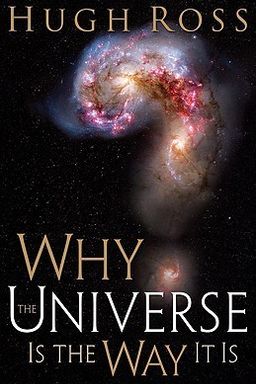
Why is the universe so vast, ancient, dark, and seemingly indifferent—and what does that mean for your life? In Why the Universe Is the Way It Is, astrophysicist and Christian apologist Hugh Ross invites you on a journey that connects the deepest cosmic mysteries to the profoundest human questions. He argues that every feature of the cosmos—from its incomprehensible scale to its laws of decay—reflects intentional design aimed at nurturing life, revealing divine purpose, and preparing humanity for eternity.
Ross contends that the universe’s strangeness is not an accident but a stage precisely tuned for human existence and redemption. Drawing on discoveries in astrophysics, cosmology, and biblical theology, he examines why the cosmos is so large, old, dark, and decaying, and why intelligent life appears unique. For Ross, these properties are signs of exquisite fine-tuning that not only allow for human life but also provide a backdrop for understanding God’s plan.
From Cosmic Curiosity to Spiritual Meaning
Ross opens by exploring humanity’s innate drive to ask "why" questions—why we exist, why anything exists, and why our universe behaves the way it does. From his childhood curiosity about stars to his professional life as an astronomer, he treats these enduring questions as paths toward discovering purpose. He contrasts scientific curiosity (driven by the desire to understand how things work) with spiritual curiosity (driven by the search for meaning). For Ross, blending both kinds of curiosity leads to a fuller comprehension of reality.
Early in the book, he notes that many skeptics view the cosmos as absurdly oversized, ancient, and wasteful if it were meant solely for humanity. Yet, Ross flips this assumption: the universe’s immensity and age are necessary to produce the heavy elements, the environmental stability, and the observational clarity that make human life and scientific discovery possible. This insight transforms feelings of insignificance into wonder.
Seeing God’s Hand in Scientific Revelation
At the heart of Ross’s argument is a harmony between modern cosmology and the Bible. He interprets discoveries such as the Big Bang, cosmic fine-tuning, and dark energy as confirmations of biblical claims that the universe had a beginning, operates under fixed laws, and was designed. Einstein’s general relativity and the measured age of the universe (13.8 billion years) support the scriptural vision of a creation that had a definite start—an insight impossible for ancient writers without divine revelation.
Ross further highlights how the Bible uniquely describes features like cosmic expansion (“God stretches out the heavens”) and the law of decay (“the creation is subject to bondage”) with stunning accuracy. These parallels, he suggests, show that scientific discoveries consistently converge with the revelation already delivered thousands of years ago.
A Universe Built for Discovery and Destiny
Ross emphasizes that humanity lives at the one moment in cosmic history and the one spot in the cosmos perfectly suited to unlocking the universe’s mysteries. Our place in the galactic habitable zone, our clear atmospheric window, and our vantage point between spiral arms all combine to make the cosmos visible and knowable. This is no cosmic accident—it reflects purpose. The same conditions that support life also enable discovery, inviting humans to explore creation and, ultimately, its Creator.
He also notes that even the universe’s decay plays a role in a grander purpose. The second law of thermodynamics, often seen as a symbol of futility, ensures that energy flows, stars shine, and life can exist. Yet, it also reminds us that physical existence is temporary and points to a need for a realm beyond decay—the new creation described in Scripture.
Science as a Bridge to Hope
Throughout the book, Ross blends scientific reasoning and theological reflection, arguing that authentic faith embraces testing, evidence, and rationality. While many scientists, he notes, see the universe as cold and impersonal, he finds in its precision and intelligibility the fingerprints of a Creator who desires relationship. The seemingly hostile facts—the vast distances, the fine-tuned constants, the inevitability of death—become part of an orchestrated journey toward redemption and renewal.
Ultimately, Ross’s vision offers a conversation between science and faith that elevates both. The cosmos is not a meaningless void but an exquisitely tuned environment demonstrating that physical life, human consciousness, and moral awareness are threads in a larger narrative. The universe, he concludes, is the perfect vehicle—large, old, and complex enough—to showcase divine glory and to prepare humanity for a better creation beyond. For readers who have ever felt dwarfed by the stars, Ross reframes that awe as a divine invitation to explore, believe, and hope.