
Idea 1
Institutions and the Origins of Prosperity
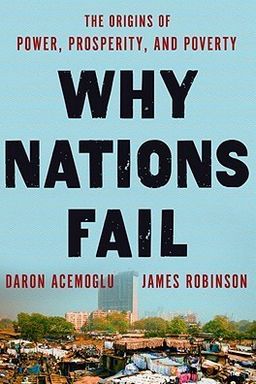
Why do some nations prosper while others stagnate or collapse? In Why Nations Fail, Daron Acemoglu and James Robinson argue that it’s not geography, culture, or ignorance that drive long-term economic performance—it’s institutions. Specifically, they emphasize the critical divide between inclusive and extractive institutions and how these systems determine incentives, innovation, and ultimately prosperity.
Inclusive institutions distribute power broadly and create rules that allow people to participate fully in economic life. They secure property rights, uphold the rule of law, and promote open markets. Extractive institutions, by contrast, concentrate political authority and organize the economy to transfer wealth upward. They privilege elites and discourage creativity or investment. From colonial Peru’s mita labor system to North Korea’s command economy, extraction shapes stagnation.
Why geography, culture, and ignorance fail
Acemoglu and Robinson dismantle the popular alternatives. Geography can’t explain why Nogales, Arizona and Nogales, Sonora—across one fence, same climate—differ so sharply in income. Culture fails to explain why Korea’s two halves diverged after 1945 despite identical heritage. And ignorance—the idea that leaders simply don’t know better—is naïve. Policy ‘mistakes’ often serve political interests: Ghana’s Nkrumah preserved clientelist institutions, Mao suppressed markets, and Mubarak’s Egypt excluded citizens not out of confusion but to protect elite control.
Politics creates economics
Institutions are political creations. Inclusive political systems distribute power broadly and subject elites to checks; extractive ones monopolize authority. This coupling between political and economic structures produces the book’s core logic: inclusive political institutions enable inclusive economic institutions; extractive political systems reproduce extraction and inequality. The comparison of Bill Gates and Carlos Slim illustrates the dynamic—both entrepreneurial, but Gates operated within antitrust constraints and competitive markets; Slim thrived within political privilege and monopoly protection.
Historical pathways and turning points
Critical junctures—the Black Death, Atlantic trade, and the Industrial Revolution—create opportunities. Whether societies use them to build inclusion depends on institutional drift and coalition strength. England’s merchants used parliamentary power and Atlantic trade to demand property-right protections; absolutist states like Spain closed ranks. The book traces how small initial differences compound through contingency: England’s Glorious Revolution advanced pluralism; Eastern Europe tightened serfdom under landlords.
Growth and resistance under extraction
Extractive systems can generate growth—plantation economies and Soviet industrialization both demonstrate this—but it is narrow and fragile. Without creative destruction, innovation stalls. When elites resist new technologies to protect rents—as with Elizabeth I’s rejection of William Lee’s knitting machine or the Ottomans’ printing ban—the economy locks into stagnation. Sustainable prosperity, in the authors’ view, requires institutions that manage creative destruction and distribute its benefits across society.
Core assertion
Inclusive institutions are politically hard to build but economically transformative. You can see their fingerprints in pluralism, rule of law, competitive markets, and innovation—and their absence in oligarchy, monopolization, and stagnation. Institutions explain why societies that share soil and ancestry end up on opposite trajectories of wealth and freedom.
This first principle sets up everything that follows: development is political. Geography, culture, and ignorance play supporting roles, but power—the ability to build, enforce, and reform inclusive institutions—is the decisive variable separating success from failure.