
Idea 1
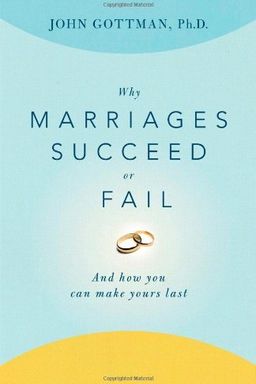
The Science of Love: Why Marriages Work—or Don’t
Why do some couples manage to keep their love alive for decades while others find themselves locked in a bitter cycle of resentment and withdrawal? In Why Marriages Succeed or Fail, psychologist Dr. John Gottman uses over twenty years of groundbreaking research to answer an age-old question: what makes love last? He argues that understanding the science of emotional interaction—the subtle ways partners express affection, handle conflict, and respond to each other’s needs—can predict a marriage’s fate with startling accuracy. In fact, Gottman’s method of analyzing couples’ conversations allows him to predict divorce with over 90% accuracy.
Gottman’s research, conducted in his famous “Love Lab” at the University of Washington, transformed marriage counseling by turning emotional conversation into measurable data. By monitoring couples’ heart rates, facial expressions, body language, and words during conflict, he discovered patterns that distinguish stable, loving marriages from those drifting toward collapse. His core argument is both sobering and hopeful: marital happiness doesn’t depend on grand romantic gestures, shared hobbies, or even perfect compatibility—it hinges on how partners manage negativity.
The Hidden Currents of Marriage
Through decades of observation, Gottman discovered that every relationship is driven by invisible emotional currents. These can become wells of harmony or whirlpools of discontent. When positive interactions outweigh negative ones by at least five to one, a relationship tends to thrive. But when criticism, withdrawal, or disinterest dominate, the marriage spirals downward. Gottman emphasizes that it’s not the presence of conflict that destroys a union—it’s how couples fight, repair, and reconnect afterward.
His research revealed that even happy couples have disagreements. The difference lies in their ability to balance tension with humor, affection, and empathy. While traditional marriage advice often tells couples to avoid conflict or fight “constructively,” Gottman shows that there are three equally healthy styles of marriage: validating (calm and diplomatic), volatile (passionate and expressive), and conflict-avoiding (agreeing to disagree). What matters is not which style you adopt but whether your relationship maintains that positive-to-negative ratio and mutual respect.
From Myth to Measurement
Before Gottman’s research, most marital theories were based on intuition rather than evidence. Therapists gave advice rooted in personal experience or cultural norms—like “fight fair” or “good marriages are built on compatibility.” But these popular beliefs didn’t hold up scientifically. Gottman’s analytical methods—videotaping interactions, coding microexpressions, and measuring pulse rates—offered the first objective window into marital success. His team could spot the early warning signs of divorce—the emotional “fault lines” that often appear years before a breakup.
Central to his findings are the “Four Horsemen of the Apocalypse”—criticism, contempt, defensiveness, and stonewalling—four toxic behaviors that predict the decay of intimacy and trust. When left unaddressed, they trigger what Gottman calls the “Distance and Isolation Cascade,” a slow erosion of affection and connection. But the book doesn’t just diagnose failing marriages; it offers tools for repair—ways to replace contempt with admiration, defensiveness with empathy, and silence with dialogue.
Why This Matters
Gottman’s work is crucial because it reframes marriage as a skill—not a mystery. Love isn’t all chemistry or luck; it’s a series of daily interactions that either build or weaken trust. His research gives couples the power to identify self-defeating patterns and replace them with communication habits proven to build resilience. For anyone wondering whether their relationship can be saved—or how to prevent it from failing—Gottman offers both a map and compass rooted in science. His message is hopeful: once you understand how emotional currents work, you can consciously steer your marriage toward closeness, humor, and enduring love.
In the chapters that follow, Gottman breaks down why some couples manage conflict while others implode, how gender differences amplify certain misunderstandings, the physiological toll of unspoken resentment, and the four keys for reversing marital decline. His promise is that you can learn to be an expert on your own relationship—just as he became one on hundreds of others—by observing not only what you and your spouse argue about, but how you argue, how you calm down, and how you find your way back to affection.