
Idea 1
The Evolutionary Mystery of Human Sexuality
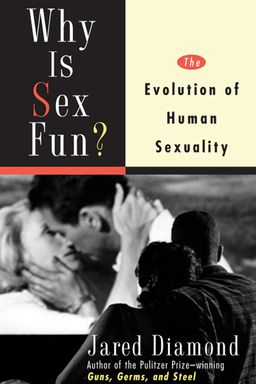
Why do humans have sex for fun, even when it doesn't lead to children? In Why Is Sex Fun?, Jared Diamond challenges you to reconsider everything you think you know about intimacy, gender roles, and reproduction. Diamond argues that our sexual behaviors—so natural to us—are, by biological standards, spectacularly weird. Why do women conceal ovulation, experience menopause, and have breasts that exist long before lactation? Why do men stay with partners and participate in child-rearing when few other male mammals do? These peculiar human traits reveal deep evolutionary strategies that shaped our species and civilization itself.
Human Sex: The Exception, Not the Rule
Most mammals mate only for procreation during brief fertile windows, driven by biological needs rather than recreation. Humans, in contrast, engage in sex privately, year-round, and often without reproductive purpose. This behavior, Diamond notes, was crucial to our evolutionary success—it fostered pair bonding, cooperation, and the stable parenting required to raise helpless human babies. By viewing humans through the eyes of a hypothetical talking dog, Diamond humorously shows just how bizarre our behavior would appear to other species: private sex, constant desire, and continued intimacy even through pregnancy and after menopause.
Why Our Sexuality Made Us Human
Diamond contends that our sexual distinctiveness is not a random accident but a critical evolutionary adaptation. He explores how concealed ovulation and long-term pair bonding may have evolved to ensure paternal involvement—the glue of the human family. Our ancestors required cooperation between males and females to raise slow-developing children, and recreational sex became a mechanism for maintaining that bond. In this sense, sex for pleasure encouraged social stability, allowing culture, language, and technology to develop.
The Broader Purpose of the Book
More than an exploration of sex, Why Is Sex Fun? serves as an inquiry into human nature. Diamond applies evolutionary biology and comparative zoology to explain why our species stands alone in its intimacy, monogamy, and emotional complexity. He asks questions that connect biology with everyday human experience: Why don't men breastfeed? Why did female menopause evolve? Why do we show sexual signals that seem unnecessary, like large breasts and deep voices? Each answer, he suggests, reveals a balance between biology’s demands and the cultural structures that emerged to manage them.
Why It Matters for You
Understanding how and why sex became 'fun' sheds light on broader human dilemmas—desire, jealousy, fidelity, and cooperation. Diamond invites you to see your instincts not as isolated emotions but as evolved mechanisms with deep biological roots. In doing so, he helps you appreciate that your relationships, conflicts, and pleasures are part of an ancient story of survival—one that made humans the most distinctive animals on Earth.