
Idea 1
Hinduism's Living Pluralism
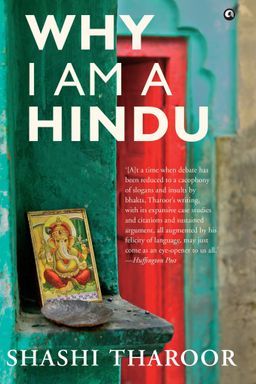
What makes Hinduism unique among the world’s major faiths? In his book, Shashi Tharoor argues that the essence of Hinduism lies not in fixed dogma, but in pluralism without rigidity. It has no single founder, no one sacred text, and no papal authority. Instead, it thrives as a civilisation of overlapping beliefs, practices, and cultural habits that stretch across millennia. You encounter a religion that invites questioning, accepts contradictions, and regards truth as multiple rather than monopolised.
No single creed, but shared ethos
Tharoor opens by describing Hinduism as a civilisation-wide conversation rather than a codified creed. The Vedic epigram “Ekam sat vipra bahudha vadanti”—Truth is one, sages call it by many names—captures the spirit. A Hindu can revere Vishnu, Shiva, or Shakti, or even reject all gods, and still remain within the faith’s tent. This absence of central authority creates unusual flexibility: festivals, rituals, and deities vary regionally and individually. Yet beyond diversity lies a unifying temperament—a comfort with paradox and coexistence.
Tharoor contrasts this with religious traditions built on revelation and exclusivity. Unlike monotheisms that often draw boundaries between believers and non-believers, Hinduism nurtures active tolerance—a willingness to see divinity in many forms and to approach ultimate reality through multiple routes.
Philosophical core: Brahman and Atman
The metaphysical backbone of Hinduism is the relationship between Brahman (the cosmic absolute) and Atman (the individual soul). The Upanishads teach that these are ultimately identical—a claim that underpins the famous adage, “You are That.” Tharoor explains that this principle allows a profound spiritual democracy: divinity is accessible within every being. Philosophical schools then refine this truth differently—Advaita Vedanta sees absolute nonduality; Ramanuja and Madhva offer qualified variations; and the Bhakti saints translate metaphysics into love.
Hindu thought recognises two faces of the divine: nirguna Brahman (the impersonal, formless absolute) and saguna Brahman (manifested and personal). This duality explains why some meditate on silence while others celebrate Krishna’s flute. Both paths lead inward toward self-realisation, or moksha—liberation from ignorance.
Many paths, one destination
Spiritual practice mirrors this philosophical inclusivity. Tharoor revisits the classical yogas: jnana (knowledge), bhakti (devotion), and karma (selfless action). Through Vivekananda’s synthesis, he shows that these are complementary rather than rival routes; you can blend intellect, love, and service according to temperament. The four Purusharthas—dharma, artha, kama, moksha—outline life’s goals from ethical duty to ultimate release, balanced through the four life stages of ashramas. Hinduism, he insists, never asks you to renounce the world prematurely; it sacralises everyday life before transcending it.
From philosophy to practice
Rituals, pilgrimages, and festivals translate lofty ideas into lived experience. Temples serve as social and spiritual centres, while pilgrimages like the Kumbh Mela embody collective devotion. Everyday Hinduism ranges from morning prayers at home altars to mass celebrations such as Durga Puja or Onam. Even contradictory habits—vegetarianism and meat-eating, asceticism and sensual worship—fit within the spectrum. This elasticity, Tharoor notes, is not chaos but culture: a system sustained by an instinctive pluralism.
Faith, reason, and reform
Hinduism’s resilience lies in its internal self-critique. Reformers from Adi Shankara to Rammohan Roy, Vivekananda, and Gandhi have continually reinterpreted the faith for their age. Whether challenging ritualism, caste, or colonial inertia, each drew upon the philosophical reservoir rather than rejecting it. This capacity to reform without rupture allowed Hinduism to engage modernity while remaining recognisably itself.
The political shadow: Hindutva
Tharoor warns that contemporary Hindutva inverts this plural spirit. Its ideologues—Savarkar, Golwalkar, and Upadhyaya—redefined Hindu identity in ethnic and nationalist terms, turning cultural pride into political uniformity. This, he argues, is the opposite of Hinduism’s inclusive genius. Where Hinduism said, “Many roads lead to one truth,” Hindutva asserts, “One people, one culture, one nation.”
The book’s structure thus moves from spiritual essence to social realities and then to political distortion. It is both a celebration and a warning—a call to recover the tolerant, exploratory Hinduism that belongs to India’s civilisation rather than any ideology. Ultimately, you are invited to see Hinduism not as a static creed but as an evolving ecosystem of ideas, where curiosity and compassion remain the highest forms of faith.