
Idea 1
Building a Life Toolkit for Mental Health and Resilience
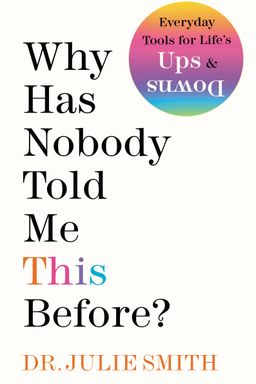
How often have you wondered why no one ever told you *how* to handle your mind — how to recalibrate during a bad day or quiet your internal critic? In Why Has Nobody Told Me This Before?, clinical psychologist Dr. Julie Smith argues that emotional education shouldn’t be an elite privilege offered only in therapy rooms. Her contention is bold but compassionate: when you understand how your mind works and learn a few practical mental fitness tools, you can change how you experience pain, stress, and self-doubt. Smith believes that good mental health is not the absence of struggle but the presence of effective skills to meet it.
At its heart, the book is not therapy—it’s a life manual. Smith brings years of psychological insight (and viral TikTok wisdom) into an accessible framework for the average reader, offering concrete exercises for managing emotions, motivation, fear, grief, and meaning. She dismantles myths about happiness and perfectionism, reminding us that emotions are information, not enemies to be erased. Through clarity and repetition, the book serves as both an education and a toolkit for resilience.
Human Minds Need Maintenance
Smith begins by reframing mental health as something that needs *maintenance*, not emergency intervention. Just as we exercise to stay physically well, she writes, we should practise mental skills to stay emotionally fit. People often arrive in therapy feeling broken, believing their moods define them or that they have no control. But small insights — learning, for instance, that mood operates like body temperature, fluctuating with environment and care — can restore a sense of agency. Depression, she notes, is not a personality flaw but often a signal of unmet needs: sleep deprivation, isolation, poor nutrition, or pervasive negative thinking patterns.
Her analogy of a toolbox returns again and again. Mental resilience, she insists, isn’t built with one magical technique. It’s a workshop full of instruments—mindfulness, metacognition, gratitude, self-compassion—that you learn to use through practice. The key is not mastery of one, but knowing which to pick up when life gets hard.
The Therapist as Teacher
The book’s origin lies in Smith’s realization that much of therapy is education. Clients often transformed simply by learning how emotions, body, and thoughts interact. She recalls one woman who, once taught how mood cycles operate, exclaimed, “Why has nobody told me this before?” That statement became the book’s title and its mission — to democratize the science of feeling human. Smith’s viral social media presence grew from that urge to share high-quality psychological education in bite-sized videos. This book expands those micro-lessons into depth: each chapter acts like a mini-workshop, ending with toolkits and journal prompts that let readers practise the skill themselves.
(This approach mirrors the psychoeducational style of Dr. Brené Brown’s Atlas of the Heart and Dr. Kristin Neff’s work on self-compassion, blending expertise with stories and practical exercises.)
From Survival to Growth
Smith structures her mental fitness course in eight sections, each addressing a universal domain of struggle: dark moods, motivation, emotional pain, grief, self-doubt, fear, stress, and meaning. She connects them through the idea that emotional knowledge is power. Understanding how psychological systems work turns chaos into clarity. Instead of seeing sadness, fear, or self-criticism as enemies, we can use them as signals guiding us toward unmet needs or misaligned values.
For example, she likens low mood to information about our internal weather. You wouldn’t blame yourself for a cloudy day, but you might grab a coat, go for a walk, or wait for sun. Similarly, rather than labeling sadness as failure, you can ask what your body, habits, or environment might be signaling. This stance turns helplessness into experimentation: What happens when you adjust sleep, social connection, or routine? Emotional learning, she says, is recursive; every small experiment teaches you more about what shapes your experience.
Tools, Not Platitudes
Instead of offering the usual “think positive” clichés, Smith emphasizes evidence-based skills that mirror cognitive-behavioral and mindfulness techniques. Readers learn how thought biases—like catastrophizing, mind reading, or all-or-nothing thinking—distort perception and fuel suffering. By practising metacognition (thinking about your thoughts), you learn to step back, rename the bias, and choose a more helpful response. Similarly, her chapters on self-doubt and anxiety show that perfectionism and avoidance make problems worse in the long term, even while offering short-term relief.
The practical tone runs throughout. At the end of each section are simple, teachable tools: breathing exercises for calming panic, gratitude journaling to redirect attention toward what sustains you, or the “opposite action” skill from dialectical behavior therapy to break harmful habits. Each is a micro-rehearsal for bigger life challenges.
Making Psychology Public
Ultimately, Smith’s larger argument is cultural: understanding how your mind works shouldn’t depend on access to a therapist. In a world saturated with misinformation and productivity pressures, she offers something radical yet practical — psychological education as self-care. Her writing insists that resilience isn’t innate; it’s learned, practised, and maintained like any discipline. Life will not spare you pain, she concedes, but knowledge can make pain survivable and even transformative. The reward is not constant happiness but an honest, robust relationship with your inner world.
By the end of the book, Smith assures you that you will still face stress, anxiety, and failure — but you’ll have the tools to navigate them, the language to describe them, and the self-compassion to rise again. The invitation isn’t to eliminate struggle but to become skilful at being human.