
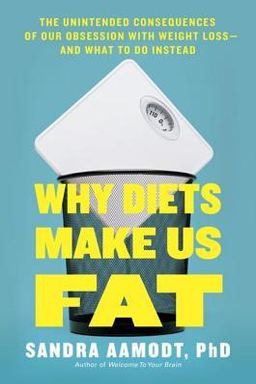
Why Diets Make Us Fat cover

Why Diets Make Us Fat

by Sandra Aamodt, PhD

Why Diets Make Us Fat dismantles common dieting myths, revealing why our obsession with weight loss often backfires. Through the lens of neuroscience and genetics, Sandra Aamodt offers alternative strategies for healthier living, emphasizing mindfulness and habit formation over restrictive dieting.

Why Diets Make Us Fat: The Body’s Rebellion Against Restriction

Have you ever wondered why your dieting efforts seem to lead to short-term victories that evaporate into frustration and eventual weight regain? In Why Diets Make Us Fat, neuroscientist Sandra Aamodt offers an uncompromising look into why diets fail—not because we lack willpower, but because our brains are wired to preserve and defend body weight like a thermostat. Aamodt argues that dieting triggers a biological backlash, forcing the brain’s energy-balance system to fight perceived starvation by slowing metabolism, intensifying hunger, and promoting future weight gain. The book challenges decades of conventional wisdom by showing that lasting thinness and health cannot stem from control or calorie counting, but from learning to work with your body instead of against it.

The War Between Diets and Biology

Aamodt opens with the compelling case of Dennis Asbury, an ordinary man who lost 130 pounds through grueling caloric restriction and obsessive exercise. Despite years of vigilance, his weight returned, illustrating a pattern repeated by millions worldwide. His story is not about lack of discipline; it’s about biology. Every body has a "defended range," a 10-to-15-pound zone that the brain automatically maintains. When weight drops below this range, the hypothalamus sounds an emergency alarm—slowing metabolism, increasing hunger hormones like ghrelin, and driving obsession with food. This response mirrors survival mechanisms triggered in times of famine, which helped our ancestors endure scarcity but now doom modern dieters in an environment overflowing with temptation.

The brain’s protective instincts mean dieting inevitably leads to metabolic suppression. Studies show that people who lose 10% of their weight burn 10–15% fewer calories even years later. The body perceives thinness as a threat and continually fights to regain lost pounds. This explains why nearly all diets—low-carb, low-fat, intermittent fasting—eventually fail in the long run. Aamodt cites large-scale studies such as the Look AHEAD and Diabetes Prevention Program: despite intense coaching, participants regained weight and experienced no lasting health improvements tied specifically to weight loss. The brain simply will not cooperate with prolonged restriction.

The Cultural Obsession with Thinness

Beyond biology, Aamodt explores the poisonous cultural fixation on thin ideals and shame. From Fiji’s transformation after television’s arrival to American teenagers obsessed with impossible beauty standards, she exposes how media and social norms drive disordered eating. The thin ideal fosters chronic body dissatisfaction—over 90% of women report unhappiness with their bodies—and that shame itself predicts future weight gain. Public shaming and medical bias amplify this cycle: obese adults face wage discrimination, poor healthcare, and even hostility from doctors, all translating into stress, depression, and overeating. Instead of motivation, stigma enlarges the very problem it claims to cure.

Indeed, stress emerges as one of the book’s central villains. Cortisol, the body’s primary stress hormone, increases visceral fat and triggers comfort eating. Whether caused by dieting, prejudice, or life pressures, stress accumulates into physical morbidity—higher rates of diabetes, heart disease, and metabolic syndrome. Chronic stress, Aamodt notes, biases the body toward storing fat, particularly in the abdomen, creating a vicious self-reinforcing loop.

Why Diets Backfire

Aamodt’s scientific framework dismantles the simplistic “calories in, calories out” myth. Studies on starving soldiers in 1945 reveal that calorie restriction leads to obsession, bingeing, and physiological damage lasting decades. Her discussions of controlled versus intuitive eaters show that strict monitors—those who track every morsel—are paradoxically more prone to binge eating once they feel they’ve “failed.” Deprivation dismantles internal hunger cues, replacing mindfulness with guilt. Meanwhile, eating cues in the modern world—advertising, large plates, processed food engineering—further detach us from satiety, enabling effortless overeating and resetting the brain’s defended range upward.

A Better Way: Partnership with the Body

In the latter chapters, Aamodt offers hope through strategies grounded in neuroscience and compassion rather than restriction. Mindful eating, stress management, sleep, and fitness emerge as the true pillars of health. Programs like the “Health at Every Size” movement show that focusing on intuitive eating, pleasure, and movement can improve cholesterol, blood pressure, and wellbeing even without significant weight loss. As personal trainer Kelly Coffey puts it, lasting change requires love, not self-loathing—because shame drives bingeing and paralysis, while acceptance encourages sustainable care.

Ultimately, Aamodt’s argument is radical yet simple: you are not broken. Your brain works exactly as evolution designed—to protect you from starvation. The secret of health lies not in conquering the body but in understanding its wisdom. When you stop fighting hunger and start listening to it, your weight stabilizes naturally within the range your brain defends. By shifting from dieting to mindful living, you can escape the roller coaster, restore peace with food, and base self-worth on health, not size.


The Biology Behind the Diet Roller Coaster

Aamodt’s central biological insight is that your brain—not your willpower—decides your body weight. The hypothalamus acts as your internal thermostat, vigilantly maintaining a defended range that it perceives as safe. When dieting pushes you below that range, the brain triggers emergency responses: it lowers metabolic rate, increases appetite, and intensifies cravings for high-calorie foods.

The Defended Range

This defended range typically spans about 10–15 pounds. Inside it, small fluctuations are easy to manage through lifestyle adjustments. Drop below it, and biology takes over with the force of evolutionary survival. Research from Columbia’s Rudolph Leibel demonstrates that dieters who fall below their range burn 400–500 fewer calories per day—equivalent to skipping an entire meal—because their metabolism slows. At the same time, hunger hormones surge.

These changes explain why even “successful” weight-loss maintainers such as participants in the National Weight Control Registry survive through constant vigilance, daily exercise, and lifelong calorie counting. The brain tolerates their thinness only under relentless monitoring, much like keeping a window open while the thermostat keeps cranking the heat.

Metabolic Suppression and Emotional Toll

The same mechanism that saved our ancestors during famine now works against dieters. Aamodt cites the Biosphere 2 experiment—eight scientists living on limited vegetarian calories who developed low thyroid hormones and extreme fatigue. When restrictions lifted, their bodies rebounded with intense hunger, illustrating the permanence of metabolic suppression. Dieters who lose large amounts of weight remain trapped in this state for years, sometimes for life.

This biological rebellion breeds psychological turmoil. Hunger transforms into obsession: subjects dream of food, binge uncontrollably, and suffer mood swings, just like the Starvation Experiment participants of World War II. In effect, dieting trains your brain to behave like it’s surviving a famine, not pursuing wellness.

Why Weight Regain Is Normal

When dieters regain lost pounds, the process isn’t failure—it’s the brain’s defense resetting the defended range higher. Stress, prolonged restriction, and bingeing act as signals for future scarcity. The brain responds by hoarding fat more efficiently and may even create new fat cells, ensuring survival if famine strikes again. Hence, each dieting cycle can make future weight loss harder. In long-term studies following thousands of adults for years, dieters consistently end up heavier than non-dieters.

Key Point

Your brain sees dieting not as discipline but as danger. Its job is to protect you from starvation—and the defended range is its safety mechanism.

For anyone trapped in the yo-yo cycle, Aamodt’s message provides relief: you’re not weak; you’re human. The only sustainable path forward is learning to listen to internal cues—hunger, fullness, energy—so the brain’s thermostat can do its job naturally. As she writes, “I don’t have to count calories; my body is counting them. It does the math with perfection.”

By recognizing that biology is not the enemy but an ally, you can stop measuring success by pounds lost and start focusing on stability, nourishment, and peace.


The Cultural Disease of Body Hatred

Even if biology explains why diets fail, Aamodt argues that culture explains why we keep trying. The modern obsession with thinness—fueled by media, beauty standards, and moralized views of fatness—creates an environment where shame masquerades as health motivation.

From Fiji to America: When Thin Became Beautiful

Before television arrived in Fiji during the mid-1990s, larger bodies symbolized beauty and vitality. Within three years of Western media exposure, eating disorders among teenage girls skyrocketed, and self-induced vomiting—previously unheard of—became common. This same cultural export reached the United States decades earlier, replacing curvaceous icons with waif-like ideals. Ads that once promised women tools to gain weight now worship thinness.

The result is widespread body dissatisfaction: over 90% of women and half of men dislike their bodies. Even underweight teens report criticism for being “too fat.” For many, this self-hatred begins in childhood—58% of ten-year-old girls have heard someone close to them call themselves “fat.” Shame thus becomes a primary inheritance.

Shame Doesn’t Motivate—It Damages

Contrary to popular belief, fat shaming doesn’t inspire change. Instead, it leads to depression, binge eating, and avoidance of exercise. Studies show that people who experience weight discrimination are up to seven times more likely to become obese later. Teachers, doctors, and even family members contribute to this cycle through subtle biases—like focusing medical advice on weight instead of health or denying opportunities to heavier individuals. These daily indignities activate stress hormones that elevate visceral fat and inflammation, contributing to disease.

Fighting Back Through Acceptance

To recover, Aamodt argues, you must move from fear-based control to self-compassion. Personal trainer Kelly Coffey, who lost over 100 pounds after decades of dieting, found stability only after learning to love her “fat body.” Instead of punishing herself for bingeing, she focused on pleasure and habit—going to the gym for joy rather than guilt and sleeping enough because her body felt better. For her, acceptance was the only sustainable motivation. “Few people take good care of anything they hate,” Coffey realized.

By shifting from weight shame to body respect, we reclaim mental health and liberate ourselves from cycles of deprivation and despair. Aamodt’s message echoes psychologists like Kristin Neff (Self-Compassion) and Brené Brown (The Gifts of Imperfection): self-love isn’t indulgent—it’s essential for genuine transformation.


Stress, Sleep, and the Hidden Drivers of Weight Gain

Aamodt demonstrates that the true enemies of health aren’t calories—they’re chronic stress and sleep deprivation. These conditions mimic starvation signals, triggering hormonal cascades that make weight gain almost inevitable.

Stress Hormones and Metabolic Fallout

When you’re perpetually stressed, your body releases cortisol, a hormone evolved to help you flee from predators. Chronic cortisol floods, however, block normal metabolism and drive fat accumulation—especially around the abdomen. This visceral fat is biologically dangerous because it releases inflammatory molecules that increase risk for diabetes and heart disease. Modern stressors—work pressure, discrimination, financial strain—don’t fade as a lion attack would, leaving the body perpetually in fat-storage mode.

Shame as Chronic Stress

Body stigma amplifies this mechanism. The U.S. culture’s comfort with open anti-fat bias means even simple errands can induce shame-driven cortisol spikes. In studies, simply watching television clips mocking overweight people raised cortisol levels in female viewers. Over time, this biochemical stress weakens immunity, elevates blood pressure, and promotes emotional eating—a survival adaptation gone rogue.

Sleep Deprivation and Hunger Hormones

Sleep loss compounds the damage. Modern adults sleep two to three hours less than their grandparents, a change that correlates with rising obesity. Lack of sleep lowers leptin (which signals fullness) and raises ghrelin (which signals hunger), convincing your brain that you’re starving. After just six nights of four-hour sleep, participants in lab studies ate significantly more and burned fewer calories.

Aamodt describes sleep not as a luxury but as metabolic medicine. Rested bodies regulate hunger naturally; tired brains make you crave sugar and fast food—the quickest sources of energy. Restoring healthy sleep patterns could be more powerful for weight stability than any diet plan.

Stress tells the body “you’re in danger,” and dieting tells it “you’re starving.” Combining the two creates a perfect storm that turns biological protection into lifelong weight gain.

Through mindfulness, relaxation, and sufficient sleep, you can deactivate this chronic alarm—and free your metabolism to work as intended, not as a prisoner of fear.


When Calories Don’t Count: The Metabolic Myth

One of Aamodt’s most striking claims dismantles diet math itself. The popular belief that cutting 100 calories daily automatically leads to losing 10 pounds a year is scientifically false. Bodies are not spreadsheets—they’re dynamic ecosystems shaped by metabolism, digestion, and even gut bacteria.

The Illusion of Precision

Food labels can legally be 20% inaccurate, meaning a “400-calorie meal” may contain anywhere from 320 to 480 calories. Restaurant portions often exceed their posted counts by even higher margins. These discrepancies alone can erase months of diet effort. Moreover, calorie absorption depends on cooking, chewing, and food type: whole almonds yield fewer usable calories than almond butter; raw carrots offer less energy than puréed ones. Processing breaks cell walls, releasing more digestible calories. This is one reason humans evolved large brains after mastering cooking—it made food more efficient.

Your Microbial Partners

Even more astonishing, gut bacteria determine how many calories you extract from meals. People with obesity tend to host more Firmicutes (efficient carbohydrate digesters), while lean individuals have more Bacteroidetes. In experiments, germ-free mice transplanted with bacteria from obese humans gained double the weight of those receiving bacteria from lean donors, despite eating the same amount.

Early antibiotic exposure, common in childhood, can disrupt this microbiome balance permanently. Babies given antibiotics within six months of life were significantly more likely to be obese years later. These findings recast obesity not as moral failure but as microbial ecology—a revelation echoing recent research in metabolic medicine.

The Real Math of Metabolism

Energy balance isn’t static. Lose weight, and your metabolic rate plummets—reducing the supposed “deficit.” Gain weight, and digestion becomes more efficient. As Aamodt dryly notes, calorie counting appeals to “our inner nerd,” but it’s an illusion of control. The human body adjusts to deficits and surpluses through complex biological negotiation, ensuring that simple subtraction equations almost never match real life.


Mindful Eating: Listening Instead of Controlling

Aamodt’s solution to biological and cultural chaos is deceptively simple: eat attentively, without judgment, and in harmony with your body’s signals. Mindful eating replaces control and guilt with curiosity and awareness.

How Mindfulness Heals the Eating Battle

Mindfulness trains you to notice hunger, fullness, and taste in the present moment, without labeling foods as “good” or “bad.” Programs like Jean Kristeller’s Mindfulness-Based Eating Awareness Training (MB-EAT) help binge eaters regain self-regulation by practicing slow observation—often beginning with a single raisin savored deliberately. Participants learn “mini-meditations” before meals: taking a breath, asking what kind of food would satisfy, and choosing accordingly. These small pauses activate the brain’s prefrontal cortex, restoring calm and choice instead of compulsion.

Intuitive Eating: Trusting Your Inner Compass

Similar principles appear in Evelyn Tribole and Elyse Resch’s Intuitive Eating philosophy. Studies show that intuitive eaters—those who eat when hungry and stop when full—have lower BMI, better cholesterol, and fewer psychological problems than restrained eaters. They also binge less and exercise more for enjoyment. Mindful eating reawakens your internal calibration system, the same one your brain uses flawlessly in children before social and parental interference disrupts it.

The Pleasure Prescription

Contrary to diet culture, mindfulness encourages eating for pleasure. Enjoyment signals the brain’s reward system that the body’s needs are met, reducing cravings and excessive consumption. Deprivation only amplifies desire; pleasure extinguishes it. Aamodt urges readers to make peace with food—to savor ice cream without guilt, skip the salad if it doesn’t appeal, and trust the body to balance intake over time.

As habits of awareness form, eating becomes effortless again. Experienced mindful eaters rarely think about food when they’re not hungry, while chronic dieters think about food constantly. The difference isn’t self-control—it’s trust. When you listen, your body stops fighting; when you fight, your biology wins. “Don’t forget to stop and smell the raisins,” one workshop participant quipped, perfectly capturing the joy of rediscovered simplicity.


Healthy Living Over Weight Loss

Perhaps Aamodt’s most empowering argument is that health has little to do with size. Using decades of data, she reveals that overweight individuals who exercise, eat nutritious food, manage stress, and sleep well live just as long—or longer—than thin sedentary people.

The Obesity Paradox

CDC research shows that people in the “overweight” BMI range (25–29.9) have lower mortality rates than those labeled “normal weight.” Even moderate obesity poses minimal risk for those who maintain good fitness and metabolic health. These findings exposed the flaws behind public fear campaigns about obesity. Aamodt critiques the 1998 recalibration of BMI categories—when millions were reclassified as overweight overnight—as both politically and economically motivated, heavily influenced by the diet and pharmaceutical industries.

Health at Every Size

Rejecting the weight-centric worldview, programs like Linda Bacon’s Health at Every Size demonstrate measurable improvements in cholesterol, blood pressure, and self-esteem without focusing on weight loss. Participants practiced intuitive eating and enjoyable movement, showing that diet mentality undermines health by promoting cyclic deprivation and guilt. Aamodt emphasizes that lifestyle habits—adequate sleep, social connection, exercise—control far more of long-term health outcomes than body weight ever could.

Fitness as Medicine

Physical activity, even light walking, dramatically reduces risk of diabetes, heart disease, and dementia. Obese but active individuals have mortality rates nearly identical to fit, normal-weight peers. Aamodt’s advice: stop exercising for punishment and start moving for joy. Dancing with friends or walking a dog yields greater benefit than hours on a treadmill driven by guilt. Exercise corrects inflammation, improves insulin regulation, and lifts mood—the real markers of health.

By reframing success from pounds lost to years gained and vitality felt, Aamodt frees readers from the tyranny of the scale. The best health secret isn’t thinner—it’s happier, calmer, more active, and in partnership with your body’s natural wisdom.

Dig Deeper

Get personalized prompts to apply these lessons to your life and deepen your understanding.

Go Deeper

Get the Full Experience

Download Insight Books for AI-powered reflections, quizzes, and more.