
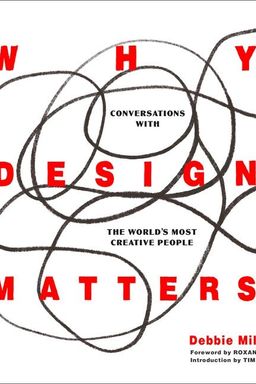
Why Design Matters cover

Why Design Matters

by Debbie Millman

Why Design Matters compiles over 50 insightful interviews from Debbie Millman’s acclaimed podcast, showcasing how design principles influence creativity, communication, and self-expression. Dive into stories from creative legends who challenge norms and inspire innovation.

Design as Inquiry into Human Life

Design as Inquiry into Human Life

What makes design matter? Debbie Millman’s long-form project, Design Matters, proposes that design is not merely about aesthetics but about the human stories, moral responsibilities, and personal reinventions behind creative work. Through hundreds of interviews—Milton Glaser, Paula Scher, Alison Bechdel, Marina Abramović, Seth Godin, Chanel Miller, and others—Millman reframes design as an inquiry into how people construct meaning and identity through craft, ethics, and vulnerability.

Design as Listening

Millman began Design Matters in 2005 as a self-funded radio experiment. What started with a tinny Voice America connection and a few friends became the first design podcast and one of the most sustained archives of creative testimony. Millman’s core method is simple but radical: she listens. Preparation—reading obscure essays, tracing forgotten details—turns admiration into curiosity. Each interview, she says, helps a guest 'articulate who they are in ways that honor their truest selves.'

Listening here becomes a design act: attention reshapes understanding. Her early mentors, like Cheryl Swanson, taught her the value of silence; holding pauses reveals what a person truly means. (Compare this to Krista Tippett’s On Being; both convert interview into moral inquiry.)

Design as Moral Practice

Milton Glaser’s famous “Road to Hell” list reminds designers that every project carries moral weight. His escalating ladder of compromise—small misrepresentation to lethal complicity—illustrates how ethical erosion becomes professional habit. Glaser and Millman converge on one idea: design choices are civic choices. When you help sell a harmful product or obscure truth, you alter society’s moral texture. The designer’s duty is not to beautify harm but to clarify values. (Note: this echoes Dieter Rams’s notion of 'responsible design.')

Resilience and Reinvention

Millman’s own life embodies the creative cycle she documents. Rejected by Columbia, refused by Vanity Fair, and initially dismissed by peers, she turned rejection into experiment—paying for airtime, refining her craft season by season. As Seth Godin, Alison Bechdel, and Paula Scher affirm in their interviews, reinvention is the hallmark of creative persistence. You begin small, fail publicly, and recycle lessons into new expression. Millman’s arc—corporate designer reinvented as cultural interviewer and educator—is a case study in using risk as renewal.

Truth, Vulnerability, and Cultural Connection

The book’s emotional center lies in truth-telling. Alison Bechdel’s Fun Home, Carmen Maria Machado’s Her Body and Other Parties, and Chanel Miller’s Know My Name extend design’s vocabulary into memoir and testimony. They teach you that authenticity is craft: emotional precision transforms private pain into shared resonance. Vulnerability, Millman’s guests reveal, is not weakness but technique—the means to create connection through exposure. (Brené Brown’s research parallels this insight: vulnerability drives creativity.)

Design’s Broader Cultural Role

Design interacts with commerce, politics, and visibility. Paula Scher uses branding to elevate everyday experience; Cindy Gallop turns business models into cultural interventions; Seth Godin measures success by whether ideas change people, not just markets. Together they argue that design can challenge or amplify power—the ethical challenge is deciding which. Visibility brings responsibility: the things you ship reshape public norms.

Across all stories runs a throughline of mentorship and teaching. Millman’s teaching at SVA and Steven Heller’s prolific guidance show how institutional structures propagate the ethos of creative conscience. Their work proves that making culture sustainable requires training not just designers but citizens of design thinking.

Core message

Design is never neutral. It’s how you visualize ethics, empathy, and persistence. To live creatively, you must treat craft and curiosity as moral practices—a continual apprenticeship to listening, failure, and truth.

In Design Matters and its accompanying reflections, creative life becomes ethical life: paying close attention, telling truth, reanimating the ordinary, and guiding others through shared curiosity. That, Millman suggests, is how design saves us—not by decorating the world, but by teaching us how to see and speak responsibly within it.


The Craft of Listening and Interviewing

Millman’s mastery begins with listening as craft. Her practice parallels design itself—preparatory research, precision questioning, spatial awareness. In a world of rapid media, she slows time to make meaning. Preparation, she insists, is respect: before any interview she studies obscure writings and traces formative moments to ask questions only this guest can answer.

Preparation as Permission

Preparation gives you moral and creative permission to go deep. Guests respond to care. Tim Ferriss notes how Millman’s eight-by-twelve sound booth—with a single window and soft edges—creates intimacy. Silence, too, is part of her design language; she learned to hold pauses and let conversation breathe. Listening becomes the ultimate design tool, revealing inner logic rather than outer polish.

Interview as Apprenticeship

Millman treats conversations as apprenticeship rather than performance. Each dialogue models curiosity under discipline. She openly admits once being gushy—a fan overloaded by admiration—and learning over time to convert that into rigorous curiosity. This balancing act turns enthusiasm into inquiry, admiration into research. (Note: similar methods appear in Terry Gross’s Fresh Air.)

Design Lessons from Listening

To design conversations—or creative work—you can apply Millman’s own steps: research beyond biographies, draft narrative beats, practice quiet, and ask questions only they can answer. Her structure mimics narrative arcs: beginning, revelation, and reflection. The creative insight is that conversation itself can be design—crafted scaffolding where truth arises.

Listening reframed

In Millman’s work, interviewing ceases to be about data collection. It becomes an art of moral and creative listening—a method to help others articulate identity and meaning.

For you, this means designing interactions as you would design objects: with research, empathy, and structure. Every conversation is a prototype for understanding human complexity—a process that, when practiced patiently, reveals design’s true subject: the soul behind the surface.


Ethics and Responsibility in Design

Milton Glaser’s conversation with Millman grounds the book’s ethical spine. His 'Road to Hell' visualizes moral erosion through professional compromise. Ethics, here, isn’t high theory—it’s everyday choice. Glaser insists that design is civic practice: each visual communication either clarifies truth or contributes to harm.

Measuring Harm

Every project asks: Who benefits? Who bears risk? Does the work obscure truth? Glaser warns against posturing—moral purity without alternatives ignores reality. Economic survival drives most design work, but responsibility requires weighing consequence. It’s less about refusing commerce and more about negotiating integrity within it.

Citizen-Designer

Designers operate within powerful ecosystems—media consolidation, branding empires, social influence. Glaser’s call to 'do no harm' becomes a civic stance: publish, protest, teach. Your design voice can oppose harmful messaging or humanize culture. Paula Scher echoes this through corporate design as service; Cindy Gallop turns entrepreneurial tools into social repair. Ethics scales through visibility and courage.

Ethical clarity

Glaser’s model reframes design decisions as quantifiable moral acts. You either amplify deception or clarity. Choose storytelling that increases transparency, not manipulation.

Ultimately, design ethics means conscious complicity: know the systems you serve, measure potential harm, and act as a citizen within visual culture. Responsibility transforms craft into conscience—the designer’s road to redemption.


Resilience and Reinvention

Creative lives pattern themselves through rejection and reinvention. Millman, Seth Godin, and Alison Bechdel all turn obstacles into laboratories. Failure becomes experiment—cheap, iterative, and formative. Millman’s early paid airtime episodes reflect deliberate risk: low prestige, high learning. You too can treat failures as prototypes rather than verdicts.

Persistence as Design

Persistence behaves like craft: daily repetition builds structure for evolution. Creative guests describe tactics—Gabrielle Hamilton’s restaurant pivot, Paula Scher’s career shifts, Seth Godin’s relentless experimentation—that show reinvention as strategy, not accident. You make affordable experiments, learn fast, and adapt slower than fear.

Turning Rejection into Energy

Reframe no’s into feedback loops. Millman’s Columbia and media rejections matured her curiosity; she used adversity to sharpen her questions. In creative work, each denial is material—evidence of iteration. (Compare to Elizabeth Gilbert’s Big Magic: treat failure as proof of devotion.)

Patience under risk

Millman’s career teaches practical patience—buy airtime, invest sweat equity, learn visibly. Rejection is apprenticeship, not verdict.

You design your creative life through resilience. Build prototypes of practice; treat risk as curriculum; let persistence become your form. Success, as this book shows, belongs to those who iterate compassionately and persist without guaranteed reward.


Authenticity and Vulnerability

Creativity demands exposure. Millman’s interviews with Alison Bechdel, Carmen Maria Machado, Chanel Miller, Saeed Jones, and Marina Abramović reveal vulnerability as technique—a commitment to truth shaped by craft.

Memoir as Moral Work

Bechdel’s Fun Home uses radical visibility to convert private identity into universal empathy. Machado bends genre to approach trauma indirectly; Miller reclaims legal testimony as self-definition. Each shows that truth gains impact through precision—concrete detail, ethical memory, and structural care.

Vulnerability in Performance

Marina Abramović’s durational art and Eve Ensler’s activism turn exposure into audience participation. Vulnerability here becomes public pedagogy; confession becomes catalyst. Yet ethical framing matters—exposure without boundaries risks harm. These artists pair honesty with structure: stage, form, therapy, or witness protocols.

Power of truth

To be vulnerable is to reclaim authorship of your narrative, turning pain into connection and moral clarity. It teaches an art beyond beauty—the art of truth.

If you want your work to reach others, practice courage in confession and rigor in framing. Vulnerability becomes creative power when it’s organized through discipline and ethical care, transforming inner wounds into collective understanding.


Mentorship and Building Creative Institutions

Design culture survives through mentors and institutions. Millman and Steven Heller exemplify this long view. Teaching, publishing, and program-building multiply impact beyond individual success. Mentorship here is design infrastructure—it produces language, ethics, and continuity.

Steven Heller’s Additive Discipline

Heller’s prolific output—hundreds of books and the program at SVA—functions like iterative teaching: one idea leads to ten more. His method pairs documentation with encouragement, ensuring that design’s history stays alive through new voices. He treats curation as civic service.

Millman’s Teaching Practice

At SVA’s Masters in Branding, Millman channels her interviews into curriculum. Students learn empathy and research through real creative case studies. Mentorship becomes conversation—a dialogue across generations linking ambition with conscience.

Enduring influence

Mentorship builds ecosystems, not hierarchies. It creates cultures where curiosity, skill, and responsibility co-evolve.

To sustain creative culture, mentor generously, archive diligently, and teach what you practice. Institutions then become collective artworks—designed not for profit but for shared growth.


Craft, Discipline, and Obsession

Mastery comes through repeated, humble labor. Across Millman’s archive, artists like Louise Fili, Chip Kidd, Christina Tosi, and Paula Scher exemplify obsessive discipline. Talent may initiate creativity; craft sustains it.

Learning by Doing

Fili’s tactile learning—setting metal type by hand—illustrates how material intimacy shapes style. Scher learned type by drawing it manually before digital tools existed. Craft transforms repetition into authorship; technique offers freedom.

Obsession and Practice

Christina Tosi’s endless pastry experiments and Brandon Stanton’s 10,000 portraits define obsession as infrastructure. Quantity teaches quality. Repetition breeds voice. Obsession isn’t pathology—it’s sustained curiosity under structure.

Provocation Plus Mastery

Marilyn Minter’s technically perfect provocations and Adams’s graffiti branding show that controversy demands craft. Rebellion without rigor vanishes. Rigor makes boldness credible.

Lesson of discipline

Technique is liberation; obsession is education. Both crystallize voice from repetition.

Create rituals of making, embrace boredom, and learn fundamentals deeply. Your design maturity depends not on novelty but fidelity to process—the daily, quiet repetition that shapes unique vision.


Design’s Cultural Impact

Design mediates between culture and commerce. Conversations with Seth Godin, Paula Scher, Amanda Palmer, Cindy Gallop, and Mike Mills show how visibility transforms society and how creators can redirect that power strategically.

Working Inside Systems

Paula Scher’s branding for Citibank and Shake Shack argues that commercial design, done well, raises public expectations. Rejecting corporate work, she warns, leaves culture to poor design. Meanwhile, Gallop and Godin apply entrepreneurial tools to everyman ethics—projects that reeducate behavior through visibility.

Culture by Choice

Mike Mills reminds you art reanimates perception; Amy Sherald’s gray-toned portraits of Black Americans reshape representation; Cey Adams connects street art to mainstream identity. Cultural design always asks who is seen and who is invisible. To design means to decide which lives get attention.

Design as citizenship

Public work isn’t neutral—it molds norms. Ethical designers treat visibility as accountability.

Before you choose projects, ask: Does this change culture or just decorate it? Your creative visibility alters collective values; wield it with care and integrity.


Leading Creative Collaboration

Leadership in art and design means discovering, not owning, the best idea. Directors and collaborators like Thomas Kail, Emily Oberman, and Cey Adams illustrate humility as creative methodology.

Building Psychological Safety

Kail emphasizes tone-setting: protect curiosity, manage temperature, and make space for imperfect ideas. Safety multiplies creativity; punishment constricts it. Humanity over talent, he says, defines productive rooms. (Note: aligns with Google’s research on team performance—psychological safety ranks above skill.)

Curating Ideas

Leaders function as editors, not authors. They collect, weigh, and curate contributions toward coherence. Being decisive means knowing when ideas are ripe, not claiming ownership. Creativity thrives on shared confidence and transparent iteration.

Leadership clarity

Directors succeed not by control but by orchestration—the craft of guiding collective intelligence toward beauty and truth.

Creative leadership demands humility, empathy, and decisiveness. It’s the invisible design behind every masterpiece: making others feel seen so the work itself can shine.


Design as Lifelong Apprenticeship

Millman’s book concludes on a long view: design is lifelong apprenticeship—a continual learning through conversation, craft, and conscience. Each artist interviewed shows that creative maturity arises from sustained practice, ethical reflection, and the generosity to teach others.

Design as Moral Learning

Design begins at self-education—listening, reading, failing, adjusting. Over time, you learn that mistakes are curricula. Each project teaches something about empathy and truth. Millman turns every episode into a classroom, revealing patterns of evolution across disciplines.

Transmission of Insight

Mentorship, teaching, publishing, and conversation keep design alive. Like Heller, Millman believes institutions should act as creative commons—archiving experience for future innovation. Your creative duty extends beyond output; it includes nurturing the field itself.

Final note

Creative life is civil practice: learning, teaching, and listening constitute continuous apprenticeship to humanity.

Through Design Matters, Millman proves that design’s ultimate meaning lies not in objects but relationships—the human continuities we design through curiosity, care, and courage. The work, she reminds you, is never finished; it’s lived one act of listening at a time.

Dig Deeper

Get personalized prompts to apply these lessons to your life and deepen your understanding.

Go Deeper

Get the Full Experience

Download Insight Books for AI-powered reflections, quizzes, and more.