
Idea 1
Understanding Race as a Systemic Reality
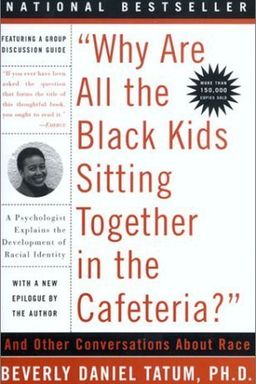
Why do racial dynamics still shape everyday life despite progress toward equality? Beverly Daniel Tatum’s work, especially through Why Are All the Black Kids Sitting Together in the Cafeteria?, argues that race operates not just as a personal bias but as a system of advantage based on race. The book’s core insight moves you beyond thinking of racism as individual hostility and toward understanding the structures—housing, education, criminal justice, and cultural narratives—that distribute privilege and penalty across generations.
From prejudice to systemic advantage
Most people equate racism with prejudice—an attitude or a slur—but Tatum draws on sociologist David Wellman’s definition: racism = a system of advantage based on race. That framing shifts your focus to institutional patterns: mortgage lending that steers certain families, school tracking that separates students, and job-market assumptions that link competence with Whiteness. Peggy McIntosh’s metaphor of the "invisible knapsack" helps illustrate daily, unearned advantages such as being treated courteously by police or seeing people of one’s race in powerful positions.
Identity development in an unequal system
Understanding systemic racism helps you grasp why students cluster by race. When adolescents enter the cafeteria, they are managing identity formation in an environment still shaped by segregation. Residential patterns, school tracking, and adult silence combine to make race salient. Clustering is not pathology—it is a developmental strategy for safety and affirmation. Same-race groups give young people language to navigate microaggressions and interpret social signals, especially in schools that have not addressed inequity directly.
Segregation’s resilience and policy history
The U.S. grew racially diverse, yet segregation remained persistent. Federal policies, such as HOLC redlining and FHA underwriting maps, established barriers to home ownership that created generational wealth gaps. Court rulings rolling back busing and race-aware school assignments reinforced residential segregation. As Tatum notes, demography has changed faster than infrastructure—the United States is now majority-minority in schools, but neighborhood and class divisions keep racial isolation intact.
Resistance and backlash
Structural progress repeatedly invites backlash. Drawing on Carol Anderson’s concept of "White Rage" and Michelle Alexander’s analysis from The New Jim Crow, Tatum connects civil-rights gains with the emergence of mass incarceration and voter suppression. After the 2008 election, new laws restricted access to voting, while mandatory sentencing and the War on Drugs built what Alexander calls a racial caste system. These policies recreated racial boundaries by law and by practice.
Reclaiming dialogue and courage
The book ends not with despair but with empowerment. You are invited to talk openly about race—to break silence maintained by fear. Structured dialogue programs (like Intergroup Dialogue at the University of Michigan) and community models (Welcome Table, Atlanta Friendship Initiative) show how conversation leads to trust, empathy, and action. Tatum’s framework insists that courage, grounded in community and historical awareness, is the necessary antidote to silence and systemic inequity.
Core takeaway
To understand race, you must look at systems—where advantage accumulates, where identity develops, and where silence protects the status quo. Once you grasp that, you can begin reshaping institutions and relationships toward equity rather than avoidance.