
Idea 1
Food, Wholism, and the Real Science of Health
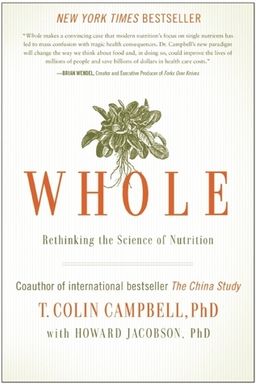
Why are chronic diseases rising despite medical advances? In his work, T. Colin Campbell argues that the problem lies not in our technology but in our thinking. We live under a medical and scientific paradigm that divides, isolates, and monetizes human biology—favoring pills and supplements over food and wholistic understanding. His central claim: eating in harmony with nature through a whole-food, plant-based (WFPB) diet is the most reliable lever for rapid, broad, and deep improvements in health, yet it is under-promoted because it cannot be patented or sold like a drug.
The philosophical foundation: Wholism vs. Reductionism
Campbell builds his argument from the ground up. Modern science operates through reductionism—breaking systems into parts and studying them in isolation. That works beautifully for chemistry and physics, but it distorts biology and nutrition. Human health emerges from the interactions among thousands of nutrients and processes. Studying a single vitamin or comparing one drug to another misses these complex relationships. Campbell advocates for wholism, the scientific study of integrated systems—seeing the body, its food, and its environment as one dynamic web.
Nutrition as a system-level force
The book illustrates that dietary patterns—not isolated nutrients—determine health outcomes. You begin with Campbell’s early aflatoxin research: in laboratory animals, high-casein diets triggered liver cancer even when exposed to low doses of aflatoxin, while low-casein diets almost completely prevented it. The same enzyme system (mixed-function oxidase, or MFO) that detoxifies aflatoxin also activates its carcinogenic form—a paradox showing how metabolism depends on diet context. Nutrition isn’t passive intake; it actively modulates the body’s chemical responses to toxins.
The transformative power of the WFPB diet
Campbell’s strongest evidence concerns clinical reversals. Physicians like Dr. Caldwell Esselstyn demonstrated that a whole-food, plant-based diet reversed severe coronary heart disease—patients saw angina vanish within weeks and had virtually no recurrent events over twelve years. The WFPB approach doesn’t merely prevent disease; it can reverse it. Campbell frames this as a practical metric: effective interventions show rapidity (they work fast), breadth (they address many conditions), and depth (they produce substantial change). Measured by these criteria, nutrition outperforms most pharmaceuticals.
Eunutria: a thought experiment on value and bias
To reveal how cultural and economic forces distort science, Campbell imagines a pill called "Eunutria" that mimics the WFPB diet’s effects—preventing cancer, heart disease, diabetes, and obesity with positive side effects. If it existed, it would be hailed as medicine’s greatest triumph. Yet because real food lacks a profit mechanism, research and advertising ignore it. This thought experiment illustrates how institutional incentives—not scientific evidence—drive what society promotes as health care.
The stakes beyond health
Finally, Campbell connects your plate to the planet. WFPB eating conserves land and water, reduces methane and carbon emissions, and liberates resources that could feed the poor. Industrial animal agriculture is a climate accelerant and a moral catastrophe—its large-scale operations (CAFOs) create pollution, antibiotic resistance, and rural economic collapse. Switching what you eat thus becomes an ecological and ethical act, not just a personal health choice.
Key insight
The book’s unifying message: health is not fragmented; it is systemic. When you eat whole plants instead of processed fragments and animal products, you align biology with ecology and ethics. Understanding food as medicine requires freeing science from reductionism and seeing yourself—not industry—as the agent of healing.
In short, Campbell reframes nutrition as both a scientific revolution and a social awakening. Real health care begins when you change your paradigm and recognize that the most powerful medicine already grows from the ground.